
Tony Jackson, Voice Actor, Athlete, Generally Cool Human
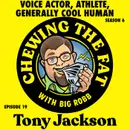


What would you have done if you had been born with a disability that affects your joints and had been told you may only live to see age 14? Our guest this week Voice Actor & Athlete Tony Jackson had been told just that but boy has he lived! Hear his inspiring story and find out how he keeps the darkness at bay.
Follow Tony on Instagram - @TonyJacksonVO
Also check out his website: TonyJacksonVO.com
If you'd like to support this podcast, you can buy me a coffee HERE.
Check out the "Keep the Darkness at Bay" Journal & T's Here
I'd also appreciate it if you left a 5 star rating and review for the podcast on whichever platform you listen on. Thank You!
Special Thanks To:
@jasonthe29th - Logo Design
@jacobjohnsontunes - Theme Music
Pod Decks - Fast 5 Questions
DISCLAIMER: Some of the links here are affiliate links, which means I will make a small commission if you click them and make a qualifying purchase, at no extra cost to you :)
*I hereby solemnly swear to only promote products and services I actually love and use in my podcast and everyday life!
Surely once a week somebody go, wow, you ever think about doing radio? You have a really nice voice.
RobbWelcome to another episode of Chewing the Fat. I'm your host, Big Robb. Thank you so much for tuning in, downloading the podcast. I certainly do appreciate you. Appreciate the folks that have bought me a copy at ChewingTheFatbr.com. Your donations mean a lot to me. They help keep the lights on, as it were, for the podcast and helps us to continue to tell these beautiful, messy human stories. Right now, joining us from Phoenix, Arizona. Please welcome Tony Jackson. Tony.
TonyHey man.
RobbHow are you doing, buddy?
TonyLiving the dream every day.
RobbI know that's right. Tony is a friend of mine that met in the VO community. He's a voice actor. Um, but he is so much more than that, and I can't wait for you to find out more about Tony. Uh so thank you again for being here and agreeing to uh be on the podcast, my friend. My pleasure, dude. My pleasure. So uh being in Phoenix, is that home? Is that born and raised for you?
TonyIt's home for now. Um born and raised, no. No. I was born on a military base in South Korea. Wow. And uh moved all over the place. So home is a very nebulous term for me. Um I mean, it's home for now, like I said. Yeah. Um I've been this is the third time I've lived here in Phoenix, actually, because I've moved away a few times.
RobbOh wow.
TonyAnd I've been back here almost eight years, which is about five years, four years too long. I I get this urge to move every couple of years, and like the urge has been there for a while now. I just haven't been able to make that happen yet.
RobbSo yeah, yeah. It was so you grow up as a military kid then?
TonyYeah, man. I went to three different high schools in four years.
RobbWow. Wow.
TonyYeah,
Robbyou know, uh talking to some other friends that have grown up military. It's like depending on what your mindset is in that, it's like it's either, oh, it must be terrible because you can't make any friends, blah, blah, blah, or man, what an adventure that you get to experience so many different types of places and meet so many different people.
TonyYeah, I'm definitely more of the latter. Like I got friends all over the world now.
RobbYeah.
TonyYou know, I I can't imagine living in the same place my entire life. I could never fathom what that's like. And I've lived in other places where people live like 40 miles from where they were born. And I can't even like wrap my head around that.
RobbYeah. Yeah. You just got that uh that uh wandering spirit that uh that need to just explore and be a part of other communities and finding, you know, new people to to to love on and and communities to be a part of and and give to. Um yeah, I I totally can understand that. So in your in your growing up, I know you're you're you know, you're you do voice acting and stuff like that right now. Was that kind of theatrical entertainment part something that was always attractive to you internally?
TonyI don't know if if always is the right word for it. Um my very first role ever, I was a beat in a second grade play. And what do you do with a kid in a wheelchair in the 80s? You put him on the middle of the stage and park him there for the entire show as a beat. Wow. Wow. Um, and then like at the end of the show, like all the kids pulled me out of the ground and everybody was happy. Um yeah. Yeah, you know, I I I've thought about this actually. I think theater for me was not something I ever thought I could consider. You know, because because I use a wheelchair. Um and so, you know, I never really thought about it. But then like I look at people like um like the probably the most famous wheelchair using theater actor out there right now, Allie Stroker. Um, and how like she just she's like, I'm this is what I want to do, I'm gonna figure it out. Right? And so, you know, you know, hats off to her for sure, because it's like she's doing awesome. Um, but yeah, I don't I don't know if like theater I wasn't like a I wasn't like a theater nerd or a theater kid or anything like that. Um But you know, I liked it. I certainly enjoyed it.
RobbWell, and and how how old were you around when you played the beat?
TonyOh god, you know, second grade.
RobbSo like whatever, five, yeah, seven, yeah, something like around there. Yeah, I mean, and that's I mean, that's a f that's a formative age, and so I could see how just that experience could either be something that's uh interesting or something that's like, well, crap, if they're just gonna park me in a corner and this is gonna be it, I why would I want to be a part of this?
TonyBut I didn't know any better though, you know, like you know, you don't you don't know what you don't know. Yeah, right. And so I I was part of the show, I did my thing. That's good. Um, and years later, in the sixth grade, I was a narrator for a play. Nice. Um, and I remember this very vividly because I'm sitting off to the side narrating as the show is going on, and I sneeze, and this like snot rocket comes blasting out of the shoot and like all over my script, and the teacher backstage sees what happens, comes up and like wipes the script off, wipes my face off, and we keep running. Um and man, yeah, there were just there were I mean, there were other moments too. Like, God, there was a play. I didn't tell my parents I had to go to this play, and I don't know why I didn't. I don't remember. I I was probably nervous, like something else was going on that. I don't know, I don't know. But like and I missed it. I didn't get I didn't do that. Um and then when I was in college the second time yeah, because I didn't want to be an adult, still don't. Um I I was studying German and um did a theater class. It was like a you know, uh a class where we learned some some scripts and then at the end of the semester we put on a show for people.
RobbRight.
TonyUm and that was you know, that was also really cool. But you know, I yeah, not really I I didn't grow up a theater nerd. Well, what were you into then?
RobbBecause you're also an athlete.
TonyYeah, well man, like I I guess it was just I I was just into what normal kids are into, I guess. I I I mean, I don't I don't want to say that I was I was always art focused. I always liked art. I always I always took art classes, yeah, and I liked doing those things. Um I never had a moment where as a child growing up where I said, I want to do this and it's gonna be artsy, right? It was never anything like that. I mean when I was a kid, I wanted to be a major league baseball umpire. Um don't I don't know why. Um, but that's that's what I wanted to do. And then as I got a little bit older, I I guess I didn't really know what I wanted to do. You know, I I really didn't. I just you know, I would just like float around and and you know, work whatever. And then I went to school and and got a degree in something I didn't really want to do because I didn't know what else to do. Just like everything. I didn't really have a lot of direction, you know? I really didn't. I and I I think, you know, a lot of us are like that though, right? Like we just kind of like do the thing because this is what society tells us to do, and so we do the thing and we're like, I don't I don't like this. And so I graduated from Arizona State University three times because I couldn't figure out my life, and I still can't figure out my life. Um and so I got a social work degree and I and I knew halfway through the program I didn't want to do it. Like it just wasn't something that interested me. Um and I also thought, too, like if I was gonna be a case manager, that would require me to go out to homes a lot of times, right? And especially in the 90s, you know, there were you know, people were going out to homes and doing visits instead of doing them over the phone and you know, all this other stuff. And I was like, I can't do that. What if the house has stairs?
RobbRight.
TonyRight and so I don't know if this is where you were gonna go with the conversation. Um, but but at that once I figured that out, I was like, well, I'm almost done, so I'm just gonna finish this up and and figure it out from there. And then I got a job at an online university, which I hated. Oh my god, I hated that job so much. And I I went back to school because people kept saying, Wow, you gotta you got a really nice voice. You ever think about doing radio? No, I had never thought about doing radio. And so at that point, I was like, Well, fuck it, I'm gonna go do radio. Yeah. Um, and so I went back to Arizona State and got into my college radio station and the Walter Cronkite School of Journalism. And there I finally felt like I found my people.
RobbNice.
TonyRight? And I was uh I was only gonna be there for two years because I had already graduated, so I already had all the undergraduate credits and stuff. So two years in the program, get out, go find a job at a radio station.
RobbYeah.
TonyAnd then I started realizing very quickly that a lot of people in any broadcast media usually start out in small markets, right? And they work their way up to the bigger markets. Yeah. Phoenix is a pretty big market. Yeah. And so I came to realize that accessibility was going to be an issue again because at that point I was still living in the Phoenix area where I have the resources I need to live. Yeah. If I went to Pocatella, Idaho in the early 2000s, probably not as many resources, or you know, some other small place that didn't have caregivers or public transit or things like that. And I was like, well, shit, what am I gonna do now? Right. But I loved it. I r I I loved it. And and so two years turned turned into five. That's a whole undergraduate degree career again. Yeah. You know, and when I went back, I was already 25. So I was already old on campus, you know, but I loved it. I had I met a bunch of great people, and um, I felt like this is something, this is what I want to do. I want to do something broadcasting, radio, yeah, something. And it just like I was like, how am I gonna start? Am I gonna get a job here in Phoenix? Mm-hmm. You know, and I told myself, no, that's not gonna be the way it works. I told myself that. And so so I gave that up. Um this is a long story about how I got into voiceover, by the way.
RobbThat's that but that's your story, it's your story. It's your story, you know?
TonyYeah. And so a couple years later, when I was working, I don't even oh, I was working at at another place. I was working, and um I was working actually at at the place that I have my my day job now. It's a place called Ability 360, it's a disability-focused nonprofit in Phoenix. And they had just opened a an accessible sports center. And I was working the front desk, and I was playing power soccer at this point. So you had mentioned a few minutes ago that I'm an athlete, and I am. I play power wheelchair soccer, I do adaptive downhill skiing, which we'll get into maybe later if the conversation goes that way. Yeah. Um, and so I was playing, and the people who build all the equipment for what we do, they they, you know, they were like, we want you to come be the voice of power soccer. We want to start traveling around and and broadcasting these games. And that was my way to get back behind the microphone again because I had stopped once I got out of school. Yeah. And I was like, oh my God, yes, let's go do that. Because I can do that. I can talk. Yeah. You know? And so I was like, all right, I'm gonna leave my nice job, you know, my stable job, and move to Zimmerman, Minnesota, population 5,000.
RobbWow.
TonyBecause that's a great idea. Right?
RobbBut you're following his passion too, though.
TonyMan, man. And they were like, we're gonna go here and we're gonna go there. And I was like, sign me up, let's go. And so, you know, and and and another person who became a friend of mine, dear friend of mine, and a mentor in the power soccer community was also moving there, which is the reason I moved, because it for me was an opportunity to learn from him how to be more knowledgeable about the game. And so I did it for about a year and things fell apart. However, I had traveled by by the time I left there, I had been to Paris, I had been to Rio de Janeiro, I had been to Limerick, Ireland. I was like, this is cool, I want to keep doing this, right? Yeah. And so I moved away, kept doing the broadcasting thing, and um, and actually, while let me back up a little bit. When I started playing PowerSucker, this is also when I kind of started, I discovered voiceover at that time. Holy shit, I don't even believe I left this part out because I've been droning on and on and on about this other thing. No, it's how I discovered voiceover because while I was at the radio station, Jesus, how did I forget that? Um, I worked my way and became eventually became the station manager because I'd been there for five years. So, yes, of course. But in between starting and becoming station manager, I was the production director at the station. And so I learned how to like record commercials and produce spots and do all this thing. I was like, this is awesome. I love doing this. And I started getting into radio imaging at that time. And the very first voiceover job I ever got, I imaged uh an online radio station in Alaska. It was a heavy metal station. And he paid me for it. And I was like, yes, I got paid to do this. And then for reasons, lack of confidence or lack of ambition, I don't know, maybe a little bit of everything, I didn't pursue it any further than that. That was it. But that was my very first voiceover job in like 2005 or or whatever. And I didn't pursue it after that. And so fast forward again, um, I'm in Minnesota. Like voiceover wasn't really a thing. Um, but when I when I had moved there, I had to go to the when I had moved there, we were getting ready to do the national tournament, and I had to go to a guitar center to go buy cables or something, I don't remember. And I saw uh a short SM7B in in the glass case and I was like, I want to buy that thing. And I don't know why I felt compelled to buy it that day. They didn't have any more, so I bought the floor model.
RobbYeah.
TonyUm and that microphone sat in a box for five years.
RobbWow.
TonyIt just sat, it just sat. Um and then uh things fell apart in Minnesota. I moved to New Hampshire. Um and then um moved back to Arizona, went back to go work at the gym that I worked at five and a half years before. Um and uh got into voiceover from there. Guy at the front desk, I I would make PA announcements when people's like paratransit rides would show up. And surely once a week, somebody goes, Wow, you ever think about doing radio? You have a really nice voice, right? Right? Yes, I have, thank you.
RobbYes, been there, done that, got the T.
TonyYeah. So one day a guy comes in, he goes, Hey, you go into this voiceover workshop at the community college down the street, and I had no idea what he was talking about. So, and it was it was one of those, hey, you should do voiceover, come check out what we do, right? Pay money into our program and we'll give you demos. Yeah, right. You know, I went there and then sure enough I did it because I I at that point, like voiceover had always kind of been in the back of my mind after that one job. And then, like in between all of that, I had discovered um the online studio that has the free library that everybody knows about, um, and and entered a contest or two in between then, but like didn't really do anything in earnest. So I went to the community college, did the workshop, and of course the person was like, Yeah, you should go do voiceover. You have a nice voice. Okay, so um a friend of mine, Jody Mylam, um helped me with that program. It's the only reason I even got into it because it was prohibitively expensive. Right. But that's how I got into voiceover, and then I've been doing it ever since. This is year seven now. And once I got paid for my first job, like a month or so after getting my demos, I was like, oh yeah, I'm gonna kill it. This is gonna be easy. I'm I'm gonna I'm no problem.
RobbYeah.
TonyNope. Wrong. Nope. As you heard me a little bit ago, still got a day job. So yeah, but anyway, that's how that's the that's the super long Magellan route of how I got into voiceover.
RobbNo, but that's you know, and it because everybody's path is is different as far as like getting into voiceover, or whatever field you get into, you know what I mean? There's it you know, I I started in radio, you know, and my path is different, but uh but there's also a lot of similarities, you know, when you work in radio and then you and then now you're hearing uh voiceover because that industry is not the same as it used to be when we started at all. It is completely different. Um and those opportunities that you had back then do not exist now. So unfortunately, people who think, oh yeah, I should get into radio, you can't just get into radio anymore because you don't have overnight shifts that you could be on to hone your craft or or intern and things like that. This they just don't exist anymore because everything's out of a hub and it's you know, it's just not the same.
TonyYeah, thanks, Bill Clinton.
RobbIf you guys don't know what I'm talking about, go look it up.
TonyI'm not gonna explain it.
RobbDeregulation. Um, but yeah, it's it's um, I mean, it's it's interesting to see everybody's path into what they're now into and what they're doing. Um, you know, I didn't mention at the start a whole lot about you being in a wheelchair because I'm listening to your voice. No one can tell that you're sitting in a wheelchair because we're just hearing your voice. Um, but that puts different, like you said, restrictions on things that you can do in your mindset on trying to do things because you have to now worry about literal physical accessibility into just buildings, into life that other people don't have to necessarily think of. Um you've been in a wheelchair all your life?
TonyYeah, I mean, minus like the first ten minutes of life, but you know, once they spanked me and made sure I was crying, it was right into the wheelchair. Yeah. Um but yeah, yeah, pretty much. Um it's the only reality I know.
RobbAnd how has that changed through the years uh from you know, and how you I mean, because it's it's it's formed how you learn other things too, I'm sure. Because like I said, you have to think of these other things to make sure that you can get to places and do the things that you know everybody else takes for granted, as it were.
TonyYeah. I mean, it it makes me a pretty good problem solver because I have to be.
RobbYeah.
TonyRight? Um it's made me a good communicator because I have to be. Um yeah, I mean it it it's only a part of who I am. Right. Although it sh it's shaped exactly who I am.
RobbYeah. It's it's because I I would have to think that that's one of those things. Like I said, listening, nobody would know. People that see you, you know, at Vio Atlanta, which is where one where we first met, you know, that's one of the things people see right away. You know. Right. Because that's that they're they're like, well, well, what's you know, and that can cause other people to then have some sort of preconceived, how do I now approach this person? How do I talk to? And you are one of the most living human beings I've ever seen in my life. Your energy, your excitement, your joy for life and fun is is just it's infectious. You know, and I hear that from people that know you and have known you much longer than I've known you. That it's like that's just one of the things about being in Tony's atmosphere is like you're not gonna, you're not gonna one remember that hey, he's in a wheelchair at the time because that's not it is not who you are. It does not define you because you are you're Tony.
TonyYeah.
RobbYou know what I mean?
TonyI appreciate that. Um yeah, I don't know, man. It just you know, I I sometimes it it it I don't let me say it like this. In a way, it becomes uh a protective shield or a defense mechanism in some ways. Um because for a long time I felt like I had to do more just to be normal or accepted or or whatever it was, right? Um and it's to a certain extent become who I am, even though it it helped me develop into you know, current day me, you know. Um you know, I was I was, you know, like many other kids, kind of shy, didn't really say a lot all the time. Um and you know, maybe other people have a different perception of me. Um but but yeah, I mean, you know, just kind of it's Just it it's who I am. It's I I do have a lot of energy. I don't know where it comes from some days, um, but I do, especially for something that really gets me going. You know. I don't know where I was going with this. No, well, you know, we can go on.
RobbNo, no, no. It's fine. It's interesting though that you you know, you that you said it was kind of a protective thing. You know, there we uh everybody comes up with certain coping mechanisms to protect themselves from things and stuff like that. I mean, I that's one of the things, you know, as as the fat kid, you know, I get picked on for being the fat kid. And so I developed, you know, humor in comedy as a uh coping mechanism. Yeah. You know, because that's that's human nature. You don't want to be picked on, you don't want to be thought less of. Because you know who you are, you know your own heart, and you're like, but these other people don't. So how can I make sure that they don't? One that you're protecting yourself, but also that they can see who you really are, as opposed to your your outward appearance, your condition, your whatever, you know, me me being fat, you being in a wheelchair or whatever, you know.
TonyFat and in a wheelchair, so there.
RobbYou're not fat in a wheelchair.
TonyWell, you know. This little little turkey neck thing going on would say otherwise, but um so when you when you were going to your three different colleges and I mean three different high schools in four years, whatever, where during those kind of years, where were you at mostly?
RobbUm I know you mentioned learning German and stuff, Sermon. You assume you guys were b based in German for a while, Germany for a while.
TonyFun fact, never been to Germany. Never been to Germany. Never been German. Was there a why German? Why did I decide to study German in Arizona? Yeah, it doesn't make sense to me either. So, super, super long story short, freshman year of college, we're in the in the dorms, residence halls for all you like dorm nerds out there, um playing Castle Risk, which is like an abbreviated version of Risk. And so amongst my group of friends who are playing, it's a pair of twins who knew German because they had studied it for like two months in like an eighth grade trip or whatever. So one of them knew that they weren't gonna win, and but they thought to each other that if one had taken over the other's armies, they with the combined armies could beat the rest of us. And they plotted this out loud in front of everybody in a language that nobody else could understand. And and and when they won, I was so pissed, so pissed that they won this game that when I went back to school later and had to pick another foreign language, German was it. You're not gonna get fooled. Never again.
RobbNever get fooled for good. Oh, that's awesome.
TonyNever again would they would I be defeated in that way. And I loved it.
RobbIt was great. You know, it it German's a great language, especially for like voice work stuff, as far as like the way that you have to form words in your mouth and your, you know, sound placements and things like that. It's actually a very good language for voice things.
TonyUm Yeah, that was another reason I stayed in college for another five years, because not only did I find the radio station, I also was studying German at that time and I really enjoyed it. So I was like, well, I'm just gonna stay here and do this longer. I don't need a job. I've got financial aid.
RobbThere we go.
TonyThat was a mistake.
RobbSo in your um in your career as far as your voiceover, um, do you have any projects that have been, you know, your favorite that you've done that was kind of like that uh bucket list moment yet? Um, not yet. Not yet.
TonyNot yet. No. Um still working on that moment. Working on a lot of things, actually. Yeah, yeah.
RobbYeah. And then um in your athletic career, how is that? Do you still are you still active on the on the field?
TonyYeah, I'm still still playing, still coaching, still announcing, still doing all those things. Um, yeah, I've been doing that 17 years. Um really long time. I've never done anything as long in my life.
RobbSo um still doing that. I would feel that that's gotta be fairly fulfilling though on the coaching side of it too. Um in in in coaching uh power soccer. It is.
TonyUm it is um being able to develop young players and and watching some of them go on to do greater things um i is rewarding, you know? Um because there were other people that did that for me. Yeah. You know, and so watching other people do it is is awesome.
RobbYeah. And how did you find um downhill skiing? How did that happen?
TonyOh my goodness. So there's this traveling expo called the Abilities Expo. It's a disability-focused thing. And so they've made a stop in Phoenix since 2022. Um, and in 2023, I was I was working one day and and one of the booths had this bucket. So for those of you who have never seen adaptive skiing in the Paralympics, athletes who can't stand sit in a molded bucket with skis that they hold in their hands, and they and there's a ski, usually a monoski, on the bottom of the of the bucket. So anyway, I'm at the Abilities Expo. I see a bucket with two skis on there, and the folks, the very, very smart folks at the University of Utah, um designed one that had um a bucket with two skis that were mounted with actuators that you could control with a a joystick. And I was like, holy shit, this is amazing. And then when I found out that there was a race involved, I was like, when's the next race? And so sure enough, that that next ski season, I went I went up to Flagstaff, Arizona, because yes, there's skiing in Arizona, um, and and skied for the first time, and it was amazing. Yeah, and then I entered a race, and um I won my very small division in my very first race, and then went to Utah the next month for like the the the big grand race of the season and came in third in my division, and I loved it. I was like, this is amazing. I want to keep doing this. You know, it was a different kind of thrill. Like with team sports, you know, it's like you and your teammates against this other team, where just like in voiceover with downhill skiing, it is you against you.
RobbYeah, you know, yeah. That's awesome.
TonyYeah, and man, I love it. I didn't get to do it this year because because the the races were right at the same time I was doing other things, and like the big race was the same time as Vio Atlanta this year, and I was like, downhill skiing, Vio Atlanta. I yeah, I gotta go do Vio Atlanta because I'm on a panel, should probably be there. Not that the panel wouldn't continue without me, but you know, yeah, so yeah.
RobbI love that, I love that. So, aside from the work that you're doing, um, what's bringing you joy right now, Tony?
TonyOh my god, man. You know, I that's an interesting question. I don't I don't know if I give myself a ton of time for that these days, so I have to find little like pockets or moments. Yeah, you know, like um I've been going to the art museum a lot recently. I bought a membership to the Phoenix Art Museum this year.
RobbNice.
TonyAnd I really, I really like going there by myself and and looking at the things that people create. Um yeah, it just kind of makes me think about living life as an artist. Right? And like these people have dedicated their lives to this thing that they do, and now it's on display for uh all of us to analyze and judge and critique. I do like that. Um spending time like catching up on me, you know, like I I've decided to start reading more um which I'm really enjoying. Um travel always you know, going different places always something that that is incredibly joyful. Um yeah, man. Just you know, just I I feel like especially over the last few years, like I just fill my day with voiceover or power soccer or my day job. I write grants at the same place where I coach and play power soccer. And so like they just it just takes up all my time, you know. And I don't really I you know, I spend a lot of weekends just like working on other stuff, whether it's voiceover-related stuff or work-related stuff that I didn't do during the week. Yeah. You know? And so there's not a lot of like space to just not do anything. And then I drown myself in in YouTube shorts, and then I end up being 10 minutes late for an interview with Rob Smith. Right.
RobbYeah, I love that though. I mean, you know, and that's the thing. I think with life, you know, anything you got going on, you gotta find those pockets of joy, those bits of time that you can uh focus on something else, focus on yourself. Um and I love that you're going, I love personally going to art museums and just like you said, just basking in the the artistic creativity of others, um, and who sit there and ponder what maybe they were going through or thinking as they were painting or sculpting or whatever, but also uh how the piece itself can just affect you internally or whatever.
TonyYeah.
RobbUm yeah.
TonyIt got me thinking about like living a life as an artist in general. Um and like I have I have a couple quotes out there in my apartment, and this is um God, I can't even remember. There's two of them. One I one I can remember easily because it's short, and it's actually part of a longer quote. There's a Jim Carrey quote up there that says, People choose practicality disguised as fear, something along those lines. Um, and and I think most of us do it. And it really got me thinking about like artists who decide that art is going to be their career choice in their life and how they decide to to move about the earth. And it made me think about like how brave it is to do that, right? Because the easy path that most of us take, you know, present company included, like we go find a job somewhere and you know, and work for somebody else who took that brave step of establishing something that didn't exist previously and and and doing all the hard work to make sure it was sustainable and then it was running, and then found people like myself or whoever else decides to go work there, right, to keep it running. Right. That person who who built that thing took a chance on themselves. And artists every day, especially the ones that make a living, take a chance on themselves to live in a way where their creativity or their emotions are what sustain them, you know, and and I was like, man, and and I think it was Lady Gaga actually that got me really thinking about it, you know, because like if you think about Lady Gaga, you know, I think a lot of people know, like just generally where she came from, right? She was just a kid who always sang or, you know, did whatever, and then just like, this is what I'm gonna do. And she created this whole thing, right? You know, you think about like Billie Eilish and her brother started in their bedroom, right? Blew up on SoundCloud and became a thing, or like whatever band you like, start out in a garage somewhere and was like, this is what we're gonna do, this is what I'm gonna do. If you want to come along, you're more than welcome to join me, but this is what I'm doing, right? And there was no plan B. I was like, this is it. Yeah, you know, and it and it it takes a lot of like courage and bravery in a little delusion to say this is the path I'm taking, and that uh there's no other way.
RobbTony, this is the second segment of the show. This is where we dive a little bit deeper into your mental health journey. Sure. Um, I definitely believe the more we can talk about this stuff, the more we find those commonalities, those down days or that we all kind of go through, whether you call it whether it's you know, diagnosed depression or not, or if it's anxiety or whatever, but we all kind of have those days. So for you, how do you keep the darkness at bay?
TonySometimes I don't. You know, I mean, man, I I there were there was one moment semi-recently, and when I mean semi-recently, like a couple years ago, a year, a couple years ago, I was laying in bed and my caregiver that morning called out. And so I'm very fortunate. I have a friend who, when in town, if I call him up and and say I need help, he will do everything he can to come over and help me. And I've had to call on him more times than I care to count. And so one morning I'm laying there, and I was like, How am I gonna get out of bed? You know, I don't want to call my friend Sam again because I've been relying on him so much recently. And I had to, I had to have a moment. And I said, Look, think about all these people out here who would be pissed if you didn't call them to let them know that you were in this situation. If you told them later what happened, their response would be, Well, why didn't you call me? Right? And and it was at that moment where I had to embrace the fact that there are people out there who care enough about me that they will drop what they're doing to come help me. And it's I think for all of us, it it it well, not I shouldn't say all of us, for a lot of us, it can be challenging sometimes to to see how we affect other people because we're not that other person, right? We only see it from our own internal perspective. And so that was really a moment for me recently where I had I said, you know what, there are people out there who would yell at you and and genuinely be hurt and upset if you didn't call them in this situation. And so that was a really transformative moment for me, because a lot of people like me who have a physical disability and rely on people every single day to help us do anything. You know, the basic things, I will say, not anything, the basic things that most people take for granted. Like you get up in the morning, you go to the bathroom, if you're a breakfast person, you eat breakfast, right? You know, you don't even think about it. People like me have to think about it every day and and and and hope that somebody shows up in the morning to help us get out of bed, or somebody shows up at night to help us get in bed. And with that comes the the weight of feeling like a burden on everybody else. Because I and that comes from a a lack of self-worth, right? Like you don't feel like you're worthy enough, so now you're a burden because you have to call upon somebody else to interrupt their day and come help you. And a lot of us who who live with a physical disability, especially a high-level one, have these thoughts, right? You know, you're living at home with your parents who are taking care of you, or you're living out in the community and people have to come in and help take care of you. And you you start to see yourself as a burden to other people when other people will tell you no, you're not a burden. Right. It might be inconvenient, right? It might be ill-timed. However, if if faced with making a choice of interrupting my day and or carrying on, I'm gonna interrupt my day to help you, right? Yep. And so I had to, I had to really sit down with myself that morning, lying in bed, needing to go to the bathroom, and acknowledge that and embrace that more importantly. And so, yeah, I mean, there were some dark moments, man. When I was living in New Hampshire after I had left Minnesota, there were days where I was like, do I even want to be here anymore? You know, like and and it didn't get to the point where I was like, I'm gonna go throw myself into a snowbank and hope a plow hits me. And it was never anything like that. It it definitely did pop up a few times though, especially after like a night of like heavy drinking for whatever reason. And you know, you wake up the next morning and you feel like shit. If you drank enough, you probably don't remember some of the things that are said you said or did the night before.
RobbRight.
TonyUm and you're like, oh my god, I'm worthless, right? Like, and you know, and I'm I'm useless, and all these other things. And then on top of that, you you're relying on people to come help you, right? And so like you're a burden to other people, and and all these other like dark thoughts start swimming around in your head. And yeah, that man, that time in New Hampshire, for sure, there were moments where I was like, Do I would it even matter if I were not here anymore? Yeah, right? Would it even matter? And parts of your brain will convince yourself that no, it doesn't matter. Yeah, and then you think about the other people, and you're like, no, this person would be devastated. This person would be a little sad. This person might not care so much, but um, but yeah, you know, and and and so so to answer your question, it's a long ass answer. Um yeah, I mean, there are some days that and and certainly not so much these days. Um I I think to keep it at bay now, A, you have to have a sense of direction and purpose, right? You also have to have a sense of self-worth because that sense of self-worth, you know, for some folks, you know, maybe all they need, but for I guess for me, like the sense of self-worth is recognizing what I contribute to other people, yeah, right, and not not wanting to to hurt or disappoint those people, and not necessarily in like a people-pleasing way, but I know that that you know, if something were to happen, here are a bunch of people who would be negatively impacted by that, you know. So yeah, I think it's easier now. I also like I I quit drinking almost six six years ago, yeah. So during COVID of all times, I picked a hell of a time to quit drinking. Um so that definitely helps too. Yeah.
RobbYeah, it's crazy sometimes how like, especially like alcohol, uh other recreational drugs or whatever can really cause you to find the the worst in yourself and amplify that.
TonyOh, for sure. I mean, there'd be nights I'd wake up, you know, I'd I'd like drink all night, and the next morning I'd wake up not remember half the night, and then I'd be depressed for like two weeks because I'm like, oh my God, you're a piece of shit. You you like what are you doing? You're a grown adult and you're acting like this, you don't even remember what you said, blah, blah, blah, blah, blah. And then other people sometimes tell you what you said, and oh my God, you were so funny. And but and and you know, but it's like I have no recollection of any of these things. Yeah. Right. And then you start thinking, oh my God, what if I said something I didn't mean to say? What if I did something I didn't mean to do? Um and you're like, uh you don't even know how you got home. What if you got hit by a car? You dumbass, what are you doing? Right? And then it it just spirals.
RobbYeah.
TonyYou know? And so like giving up alcohol was definitely a huge part of this. Yeah.
RobbUh and I think you know, having community, having someone you can call on, um just to just to talk, not because you need help doing something or whatever. You know, you're you're in a situ a different situation where like I said, you you rely on others for a lot more things than than other people do, but still having a community that you can call and you can be like, hey, I just need to talk about this, or I just need to, you know, uh I'm having these thoughts, I'm feeling this way. Do you want to come hang out? Do you want to, you know, uh, you know, grab a coffee or something, or can we just have a talk on the phone or or chat, you know, for a few minutes? I think that's really important.
TonyFor sure. And, you know, for me, like getting out and seeing my friends, you know, the people that I care about is yeah, it is extremely important to do that. Because even now, you know, even though I don't necessarily feel the same way, you know, it gets it gets a little isolating, not only in this little box, but just in the you know, I I live by myself with a cat who doesn't talk back and only and only comes to say hello when he's hungry or wants to be pet. You know? Right. And the rest of the day could not care less. And so yeah. You know, for me, I I I need people.
RobbAll right, Tony. This is the third segment of the show. This is uh the Fast Five, the Fast Five. It's time now for the Fast Five. Fast Five. Fast Five. Sorry, I'm still working on that theme song. I'll get to it one day. Fast Five is powered by Pod Dex. It's an app created by my friend Travis Brown. Uh if you go to Chewin'TheFatBR.com/slash poddex, uh, it'll take you to the link you can download it in your favorite app store. Uh, it's made for podcasters, but they're great icebreaker questions. Uh it's no wrong answers, uh, just the top thing that comes to the top of your head, and uh we'll we will go from there. You ready? Here we go. Here we go. Question number one. Do you prefer live action or cartoon superhero movies? Ooh, cartoon. Yeah, yeah. You gotta you got a fave that pops into the top of your head?
TonyI watched the Transformers 40th anniversary re-release in theaters recently. I mean, like like when you look at it as an actual movie, like, you know, it's fine, but there's so much nostalgia dripping from that movie for me. Like it's it might be one of the greatest movies of all time.
RobbYeah, and especially like this year, having lost Peter Cullen too. I mean, in our industry, being being voice actors. So that's uh that's a good one. That's a good one. All right, question number two. Who is your biggest mentor or teacher this year so far? Oh man.
TonyWell well, I I was I was just thinking about like what I've been doing recently. I'm gonna say Kristin Paiva. And for those of you that don't know Kristin Paiva, she's a casting director who who used to work at a bunch of big places that you know um and branched out on her own recently. And so earlier this year, I was chosen to be part of her Voice Forge. Um, so there's six of us that were chosen, and it is a mentorship program. Um and like after finishing it, we we finished it about a month ago. Like I'm noticing that for me there's been a slight mental shift and and recognizing how much I have been holding myself back in terms of pursuing voiceover-related milestones, for lack of a better way of putting it. And and so there's been a there's been a little bit of a shift because one thing that I that I've come to understand in in being part of the voice acting community now for the last few years is there is a lot of personal history to unpack. And and being part of the voice acting community, coupled with being a small business owner, there are a lot of things that you have to manage and and do on a day-to-day basis, in addition to whatever other life responsibilities you have, whether that is a full-time job or a family or anything else, you know, all of those things on top of all this, and there are stories that we tell ourselves, right, that have been woven into our being since we were children, right? And some of those stories serve us and some of those d do a great disservice to us. And and being part of this VoiceForge program helped me see a little bit deeper some of the barriers that I put up in front of myself. You know, and so I've been working on on tearing those barriers down, which was a it's a lot, it's a process, right? Yeah, it's a long, long, winding and sometimes messy process. Yeah. So I'm I'm going to give my mentor of the first nine months of 2026 award to Kristin Paiva.
RobbYeah.
TonyThank you. And and I and you know what I I need to write this message in in the little chat that we all have. I will do it later. But yeah, it I don't know why it took me so long to think about that. But yeah, it's been it's been interesting. It's been interesting, especially coupled with like some of the like self-improvement materials that I've been reading recently. Um yeah.
RobbLove it.
TonyI love it. Question number three. I like that. I like that little like like little music pad that you play, right? But it's fun.
RobbA spinner. Yeah, I love it. If you could go back in time and give your younger self one piece of advice, what would it be? Go find more voiceover jobs.
TonyDon't stop at Alaska. Don't don't don't stop at that heavy metal station in Alaska. You know, like you obviously had some skill. Skill enough that somebody paid you to do it. Don't stop right there, please. Just keep going with it. You know, I I will say though, in defense of current me, voiceover 20 years ago was far more challenging to get into. Yeah. Um, because the equipment was prohibitively expensive. Um for me, transportation options were not as plentiful. And so going into a studio would have certainly been a challenge. However, figure it out. Yeah. Don't don't stop at that one thing. Um yeah, I know I'm about to go off on a tangent here, but I'm I'm glad though that I'm doing it now because I don't know if I would have had the emotional uh maturity and the mental resolve to keep going then that I do now. Yeah. And that stuff only comes with time sometimes.
RobbIt does, and experience, right? Yeah.
TonyAnd and and and making a choice about whether you want to continue or not, right? So but yeah, that that would be my one piece of advice. Don't stop, please. Just keep going, see where it goes. Yeah. I love that.
RobbQuestion number four. All right, you've lived in several different places. There is there any diff any uh local dish or food product from any of the places you you live growing up that you miss right now where you are in Arizona?
TonyOh wow. Um I mean, Korean food, even though we have Korean, we don't have enough Korean restaurants around here. I mean, my mom is still among the living. She's still kicking around. So, you know, whenever I go visit them in Georgia, I will get my fill. Um I need one close to where I live, though. There's not one super close to where I live that I can get to super easily. I need that. I will it oh man, I was at One Voice Dallas, and my boy Charles Coates, Charles the Voice, bought me Korean food for dinner one night, and it was it was lovely. Yeah. Delightful.
RobbIs there a specific dish that's like your favorite or go-to?
TonyI mean, I mean anything, honestly. Like if you just throw it in front of me, I'll probably eat it. All right then.
RobbQuestion number five. What do you love to do for others?
TonyMake them laugh, man. Yeah. Yeah. First because it's free and I'm broke. So um you know, it's like you it it's it's a it's a thrill to get that reaction out of people. Yeah. You know I enjoy it, you know, and then you know, it g it gives everybody some good feelings while we're all together. Yeah. You know what I'm saying? Um, so like even if you're having a super tough day or week or year or life, yeah, um, that spiral quickly. And you know, just being able to, you know, make them forget about it even for a few moments and just laugh. Because I mean, laughter feels good, right? Yeah. Yeah, man. It it feels good. So being able to do that for others is great. I love doing that.
RobbYeah, that's an awesome answer. That's an awesome answer. Well, that is our fast five, Tony, and that is the show. Thank you so much for being here, my friend.
TonyMy pleasure, man. That it wasn't super fast. It was probably planned to be done in three minutes. We took a whole seven and eight minutes to to answer those questions because I couldn't get my shit together.
RobbIt is all good, man. It is all good. If folks want to keep up with you and your voiceover and everything else you got going on, what's the easiest way for them to do that?
TonyUh, you can find me at Tony Jackson VO on LinkedIn, Instagram, even though I don't really use them that much. Send me a message. Um, you know, I'll answer eventually. I swear, I promise. I'll I'll answer you. It might take me a year, um, but I'll get back to you.
RobbWell, hopefully, if they want voiceover work, it doesn't take you a year to get back to them.
TonyNo, it will not. If you want voiceover work, I will get back to you in 20 minutes.
RobbI love it. I love it. Well, awesome. I'll make sure to put those links in the show notes again. Tony, thank you so much for being here. And I love you. I love everything you're doing, and I wish you nothing but success with all of it, man. With all of it.
TonyAppreciate that. Thank you. Thanks for having me on.
RobbAbsolutely, absolutely. I can't wait to see you again out and about in the world somewhere, too.
TonySomewhere.
RobbAnd if you would like to support this podcast, I'd appreciate it if you bought me a coffee at chewing the fatbr.com. But until next time, I look forward to the chance we have to sit a spell and chew the fat.


