
Paul Barton-Jones, Music Director, Teacher, Actor
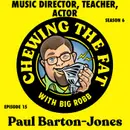


Have you ever had a friend that has a song lyric for any occasion and wondered where that skill comes from? Our guest this week explores the connection of music to humanity and how shared experiences can make a society stronger.
Follow Paul on Instagram - @paulbartonjones
and follow Tater too - @sirtaterboy
If you'd like to support this podcast, you can buy me a coffee HERE.
Check out the "Keep the Darkness at Bay" Journal & T's Here
I'd also appreciate it if you left a 5 star rating and review for the podcast on whichever platform you listen on. Thank You!
Special Thanks To:
@jasonthe29th - Logo Design
@jacobjohnsontunes - Theme Music
Pod Decks - Fast 5 Questions
DISCLAIMER: Some of the links here are affiliate links, which means I will make a small commission if you click them and make a qualifying purchase, at no extra cost to you :)
*I hereby solemnly swear to only promote products and services I actually love and use in my podcast and everyday life!
Paul
Oh yes. There's always a harp hunt.
Robb
Welcome to another episode of Chewing the Fat. I'm your host, Big Robb. Thank you so much for tuning in. Download the podcast. I certainly do appreciate that. And to the folks that have uh left reviews on Apple Podcasts and given the five-star ratings, thank you so much. It really does help the podcast find more people so we can continue to tell these beautiful, messy human stories. Right now, one of my favorite humans in the world sitting across to me in the studio, please welcome Paul Barton Jones. Hey buddy. How's it going?
Paul
It's good.
Robb
You're a little quiet.
Paul
Am I?
Robb
You are.
Paul
Oh, not theater voice.
Robb
It's odd. Uh Paul and I uh, well, we we know each other from theater first. Then we worked together for years at uh the fruit stand. Fruit stand. And the notorious. The notorious fruit stand. Um, and then uh, I mean, and we just continue to know each other from theater and and stay in touch and stuff like that. So, but you are teaching now.
Paul
Yes, I am a high school theater teacher now. Um actually, this year will be my first year just focusing on theater. I've been doing theater and chorus for the last two years. Uh, built the program up enough to where they were like, yeah, we should probably get you some help. So Oh, well, that's good. Yeah, no, I'm excited. That's awesome.
Robb
That's awesome. Um, we're here in Augusta. Is Augusta home for you, Paul? Like born and raised?
Paul
Born and raised. Um, I've been kind of everywhere. Uh, I grew up over in Martinez went to Bell Air Elementary that is now uh, you know, Dollar General in that large field. Um grew up in my grandmother's home and and she taught at Evans High School. And now, full circle moment, I am right back teaching at Evans High School. That's awesome. So, but been here my whole life. Yeah.
Robb
Um doing theater and music and things like that. Uh did you grow up in like a musical household?
Paul
Uh no. Uh surprisingly, I am the only one of seven grandchildren who had any kind of musical desire.
Robb
Really?
Paul
Um apparently I was the kid that liked to lay on the floor and watch Disney movies and sing along. And a family member, uh, I think it was my my grandma's sister, so great aunt, uh, was in the house and looked at my grandma and was like, you should probably get him in something. Um and so my grandma did some some research and found the Augusta Children's Corral. Um, so I started doing that. Um, and that's kind of how I was able to get some outlet other than just performing in front of the TV for, you know, my immediate family.
Robb
Uh so when you were in school then, is that so did you get going into like chorus programs, band programs, things like that? Because you're also an instrumentalist, you're a flautist.
Paul
Surprisingly, and that's what most people don't under uh don't realize about me is that I my degree uh was in flute performance. Wow. So I don't play as much as I would like to, considering uh that degree. Um, but I am using my music degree to be able to teach um music and theater and stuff like that. But I think I did some chorus stuff, maybe in elementary school. I remember being in a couple of the school plays in elementary school. Um, middle school is when we kind of moved around and I moved over into the North Augusta area, um, went to Hammond Hill, made some friends that were starting to go into band at Paul Knox. Um, and so seventh grade year, I was like, I want to join the band. Um, because all my friends were doing it. And the the teacher was like, Um, sure, you can join band, but just tell me you don't want to play the trumpet or the drums. And I was like, no, I want to play the flute because my grandma had told me, she's like, I just think the flute is the most beautiful instrument. So I was like, I'm gonna do that. Oh cut to me getting my degree, and I reminded her of that story. I was like, you know, you're the reason I learned how to play the flute. And she was like, What are you talking about? And I was like, I reminded her of that. And she's like, Did I say that? She's like, I meant the oboe. Wow. And I was like, well, $20,000 of college debt later maybe is not the best time.
Robb
And it's not necessarily transferable skills between the flute and the oboe. I mean No.
Paul
Not by any means. I did try it in one of our college classes. We have to learn how to play other woodwind instruments, and I tried that and I could not make a sound on that. Wow. So flute it is.
Robb
Flute it is. Uh and so and that's what you and obviously that's what you said. You that you went to uh college for. Did you go here or um
Paul
I did. I went to um what is now Augusta University. I think at that point it might have been Augusta State or GRU. It's been through multiple name changes. So many names changes. Um that college on the hill over there is what we'll just refer to it as. I did. I I went there. Um, I had actually applied and got into UGA. Um, but because I was the only child in a huge family that had any kind of musical interest, my family had no idea how to get me into any of those kinds of programs. I was also the first one um to look into going off to school. Um, but I also graduated from a small town high school over in over here in South Carolina. They just didn't know how to help find art students, find resources. So I got in and did all that stuff, and then it came down to it, and we just didn't have the money for me to go. So, real quick in a week, had to apply for Augusta State, get in, and then just started. And it's been the ball's been rolling ever since.
Robb
Yeah, yeah. Um, in that um time of playing music and stuff like that, where did theater come in to play?
Paul
So as I was studying music, I've always been a huge music nerd. I've always listened to soundtracks, watched movie musicals. Um, the first musical I ever saw, my grandma did take me to that. Um, I've told my students this story a million times. So if they're listening, I'm sorry you have to hear it again. Um But the first live musical I ever saw was Oklahoma at Evans High School. Okay. Um, she was going to support, she knew I liked it. Um, and so I saw that. And I've been in Oklahoma twice now. And actually this year I'm going to be directing it at Evans High School. So again, full circle. Um, but I was studying music, and one, a lot of my friends were voice majors, and one of the professors, Patty Myers, had a notice on her door um for an opera workshop performance. And they were looking for some people to fill out some characters for uh the Bernstein show Candeed. And they were looking for a Dr. Pangloss, which is nice baritone sound. And I looked at the call sheet and I was like, I know that. And I knocked on her door and I was like, I know this musical. And she was like, Do you? Um, you know, small town flute player. What what do you know about Candeed?
Robb
Right.
Paul
Um and she brought me into her office. I sang a little bit and she was like, Okay. And I kind of got the bug then and there. I did Oklahoma. I did that opera workshop performance. I ended up doing The Music Man Um and met some really great friends that I'm still working with today. Um, Sean Moton. Um, he's come back and directed some stuff after being out of town for several years. So um, yeah, that's kind of where it all started. Yeah. And I haven't stopped.
Robb
Yeah. Yeah. Well, and I I think I met you with the Augusta players um back when uh Debbie Ballas was uh still alive, still handling uh uh that program. Uh and it's such a you know, it's such a welcoming community. Um I mean, you know, every every group is gonna have some clicks and things like that, and you have to work your way in. But uh overall, it's very accepting, you know, community to, hey, yeah, come on, be a part of whatever we've got going on.
Paul
Um yeah, that was actually I was doing Oklahoma with Laura Butler and Melissa Cannis, who were real big in the players at that time. And um, Laura was 80 Annie and I was Will Parker, and she was like, You should really come audition for an Augusta player show. And I was like, No, I'm not gonna do that. At that point, I had already auditioned, I think, for the Augusta Opera and had a terrible audition for Sweeney Todd. Um, but somehow still got in the ensemble. Um, but yeah, I ended up coming in and auditioning, and I sang, Oh, what a beautiful morning for my audition for Peter Pan, which is literally not the same kind of musical.
Robb
Yeah.
Paul
Um, and just watching Debbie behind the table, not knowing who I was, but then just kind of her like sitting back and crossing her her arms like she would do and and smiling and going and and nodding and going, mm-hmm, mm-hmm. Um, I knew I had I had found found my people.
Robb
Yeah. Yeah. So and and you've continued on doing plenty of stuff with the players, uh, even now musical directing a lot of shows. Uh I just saw uh Hades Town teen that you did at Davidson. Uh well, it was the junior players performing at Davidson as a venue. Um, but it was just a it was uh so well done. So well done. And you could tell that um how much work all of those kids put into that performance uh and how much you as the musical director brought out of them. I mean, there's a lot of like emotion in those songs. There's also a lot of nuance in those songs and uh layered voices and things like that uh that can easily become you know a den on the ears where where this was not. This was very, very well crafted. So bravo to you and and all of those kids. It was it was a great, great performance.
Paul
Yeah. The kids, the crew, um, Christina, her artistic vision for the whole thing, and then saying, Hey, we're putting the band on stage. And I was like, Okay. Um, because we were on stage with the kids, but a lot of times they could not see me. The band was split up across, you know, the stage. And so I would finagle away to to speak to the other half of the instrumentalists um when I didn't have a clear line of communication otherwise. Um, and I've learned a long time ago you make good friends with the sound engineer, yeah, and they will help you any way they can.
Robb
Yeah.
Paul
So they do a lot of work with with helping with the blend and stuff, but no, musical theater, I love the storytelling of musical theater. And those kids were so excited and so invested in the storytelling for Hades Town. Um, because hot take, Hades Town is not one of my favorite musicals. Um, but those kids loved it so much um that I just kind of fed off of that energy.
Robb
Yeah.
Paul
And working through music and things like that, I start looking at the small details and going, wow, this is really genius, the way that this composer put all of this together, um, and putting little bits and pieces here and there. Um, like each character or something has a theme, which is very operatic. Yeah. From my, you know, musical music history days from college. I was like, oh, it's so smart. So you you learn to find the things that you love in the stuff that you don't necessarily care for on the surface. Still working on Hamilton though. Not a not a fan though. Still not still not a Hamil fan. Yeah, yeah. I appreciate it what it I appreciate what the art does for um bringing people into musical theater that may have not have been invested before, but I still think Lynn Manuel Miranda has written better stuff.
Robb
Yeah, yeah. Well, I mean, I I definitely think that Hamilton and there there's one song that I I like, I like the Battle of Yorktown in Hamilton because it is basically a medley of all the hits that are in that entire show, and I can get it done in six minutes and be good. That is it. I mean, it you you get the not gonna throw my my shot, you're gonna get some of you know Hercules Mulligan, you're gonna get a little bit that you know what I mean? And so, and then we're done. Yep. Um, but but also uh it sounds a lot like in the heights.
Paul
That's just but to me, in the heights was his best musical, and I think he knew that too at that point because he was like, I'm gonna start pulling a bunch of stuff in. But then when you start looking at his body of working, going, well, he's leaning a lot into Latin rhythms and and things, and there are not an infinite number of Latin rhythms. Um, so I I I I understand. Um, but I still it's I still can't get my ears to love it as much as some people do.
Robb
So um, and so going back a little bit, um, prior to you now teaching and and doing musical direction and things like that, we had very long conversations at the fruit stand about what we wanted to do with life. Because we sat pretty much like six feet apart from each other. Right. Uh in the scrolled away in the back. Right. Uh and um what because me me leaving was not necessarily on my terms, uh, but I think there was always a desire to to do something else. We all have those passions and things like that. We had a lot of talks about you should do this, you should do this, you should do this. Um, where was it for you that you were like, you know what? Time is that uh uh non-infinite source, not on non-infinite resource. It's not, you know, you can't make more time. So the time I have, I want to do what I want to do.
Paul
Right. Um I think for all of us, you know, 2020 was the turning point. Um, and I really think that's around the time that you and I started having those longer conversations. Because I will say the good thing about the fruit stand is they did offer um a platform and a space to be able to work through feelings of everything that was going on. Um because one of the last shows that I worked on um was Mamma Mia with the Augusta players. I music directed that. Um two weeks later, um we were starting to we were starting to during that process get, you know, the rumblings of COVID. Um people were talking about it, and then it had made its way over. And um my grandmother had gone into hospice care um and then passed away about two weeks after we closed um Mamma Mia. And then less than a week after that, everything shut down. We got stuck at home. And I think just sitting in the despair where you've already heard me talk about how my grandmother was very influential in driving me into music and theater and all of those things, she was a huge supporter and just sitting there and going, What am I doing with my life? Um, where am I gonna go? How am I gonna do this? Um and so just sitting in the silence a lot of days, um, where you know, you were going through and now we've moved to online. So we're helping helping sell things and stuff online through chat and things like that. And you just start opening up another window on the computer, and you're like, well, if I could, you know, once we get through all of this, and we will get through it, what is it gonna look like? What is it gonna feel like? Where can I go? Who can I, who can I contact? So you start really sitting in your own mortality and going, what am I doing? And I think that just stuck with me until I left. Um, it was just like, there are things that I want to do, there are things that I'm really good at. Um, and that there are people I want to help. Yeah. And being forced to be away from people um really added value to the fact that um I needed people. I needed to be able to help people, I needed to be able to teach them something and really give the gift of music to people um the way that I feel it. Yeah. So I I think 2020 is where it started, and it just it was just that gnawing presence always there.
Robb
Yeah, yeah. And and and we lost uh people during during COVID. We lost Richard Justice uh to COVID, who's a great director, part of the Augusta players family. Um we had uh done uh uh 25th annual Putnam County Spelling Bee was one of his last shows he did with us over here in North Augusta at the Riverfront uh uh theater. And uh it's just like you said, though those type of things of losses, loss of your grandmother that really do put life into perspective. Right. And and you know, I I I've reached that age where it's like, all right, there's statistically more years behind me than there are ahead of me. Right. How can I make the most of these things, these years that I have left, whatever that is, you know. Um and there is something that is just uh lost. Youth is wasted on the young. Uh you know, when you start thinking because when you you feel like you're bulletproof when you're younger and you're like, oh I'll have I'll have time to, I'll have time to, I'll have time to and then you reach a point where like, I've wasted a lot of time. I need to reclaim that. So I I I I think it's amazing that you are doing the thing that really sets your soul on fire and that you are so talented in. Yeah. Uh and and that it like you said, it just it allows you to feel more uh confident and accomplished in doing what you are supposed to do. Sure. You know, and and the fact that you're in school too, um teaching other kids, teaching those kids with the you know, with youth not to not waste it. Right. And to and to do those things that that are going to allow them to be good, whole people, right, you know, as they go through. So I I think that's I think that's just amazing.
Paul
Well, and I just look at them too, um, because there are some that have gone through my program. I've only been teaching um at this school for two years. Um, and I see a lot of them that were having the same issues that I did, where it was like, I this is what I want to do, but how do I do it?
Robb
Yeah.
Paul
Um, and so I've tried to make sure that I have opened up those avenues and done the research for them.
Robb
Yeah.
Paul
Uh, because I don't want anybody to feel like they couldn't do it because they didn't, they just were not afforded the opportunity. Um now, granted, I am that person that's like, I'll give you the contact information, but you got to put in the work. Right. Because you're at this point as an artist, you're you're selling yourself. Yeah.
Robb
Yeah.
Paul
Um, so you have to know how to market yourself. And the only way to do that, like to learn that is to do it yourself. Yeah.
Robb
So you gotta figure out what's gonna work and what's not gonna work, you know. Uh you know, but that's but that is such a a rare gift of giving them even just the information because sometimes it feels so gate-kept. It may not necessarily be, but if you don't know where to look, it feels like a gate. It's like I don't even know where to look. But to so to even say, hey, this is where you look for this. This is here's a person that you can contact, or here's a resource. Right. Um, or hey, you want to do this, this, you know, what you want to do, musical to musical directoring, whatever, you know, maybe look at being an assistant to a musical director. Yeah. You know, uh say go to Branson, but go to Branson or something like that where oh, they do musicals all the time, or there's Dollywood, or there's it doesn't have to be necessarily Broadway or something like that, that there's there's ways to get to Broadway that don't require you selling everything and you know, living in a hovel. Exactly. Uh so um, and like I said, I think I think that's great that you you even offer that. Because I feel like you've probably felt on the other side of that that you had that desire to want to do stuff, but you didn't know where to look. You didn't you felt like maybe you had relationships that would not help you necessarily.
Paul
Right. No, I definitely remember the first time that music directing was even brought into my realm of possibility. Uh Laura Butler was in charge of she's Laura Thomas now. She's always gonna be on my phone as Laura Butler, though. I'm so sorry. Um, but she she was in charge of the junior players at that time, and they were she was trying to step the program up. Um and she knew that I had a music degree, and I think her mom was busy because Jeannie is, you know, one of our music directing regulars. Um and I think Jeannie just had plans for that summer or whatnot. Um, but we were gonna do Tarzan, the musical, and she was like, I want you to music direct. And I was like, Really? Um, I mean, I would love to, but are are you sure? Like, I've never done that before. I'm I was drum major in high school marching band, but that was, you know, at that point, six or seven years before. Um, so I hadn't done In a while. But no, we did it. And I really liked it. I liked being involved in the storytelling process. I liked also, because again, I'm a huge music nerd. So I'm I will tell the kids, oh, look at this detail or listen to this when you sing it this way. Um, or, you know, pull back here. I know you're listening to the Broadway soundtrack and they belt here, but I want you to do it this way here. Um, and it gives you a little bit more of an emotion that we're going for in the storytelling and just being able to read what the director is wanting, but also be able to have the acting experience and the stage experience behind me as well and know what the actor themselves wants has been kind of a blessing that not a lot of music directors have um because they are very, you know, by the by the metronome. Right. Um, and I'm that person that's like, no, let's tell a story together. So she got me involved. And then I remember going to Debbie after a couple of years of doing that and going uh nine to five, the musical was up. And I was like, I really want to do that show. Love Dolly Parton, protect her at all costs. Yeah. Um but she, I was like, I think I'm ready to do the main stage. And she goes, you know what? I think you are. And and she trusted me to be able to do that. It was one of the best times. Um, a lot of my friends were in the cast. Um, that music was challenging. It was hard. It's fun to listen to, but you don't realize how many notes are in the voice parts when you're trying to teach them. Um, and I just kind of went on from that and I just kind of went into the rotation. Um, and then I worked, I never got to work with Debbie, which was crazy because she was the one that that you know gave me the opportunity, but I did work work with Richard and being able to use my personal relationships with everybody um and know what they want and having been directed by them was also a bonus. Um, and then when Scott came in, I worked with him a good bit and kind of became the the two-man team that um just kind of became the predominant source in in Augusta's musical theater. Um, I would think, because we just clicked so well. Um, but we wanted to make sure that you know everybody had the opportunities. And so I would just say, hey, when and when somebody else would come in, I would say, all right, this is how Scott works. This is what he wants. This are all of my contact information for any instrumentalist that you may want, in town or out of town. I've had to call in people from Atlanta and Charlotte and all that fun stuff. So if you need specific instruments, I remember there was a harp hunt at one point. Oh, yes. There's always a harp hunt. Um, but yeah, so I mean, I try to share the information that I have with anyone and everyone because I want everybody to succeed.
Robb
Yeah.
Paul
I don't, I I know, like we talked about earlier, sometimes it can feel a little bit like it's closed off or clicky. Um, I know that that's kind of a word that gets thrown around a bunch in lots of theater communities, not just powers. Um, so I try to make sure that we don't feel that way or that we're not gatekeeping. And so that way I can, you know, help foster somebody else's talent too, because I know I'm not the only one. Yeah. And there's definitely gonna come a day when I can't do all the things like I want to. So Yeah.
Robb
And I and I do think that there was a shift, I think, after COVID, it kind of died down some, at least in this uh uh theater community, where uh and I and I will give some credit to Scott for bringing that attitude in too. He was very pro all of the theater. So you would always see him at Le Chatte Noir. You've done shows at Le Chate Noir, you've done plays at Le Chate Noir, um you've done other musicals there as well. Um, but also for Gordon Dinner Theater when it was a thing, uh, and uh Aiken uh community theater, you know, trying to be like, hey, it's it's not just us, it's all of us. Right. You know, come be a part. Let me advertise your show in our playbill. Let's, you know, make sure that everybody is aware of this because that's how we grow as a theater community is share that information, share resources.
Paul
Yeah, no, and it was something that I think you and I had talked about a long time ago is is how do we how do we bridge the gap? Because, you know, interpersonal relationships happen. Um, things happened with the owners and directors and and people in charge that we don't understand. We were not part of those conversations or that those issues, but because we are all on the same team when it comes to making art and and serving the community of Augusta, um, we're like, well, why can't we why can't we just all play in the same sandbox? Yeah. You know, so I I do agree with you. I think Scott was very instrumental in in trying to make sure that that was that was the past was behind us and we were welcoming and including everyone. I mean, we were getting tons of people auditioning from Aiken that never came in because they had always heard, you know, well, it's just closed off, it's clicky, we'll never get in. They cast the same five people over and over again, um, which sometimes it does feel that way, but you know, when there are only so many males in musical theater, right?
Robb
Right.
Paul
Kind of have to go through the same rotation. Um, but that's also another reason why a lot of the theater teachers in the Augusta area now are um in some way affiliated with the Augusta players. So we are trying to foster that talent and also like encourage that talent to become involved in the community as well. Um, because we also understand my kids are only going to learn my style of directing if they only do school shows for the four years that they're in high school. So trying to promote other programs and trying to get everybody out there just so they become complete well-rounded individuals is what we're all kind of aiming for. We have a theater teacher group chat that we are all in constantly, um, asking, you know, hey, can you promote my show? Can we borrow this? Do you know of this? Um, has anybody done this show before? Type stuff.
Robb
So yeah. And that's important though, when you're talking about the kids and and giving them exposure to other types of directors, type of music directors, type of sort of shows and things like that, plays as opposed to just musicals, things like that. Because if there are some of those kids that they have decided, this is what I want to do. Right. I want to be an actor, I want to be a musical uh performer, I want to do this type of thing, there is a very real and often cruel world period for all of us, but also when it's full stop. But when it comes to like that type of community too, when you're talking about going to New York and now be now you're in an audition rotation where you're that's what you do. You go and audition, you're in audition rooms, and you're standing there and you're singing your, you know, your your eight bars or whatever it is, and how to pick that those right things and and how to deal with that rejection. Because truthfully, as something that I do now, my life is auditioning. It is I am setting myself up to understand that there's going to be a lot of rejection in that. Right. And how to mentally not let that affect you, affect your performance. Right. Uh yes, we have those roles that we want, and we're like, oh, those would be great. I was I was perfect for this. And then you don't get cast. Right. And you don't know why, and you you start to take it personally. So so being able to expose them to other folks, other ways of stuff happening, and even exposing them on a professional level, like, hey, this is this is how this audition is gonna go. These uh I saw the uh audition breakdown for um Beautiful, which is gonna be the opener for They Got Some Players this year, and it was very much that. It's very much a uh a a breakdown as I've seen on other professional auditions. It's like this is how it is, this is what you're gonna sing, as opposed to bring in a song or bring in your own eight bars. This is what I need you to sing. This is this is the cut, this is the part, this is the voice part, this is and um that's something for them to be aware of. Yeah, this is this is now will be your business. Yeah.
Paul
Um, it was something that when I walked into the high school, that I realized the kids didn't know how to build an audition book. Um, they didn't know how to find um monologues that were appropriate or how to even choose a monologue based on the character that they're auditioning for. Or, you know, sometimes the audition announcement will say in the style of um, well, what does that mean? Um, and what are the kinds of things that I need to have in a book um to show somebody? So that's been something that we've I've I've really leaned into teaching them. I was like, the audition is the important part because that's 95% of the job. Yeah. Once you're cast, it's great. But then once you've signed that contract, there's an end date.
Robb
Right.
Paul
Um, so you you gotta be ready to move on to the next thing and you gotta, it's the muscle that you just gotta stay flexing the whole time. Um, and then also leaning into high school is very competitive. Um, and you know, we get a lot of the kids in theater that are kind of othered, yeah. Um, which high school's already hard. So I I remember having the conversation my first year. Uh there was a a lot of infighting going on in in one of my classes, and I was like, I guys, let me understand one thing. I was like, you guys go out into the hallways out here and you get treated like this. Why would you treat each other like this? Like you're supposed to be your own family, you're supposed to be your own support system. This is the safe space.
Robb
Right.
Paul
Um, but then so I've worked on on cleaning that up a little bit, but now they're looking at because high school is just designed for competition. You know, you got football teams against other football teams, school rivalries and things like that. So getting them to understand that when you get into the professional world and you are literally going to get cast or go into a casting call and it's going to be the same six people every single time.
Robb
Right.
Paul
You have to be that other, those other folks support system. It's like, I hope it's you this time, or I hope it's one of us this time, you know. Um, you'll get to know your competition and they should be your friends. Like it's okay to have some friendly competition, but let's let's not lean into that I'm gonna beat you this time type thing. Um, it's sometimes the one thing that my friend Jenny Wright has always told me just because it's for someone else doesn't mean it's against you. Right. Um, and that's something that I just hear myself throwing out there at them all the time. Um, to just kind of try and change their mindset into a more positive, self-motivated instead of I have to beat you type thing.
Robb
So yeah, yeah. Because every every audition is an opportunity to show yourself to that casting director. Right. You know, the a lot of times those things are like there's there's a preconceived notion, you know, and what they want in, you know, the show. Right. You know, but if you can come in and you can be yourself and you can show them something that they maybe didn't think of, that's that's who you need to be. You need to be you, right. You need to be your interpretation of Curly. You know what I mean? You you don't need to be uh the one you saw on the YouTube video or the one you saw on the movie or the one you saw last week when you went to see the show or whatever. Right. They want you embodying that character. It's acting, it's acting, even though it's even though you're singing, it's it's acting. Yes. And that's so such the important part of this.
Paul
Yeah, and no, that's something I still tell myself all the time, because I don't audition as much as I used to. I'm usually on the other side of the table. Um but you know, imposter syndrome will sneak in and you start getting in your own head. And something that Scott said to me sitting behind a table one day, we were we were casting for for something, and he was like a different day, a different director, you know, the casting could go completely in a different direction.
Robb
Yeah.
Paul
Um you never know. I mean, the director, you could be everything the director wants or everything the music director wants. And they just had a really crappy interaction at Starbucks on the way, and they're just not in it. Yeah. Um, and that's the human aspect of it. But if you came in the day before when they had the perfect day, you might have been exactly what they were looking for. You just never know.
Robb
Yeah.
Paul
Um, so stop trying to put yourself on what you think that director's pedestal might be. Yeah. And just really just sell yourself. Um, and full circle. It's what I try to tell the kids, you know, just make sure that you are marketing yourself. Yeah. Um, and if you're right, you're right. And if you're not, it's okay.
Robb
There'll be other opportunities.
Paul
Absolutely.
Robb
There'll be other opportunities. For you, uh, for your um this is just me just asking, like for your audition process, if you're auditioning for a show, whatever. Do you have something that you um we'll just talk about music-wise. Uh, do you prefer people to come in prepared singing songs from the show, or would you rather them bring something from their book in style of, or does it just depend on the show?
Paul
For me, it really depends on the show. Because there have been times where I have um been music directing and we've been putting the audition announcement together. And I will just say, for like Dream Girls, for instance, there's not really a lot of solo work in Dream Girls. Um, there's not really a lot of solo work in Beautiful. Um, because all those songs are so like they were written for groups, um, or they were written with background singers in mind. Um, and sometimes there's not a lot of stuff for ensemble um that's not harmonized. So it's difficult to find something. So usually what I'll do, especially if it's like a pop-ish show, um, I will say, bring sing something in the style of because I want to see your personality. I don't necessarily need to hear all the right notes. If you can do all the the riffs and belting and hit everything, like that's great. But I just want to see you have fun in the room. Now, when it comes to certain things like golden age, I'm definitely gonna pull some stuff from the show and say, hey, I just want to make sure you can do this. Um, or if it's a really abbreviated audition process, like if we need to audition today and we're starting rehearsals next Wednesday, um, and it needs to be quick, like I'm gonna go ahead and do the homework for you and just say, sing these 32 bars.
Robb
Right.
Paul
Um, but yeah, I when it comes to stuff like that, um, and I'm giving you something from the show, chances are I'm looking for the storytelling. It is the acting, yeah. Um, the pop shows and stuff, you're you're you're you're portraying a person that already exists, like these jukebox musicals I'm thinking of specifically. Um, and yes, there's a storytelling aspect to that, but those those people like Carol King um or Diana Ross, they are show people. And I want to see you light up the stage. I want to see how you can work the room and if you're gonna catch my attention. So that's when I give you a little bit more free reign to say, all right, you pick a song that showcases you. Um, but yeah. So it it really just depends on the show. Yeah. That's a really long way to get around to that really short answer.
Robb
No, but I love no, but I love the fact that you mentioned brought the up the storytelling of the show the song because I think having sat in auditions before, there are some people who listen to the Broadway cast recording and they sing the Broadway cast recording. A lot of time the Broadway cast recording is just that. It is the it is an album of the show. It is not the show, it is not the storytelling necessarily. Yes, there's you can divine the story in the words, but you don't but you miss out on that emotion. You miss out on that what's going on in this moment for this character. Why did this person stop talking and burst into song? Right. What is the heart behind that? Right. What is that storytelling? And uh uh an example of that is the difference between um what is it? Was it Audrey McDonald singing uh uh mama's song? Oh Rosa's Turn. Rose's Turn, and and the emotion just the raw emotion that she brought into that performance in the Tony's and and to her run for for that show, as opposed to uh, you know, a bad middler, or uh you know what I mean?
Paul
It was there was nothing that was the thing that drove me insane about her run in this latest revival of gypsy, is everybody wanted to compare her to who came before her. And I was like, and I I as someone who will mimic a voice if I if I'm able to, I find, you know, the joy in that. Um voice acting is never really something I got into, but I do kind of mimic or pick up accents and and things like that. But at the end of the day, if I wanted to, if I wanted the Broadway cast, I would apply for the rights to just do a lip sync version or, you know, a staged concert version, kind of like what they do with Rocky Horror in some places, where it's like we're gonna watch the movie, and the people down in front are just reenacting the thing to the soundtrack that's already happening. Um but I'm like, Audra brought such a different perspective to that. Also being the first woman of color to do that role was a completely different context. And just watching her and listening to her, and just feeling like the emotions and her soul being ripped from her body, like I felt that she was going through the pain that a mother who would be in that situation would go through. Um, and that's the whole point of musical theater is that the emotion gets so high that we have to sing, we have to dance, we can't just we're not just doing it. Um and yeah, you know, Ethel Merman set the bar many, many years ago when she, you know, started screlting in everybody's face in those big theaters in New York. But there comes a time too where it's like, okay, well, let's strip some of that back and get into what are we trying to say? Like, yes, the notes are important, but the notes on the page are what's important. Like the composer chose that melody for a reason. Um so we don't need to muddy it up too much. We don't need to add a bunch of riffs, we're not trying to impress the audience that way. Um go to a pop stars concert if you if you want to do that. Right. Um, and there are some some times where it it will work in musical theater, but for the most part, it's it's like don't detract from the story you're trying to tell by doing too much. Right.
Robb
So Yeah, yeah. And that's you know, like I said, I I I think that's one of the things that that makes uh a good show a great show. Because that helps to create that human connection between what's going on on stage and the audience that's observing it. You know, and that's what that's one of the magical things about theater is that it is that it is breathing, it is living, it is happening in the moment. Put your freaking phone down, don't record anything, right? Turn your notifications off and be in the moment and experience something collectively. There's so few things that we can experience collectively, like like theater that move us on such an emotional level. Yes, there's you know, hundreds of thousands of people watching, you know, the World Cup, right? And we're experiencing something emotionally together and cheering and and all like that, but you know, not a lot of on-the-field storytelling going on. Right. You know, there's there's gonna be highs and lows to extremes between, yay, we made the goal, no, we didn't get the goal. Yay, they made the goal, or boo, they made the goal, we should have made the goal, you know, that type of stuff. But the nuance of storytelling and what that emotional journey you go on, those acts that we take through the story are so important.
Paul
Yeah. Can you imagine sitting and watching the World Cup? Just watch it on mute. And it is not nearly as interesting without the color commentary. And those guys, those men and women who are doing commentary, they're literally acting. Like they are heightened, heightened emotion this whole time. Um, and you know, if you're not able to get in the stands and have that feeling, that camaraderie with everybody else that's in that stadium in that moment, like we're watching it at home. It's kind of how I feel about the Tonies, too. We don't we don't get to experience it the way the people in the room. We're getting highly, highly produced, highly filtered on our end in our living room. So it I can go off on a a very long tangent about, you know, uh armchair, armchair coaches and and things like that, um, when they're criticizing the stuff that they see on TV. I feel the same way about, you know, the sports as I do about watching people fuss uh when they watch a Tony performance on on TV. And I'm just like, let me tell you, I don't care if the notes are just a little off, but if if they're if they're giving it, like that's it. That's important.
Robb
Yeah. So that's what you would experience if you were in the theater at the time. Because as much as a show may have been up for years or how many ever runs or whatever, there's always just a little there's a little bit different every show because the audience is different. Right. And again, it's that living, breathing thing. It's that it's that, you know, breathe in, breathe out that you that communication you're having with the audience. Sometimes a a joke lands in an audience that never landed before. Right. And you get this laugh that came out of nowhere. Right. Or a gasp or a tear or whatever. Um, because it's it's it's it's a living, breathing piece of art. Yeah.
Paul
And you know, just to unburden my my theater teacher heart here, I mean, when theater was started, uh way back in ancient times, it was started as a communal uh event. Yeah. Like it's uh black box theater is great because it can be intimate, but it's still communal because you've got a hundred seats and you're just closer to the action. But I was like, there's a reason in Shakespeare's day that that was like what everybody went to do. It wasn't just I mean, they could have gone and drank anywhere, but you know, they are gonna choosing to go to the theater together. Um, that was the event. Um, and I think it's just really sad to see um uh theater not being as appreciated as it used to be, or any of the arts really. Um because the music, music in movies is important, or in case of horror movies, the lack of music is extremely important.
Robb
Yeah.
Paul
If you're sitting watching something and the music cuts out, you know something big is about to happen. Or imagine the Harry Potter films without John Williams score underneath it.
Robb
Yeah.
Paul
I was like, you know, we we take the art so for granted because it's just been there. It's always been there. But then we just kind of shuff it off when it comes to funding or asking for support or just getting audience members to show up. Like ticket and show it's hard to get, it's hard to market some of these things because they're just like, oh, it's not my thing, but it's somebody else's thing. And I promise you'll have a good time.
Robb
Yeah.
Paul
It's two hours of your life.
Robb
Yeah. And you know, we go back to COVID shutdown. The arts, even though they couldn't be in the theaters, those are the folks that stepped up to help people who were at home going stir crazy. Right. You saw artists, you saw shows that were mounted virtually via Zoom and things like that. I mean, we did that with the players to to be able to help people stay entertained, stay in a good mindset, to realize that they were not alone. Right. You know, it it's so important. Um anything going on with uh your your uh Evans uh players that uh you need to get folks aware of to help for anything that's upcoming?
Paul
So this year we're going full tilt. Um when I got there a couple years ago, we I stripped everything back. We just did two shows. We did our one act competition and then we did our full-length play, or our we did our spring musical. Um last year I was like, okay, I'm comfortable. Let's add in another, another play. So we added clue. Um this year, again, full tilt. I've lost my mind. Um, we are doing six productions at Evans. So we are going to start with our one act, um, which is gonna be a cut of a show that everybody knows. I'm just not gonna say it just yet because I'm still waiting for the rights to come through on that one. Um, so I don't want to get anybody in trouble or jinx it, but we will do um a student directed play because the students do get an opportunity now to earn fine art seals on their diploma if they do a capstone project. So I'm allowing two senior young ladies to uh direct a show, and we're gonna go through and I'm gonna teach them how to direct and choreograph if they choose to add that in, um, how to market a show, uh budgeting, all of the stuff that goes into it. Um, because it's never just about putting people on stage. Right. Uh it all costs money. Um and then we'll do uh uh the classes that I'm teaching. I figured this year I would just make it, even though it's adding two more shows to my year, we'll do your good man Charlie Brown for my musical theater class. And we're gonna do Puffs, um, which is a spoof on that other magical boy that went to that school over in the UK with uh a bunch of other witches and wizards. Um don't want to get in trouble for that one either. Um but yeah, I and then we'll do our full-length play and we will do Oklahoma um as our spring musical. And this year, because um Oklahoma has such a good history for me, um I we've moved into a new space. Um, so we have got a brand new theater this year. And I ran into a good friend of ours, Greg Goodwin, at Lowe's one day. I was shopping for something for theater to build. And he was like, you know, I was I was in the first production that was on that stage that you're teaching on um back in 1981, and it was Oklahoma. And I was like, oh my God, shut up. Um and it just got me to thinking, and I I messaged the the theater group chat, uh, Dan McGill and Beth Haas were in there, and I was just like, guys, do pe do kids want to do golden age musicals? Like they all talk about like these dunk-in-cheek shows, and they want to do the edgy stuff. And and I was like, I just don't know. I mean, I don't have a lot of belters. Uh I had a I lost a lot of great performers this year. Um, so kind of in this rebuilding moment. Um, but I was like, I do have a good, a couple of good female singers that I think would really fit the tone. Um and Dan McGill uh was was over at Grovetown. He's now retired, but he was like, My kids asked me to do that show all the time. And I was like, You're kidding me. Um, so I was like, we're gonna do it and we're gonna lean into the nostalgia of it. We're going to uh the the director actually uh of the chorus from 1981, um, found me on Facebook because you know Austin Rhodes posted it on his Facebook and got the community talking about it a couple uh like a month or two ago. She found me through that and ended up calling me. Wow. Um, which was a hint to I should probably take my phone number off of Facebook. Um but I really enjoyed talking to her. She is so excited. She is working on getting that entire cast together to try and come see the show. So I'd love to incorporate them into it.
Robb
Oh, wow.
Paul
Um, I've already gotten the faculty involved. Like we're gonna have some faculty performers. I'm inviting alumni to come back and be in the show. Pam McCorkel is gonna come back and play. Um Aunt Eller, uh Greg Goodwin is gonna come back and play Andrew Carnes, 80 Annie's dad. So um I'm really excited. And I just got notification uh yesterday uh that Nathan Lubeck is gonna come and do some choreo for me. So um a little bit of a uh marketing tool for me is you know, I'm I'm trying to get some some really strong male actor, dancer types to come in and and really show everybody like guys can dance.
Robb
Yeah.
Paul
It, you know, everybody can do musical theater. It's, you know, not just a I mean, it is a female heavy arena, but it's not just for girls.
Robb
Right.
Paul
Um, and it's not something, you know, that's you know, too girly for for you know straight guys to do or anything like that. So um, and plus I want to just expose the kids to all of the people that have been around for a long time that, you know, have been mentors to us, that we grew up, you know, working in the theater alongside and and were, you know, teachers and and mentors to all of us. So um, and that they are still very successful people and they still do theater and music because they love it. Um, so even though they may have gone on to choose other career paths, like theater is still a passion and an outlet for them. Yeah. So I'm so excited about Oklahoma, even though I swore I would never do it again. Um, but this time I don't have to be in it, I'll just have to direct it.
Robb
That's awesome. That's awesome. Um I saw a a post you put up a while back. Uh there are there some things that you guys still need that you have like an Amazon list going for or something like that.
Paul
I do have an Amazon list. We don't you worry, I will repost Amazon lists as each show comes up. But Oklahoma, I am definitely looking for a Surrey with a fringe on top. There you go. Uh specifically, because you know, we talk about it.
Robb
It's kind of important.
Paul
Um, I don't think the Rogers and Hammer Sign Estate will let me change the lyrics to match whatever it is that we do get if it doesn't have fringe on top. Um and things like uh a butter churn, uh just some very farmhouse old old school type stuff. I I did go into uh an antique uh market. I won't say which one, um, but I asked, you know, hey, do you guys have a butter churn or know of anybody who sells in your in your market who might have access to one that I can reach out to? And and the lady just real loudly said, Well, there's a guy in the back that's got some really primitive stuff. Um, and I was like, it's a butter churn. I don't, I don't know that I would call it primitive. Um it's not prehistoric. We're not talking, you know, caveman days, but you know, uh I I do understand that it's very niche, but we have, you know, we got a lot of farm area around here, so hopefully somebody's got one. So we'll see.
Robb
Well, I'll I'll definitely make sure that we put a link or something like that in the show notes so folks have that or they can get in touch with you to let them know, hey, yeah, I actually happen to have a Surrey with the fringe on top. That would be great. It could be featured. Um, Paul, as aside from your work that you've got uh going on and and the great things you're doing in the theater, what's bringing you joy?
Paul
Um things like this. Um, I know I've kind of put off because I've I've always said nobody wants to listen to me ramble. Um, but actually just being able to sit down and and talk to you like brings me joy. Being able to reconnect, even though, you know, I haven't been haven't been able to see you in a long time. Um, but being able to reconnect and rekindle the friendships that, you know, have always been there. Um and I am just very secure in no matter how much time passes by or how busy we get, you know, we can always pick up the phone and and just catch up, um, grab a drink. Um, I still owe you like two Robtobers worth of um worth of meals. But people like the the really close relationships have been really important. Um my dog, Tater. Sorry, Tater butt. Um, and then mostly my husband, just being able to sit at home and just he totally understands the fact that I am an extroverted introvert, or maybe an introverted extrovert. That's probably more like it. And I'm just on all day and and and yelling across a room, uh, an expansive space at you know, 200 students across an eight-hour time span, and and just needing to recharge and just sit and just parallel exist for an hour or two before I'm willing to engage in a conversation. Um yeah, just having those personal relationships, spending time with with Dallas, um, my husband, and then being outside, listening to music. There are definitely times like there's never a time when I am driving in silence. Um I'm always listening to something. I'm always trying to create something, um putting it on paper or journaling or, you know, making lists. I love a list, um, especially a physical one that I can check off. Um yeah, just paying attention to the world around me with, you know, the people that are important and and making sure that they know that they're important and spending time with with people is what is joyful to me.
Robb
All right, Paul, this is a second segment of the show. This is where we dive a little bit deeper into your mental health journey. Uh, definitely believe uh we all go through those down days. Um, but the more we can talk about it, the easier it is, not just for us, but for all of us. So for you, how do you keep the darkness at bay?
Paul
Uh some days, to be completely honest with you, you just can't. Some days it's very hard to just keep the darkness away. Uh there are definitely days where I feel like I just have to lean into it. Um but as a creative, um, leaning into it doesn't mean living in it. Um because I I I do believe that we kind of have to sit in it for a second to process it, to figure out what it is that we need to do to get out of it or to navigate through it. Um but I'll I'll lean into it if if I need to. Um, but a lot of times um if if I can, I try to make sure that there is some sort of dialogue that I can have with somebody. Like there are so many people in my life who have had so many different experiences that I know I can call and say, hey, I know that you've experienced this. Um how did you do it? Um, because again, even I tell my students, like, I don't, I don't have all the answers. Um, I'm very methodical in how I think and how I plan. Um, but I probably also have a touch of ADHD because my creative side is all the time just moving and talking and and doing all those things. So having that inner dialogue always going on in your head. Um but yeah, I mean sometimes you just have to lean into it and then you create, you use that darkness to create what it is that you're feeling. Um, sometimes it's not even just creating, it's let me pull the flute out that I haven't played in several years and just see if I can navigate through this piece that I really connected with when I was taking lessons in college, or uh listening to the right movie soundtrack. Um, or listening to the right movie soundtrack to get me out of it. Um, because sometimes I uh the methodical part of me has to sit there and go, all right, is this something you can fix now? Is this something that can wait to be fixed? Or is this something that's not going to matter whether it's fixed or not? Um, and so trying to qualify and quantify each thing as it comes up um kind of helps delegate the weight of those things and how much darkness you allow in. So I will sit there and I will say, all right, well, this is not anything that I can control. So is there an element of this that I can control? If there is, how do I do it?
Robb
Yeah.
Paul
Um, let's get on it. If there's nothing I can control about it, all right, well, we're just gonna tuck that away. I'll talk it through with somebody if it's if I feel like it's really heavy or if it's something that may affect some other part of my life. Um, I'll call somebody or or have that conversation, meet them with coffee, meet them for coffee. Um, but yeah, sometimes you just have to lean into it, but then don't let it drag you down. You just have to use it to motivate you. Um, find the pieces of light that you can, grab onto those, um, and just keep moving forward.
Robb
Yeah. Yeah, I love that. I love that. And and I know when you're talking about categorizing each one, sometimes life just, you know, kicks you in the nards, and it's hard to be that methodical or that rational about it. I can't imagine like when you lost your grandmother, the person who you decided to take flute for the because she liked it. There there's obviously such a deep connection there uh that you literally molded parts of your life because of your affection for her. Um, that's gotta be something that, you know, when happened, it kind of threw you off the rationale.
Paul
Absolutely. Like you are never prepared um for for a loss. No matter how long this person's been in the hospital, no matter how long they've been sick, or if it was sudden, um, you are never fully prepared to lose, you know, your guiding light. Yeah. Um and there are a lot of times where my mom will even say, you sound just like your grandmother. Um, because I mean she practically raised me. So she and she was there for everything. Um, the one thing that she couldn't be there for was my wedding. Um, but I know she would have been physically if she were able. Um, but that was also something that, you know, my family had to learn how to navigate. Was I am also the only queer child in a large family. Um so, and we grew up in a very religious household. Um, my grandmother's husband, he passed away before I was born, but he was a Southern Baptist minister. And so they were very strict in the Bible. Um, and so being able to have the long, deep conversations with my grandmother and my and my family about my relationships with other people, um, and the things that they were scared of, about me growing up as a homosexual, um, and then finding the person that I wanted to marry.
Robb
Yeah.
Paul
And and really challenging their beliefs, but then also understanding where they're coming from, um, and and saying, I see what you're saying, uh, you know, but what does my marriage negate about yours? Um, and I think that was a big turning point for them too. So yeah, I mean, and I think that's what made our relationships so strong and why it was so hard, because that was the person that I would go to and have those hard conversations with. But, you know, we always led with love and understanding, and we know, um, and Dallas also knows if if I if something has just happened, if if there is a big issue that's happening, um, which are very rare in in my marriage, but if something big is happening and I just need to process it for a minute, like I'm just not gonna talk about it. Um because you know, the Irish side of me just wants to throw my hands up and and say every four-letter word that comes to mind or get real creative. Um, and I don't care if I hurt your feelings, but I that's not the person that I am. That's just the knee-jerk reaction. So I want to make sure that, you know, I I can be that solid uh conversation and that solid rock while somebody else is having to go through some stuff too. Um and I learned that from my grandmother. So I take a lot of the things that she taught me after she's, you know, left us, um, and I just try to give them back to the world. You know, there's that famous line in uh hello Dolly towards the end, uh, where she quotes her her late husband and she says, Money is like manure, it's no good unless you're spreading it around. Um, and I feel that way about the the golden nuggets that that my grandma always left me.
Robb
All right, Paul. This is the third segment of the show. It's time now for the fast five. The fast five is time now for the fast five. Fast five. Sorry. Uh you know, I wondered if I could use that as an audition song. I don't know. I shouldn't. I'm still working on an original piece. Exactly. I'd be performing an original piece for my audition song.
Paul
I promise not to go full Simon Cowell on you.
Robb
Fast Five is powered by Pod Dex, a snap created by my friend Travis Brown. If you go to chewingthefatbr.com slash pod decks, it'll Take you to where you can download on your uh favorite app store. Uh it's made for podcasters, but it's really great uh icebreaker questions. No wrong answers in this, just first thing comes to the top of your mind. Just five random five random questions. All right, here we go. You ready? I'm ready. Question number one. What did your 15-year-old self imagine you'd be doing right now?
Paul
My 15-year-old self probably thought that I was going to be a marine biologist. You know, the typical millennial answer. Um I don't know what our fascination was about the ocean, but I feel like I was going to be some sort of scientist or an actor.
Robb
Mm-hmm. Mm-hmm. I love that though. Marine biology. That's great. That's great. Question number two. As a creative, what kind of shower ideas do you get?
Paul
Oh my gosh. I don't know if I do a lot of thinking in the shower. Oh, okay.
Robb
Okay.
Paul
I do a lot of thinking as I'm going to bed. That's the problem. Uh, because that makes for late nights. But that's usually when I can come up with set designs or costume designs, or like, oh, I can add this creative process uh to like what if I want to add choreography to this piece here, and how would that look? And yeah, I end up that's usually I end up having that internal dialogue as I'm trying to go to bed. But a shower, it's usually like um, I think I have like 15 minutes to finish the shower before I need to get on the road.
Robb
That's that's still that's still valid because they they say like the the best ideas come into three Bs, either uh bedrooms, bathrooms, or barrooms. So there you go. So there you go. No, that works. That works. Question number three. If you were a captain of a ship, what would you name the ship?
Paul
Oh, I'd have to name it after Tater. Oh. But what would it be? His full name is Sir Lancelot Taterbutt, and I don't know that that would fit on the on the side of a ship. Small print.
Robb
Yeah, it's gonna be very difficult.
Paul
You wouldn't know until you know you got really close, but that's I I would definitely name it after Tater. That's awesome.
Robb
Question number four. I'm gonna put a caveat in this one. Uh what do you geek out about? But not like just it can't all be musical theater. Because that's what you do. So aside from that, what do you geek out about?
Paul
Um I geek out, you know this. Uh I geek out about Harry Potter. I am that millennial. I geek out about Harry Potter, and I love like period pieces, like watching uh like Rome on HBO. You remember that HBO series? I would watch that, Game of Thrones, like anything that's just like ancient feeling. Um, because I will go on a deep, deep dive about how I think Circe is one of the best written villains in all of television, um, and all of uh actually literature, because you know, George R. R. Martin did a really, really good job creating her. But yeah, I'll geek out about some some random stuff. Okay, okay.
Robb
I love it. I love it. And question number five. What is your theme song and why?
Paul
Theme songs change all the time.
Robb
Okay.
Paul
Um what is my theme song right now? It's hard to say. Is that the name of the song? Sure, we'll go with that. Uh uh also self-composed, uh just like your fast five uh theme song here. Um one that always comes back to me is and it's hard to find. Um, and it's actually the one that I quoted when I got my job at the fruit stand.
Robb
Really?
Paul
Yeah. Uh fun story is Joe Pierce, who was the store leader at that time, uh, took us all on our last interview one by one. And I think Apple Music was just getting started. Um, and he asked me, he's like, if you could choose a song, what would be the song uh that is the theme of your life? And I went off about the theme from The Patriot, like John Williams. Um, it is so difficult to find now. I don't even know that it's on Apple Music, like the actual soundtrack itself. I think you can find some other recordings of it, but um yeah, it just it I had a band director in high school that was a Civil War reenactor. And he was and he also did Revolutionary War reenactment too. And he was from South Carolina and he was in the movie.
Robb
Okay.
Paul
And he I remember I was it was my junior year or sophomore year. Um, that movie came out. He drove all the way in from Lexington because he lived in Lexington, and we saw the the film together, and he was so excited, and the movie was so good. And John Williams, I mean, come on as a musician, like that's the apex. But he passed away not too long after that. And he has also been one of those that was just like very inspirational in pushing, pushing me forward and giving me opportunities that I didn't know that I wanted um or didn't know that I was qualified to have. Um, so that one is kind of always playing in the background, even though I say my theme song will change. Yeah. Um, sometimes, you know, it's the underscore. Right. Yeah, absolutely. But you know, sometimes it's Saturday night fever because you know, you want to walk to a beat. That's right. Or you might need to perform CPR. Correct, you never know.
Robb
I love that. I love it. Well, that is our fast five, and that's the show, Paul. Thank you so much for being here, my friend.
Paul
Thank you for having me. Sorry it took so long.
Robb
No, no, uh it happened when it was supposed to happen. That's right. It happened when it's supposed to happen. Uh, Paul, if folks want to keep up with you, what's the best way they could do that?
Paul
Um, you can always find me on Facebook or Instagram. I am terrible about posting. Um, but if you want to follow Tater, he also has an Instagram as well. I believe his is Sir Taterbutt, so Instagram.com Sir Taterbutt. Um, I am listed as Paul Lawson Jones on Facebook, Paul Barton Jones on Instagram.
Robb
Okay. I'll make sure to put those links in the show notes uh so that folks can follow the person that that uh that I know you are and that I love and I do love you, and I I thank you for being here, and I wish you nothing but success in everything you've got going on and all those dreams that you have that have not come to fruition yet, that are going to come to fruition.
Paul
We still have time.
Robb
Yes, absolutely. Thank you again for being here.
Paul
Thank you for having me.
Robb
And if you would like to support this podcast, I'd appreciate it if you bought me a coffee at chewing the fatbr.com. But until next time, I look forward to the chance we have to sit a spell and chew the fat.

Husband / Teacher / Music Director / Actor
Paul is an award winning Music Director, Actor, and Educator. Hailing from Augusta, GA, Paul has performed in productions with numerous theatrical troupes with notable starring roles as Will Parker (Oklahoma), Bert (Mary Poppins), Bruce Bechdel (Fun Home), Adam (Children of Eden), Princeton (Avenue Q) to name a few. He has also guided the living musical voice of productions from the pit, his latest being Hadestown. Paul exemplifies the duality of having world class talents and hometown sensibilities. When not guiding and encouraging the next generation of thespians, conducting a theatrical group’s production, or treading the boards himself, Paul enjoys all of life’s adventures with his husband Dallas and fur baby Sir Lancelot Tater Butt.


