
Mike Pelletier, Voice Actor, Podcaster, Dungeon Master

Have you been told you have "something wrong with you" but no one could tell you what or what to do about it? My guest this week didn't get the name Tourette's attached to what was happening to him until he was already into his late 30s and a husband and father. Hear how not being defined by it has helped him see his self worth and his worth to the world around him. Follow Mike on Instagram - @mikepelly Check out Mike's website: MikePelletierVO.com Check out his podcast: Mitch &am...


Have you been told you have "something wrong with you" but no one could tell you what or what to do about it? My guest this week didn't get the name Tourette's attached to what was happening to him until he was already into his late 30s and a husband and father. Hear how not being defined by it has helped him see his self worth and his worth to the world around him.
Follow Mike on Instagram - @mikepelly
Check out Mike's website: MikePelletierVO.com
Check out his podcast: Mitch & Mike's VO Journey
If you'd like to support this podcast, you can buy me a coffee HERE.
Check out the "Keep the Darkness at Bay" Journal & T's Here
I'd also appreciate it if you left a 5 star rating and review for the podcast on whichever platform you listen on. Thank You!
Special Thanks To:
@jasonthe29th - Logo Design
@jacobjohnsontunes - Theme Music
Pod Decks - Fast 5 Questions
DISCLAIMER: Some of the links here are affiliate links, which means I will make a small commission if you click them and make a qualifying purchase, at no extra cost to you :)
*I hereby solemnly swear to only promote products and services I actually love and use in my podcast and everyday life!
Mike
Nobody in their right mind actually knows what this is.
Robb
Welcome to another episode of Chewing the Fat. I'm your host, Big Robb. Thank you so much for tuning in. Download the podcast. I certainly do appreciate that. And to the folks that have bought me a coffee at ChewingTheFatBR.com, thank you so much for your financial support for the podcast. It helps us continue to tell these beautiful, messy human stories. Calling in right now from outside of Dallas, please welcome Mike Pelletier. Mike.
Mike
Hey Robb!
Robb
How ya doin?
Mike
Can't complain.
Robb
That's good. That's good.
Mike
I mean, I could complain, but what what good is that?
Robb
I mean, you know, sometimes it's good to get that stuff off your chest, you know. Sometimes. Sometimes. We've kind of met in passing at some of the conferences like in Vio Atlanta. And then uh we've also worked on some common projects uh in the Brauniverse, the Leo Brauniverse, uh shoestring TV.
Mike
Uh umbrella of audio dramas.
Robb
Yeah. So that's that's always fun to do. Um but yeah, so that's that's how I know Mike. Uh and uh he's just got uh such a a great story to tell. So I just wanted to make sure that uh that that I had him on so that he could help tell his story. Uh you are in uh outside of Dallas right now. Is that is that home?
Mike
Like uh yes, that thing? Uh no, I've been here for about 20 years. I grew up mostly in in California. So I got that Californian accent going you know there. Uh but uh uh yeah, we uh picked up the family and moved to moved to Texas uh 2006. And so we're we're running up on 20 years here in a couple months.
Robb
Wow, wow. So what uh well well growing up in in California, what what area were you were you in the Hollywood area?
Mike
Is that what got you into like I voice actors those of you who are our age or my age, I don't know how I I I'm pretty sure I'm older than you.
Robb
I don't think so.
Mike
56.
Robb
Okay, all right, just by just by like two years.
Mike
So just by hair. But you're in the same generation as me. Oh, yeah, yeah. And so you'll appreciate this. I grew up in and around the San Fernando Valley. And I married a valley girl. Nice. So my wife grew up in the 80s. She had the big Aquanet hair. Yeah. That's we called her the lion in high school because she had a giant mane. And uh, you know, she she wasn't like every day or every weekend at the gallery, and she didn't say, Oh my god, for sure. But she lived in the valley, she went to the mall, she had the big hair, she was technically a valley girl.
Robb
That's awesome.
Mike
Yeah.
Robb
Yeah. My and my wife, uh, you know, we she had I think all of the girls had that. It was that feathered big wings pressed out to the side of your head just to make and the big, the big just big poof on the big poof ball in the middle. Yeah. Yeah.
Mike
Just a can and a half of aqua net every morning. Yeah.
Robb
All kind of holes in the oza.
Mike
Just yeah, just ruining that ozone. All those 80s girls.
Robb
That's awesome. So um growing up in in California, what so what what were you into? Again, where were you is you're a voice actor now. Is that what you were like, yep, this is what I want to do?
Mike
Well, yeah, I mean, here's the thing. I was kind of a hybrid, right? I, you know, I I I I wouldn't technically call myself a jock because I only played one sport because my dad, you know, was not one that uh would tolerate a bunch of late night practices and and games and stuff, but I he allowed I played football.
Robb
Yeah.
Mike
Um, and so I I played football all through high school. Um, and uh when I couldn't do other things, um, I joined the drama club. Uh and uh, you know, I had done some some little things, you know, little school uh just tiny little productions in like elementary school and and whatnot. And then um I just I got to um enjoying the uh the camaraderie and everything of of uh you know the acting kids. And so it was it was a small school. I went to a small private school, and so everybody did everything. And so there wasn't that stigma of, oh, you're a jock, what are you doing in the play? Or oh, you're you know, you're a drama nerd, why are you playing basketball or whatever? Everybody did everything, and so it was it was nice in that in that way because there weren't really the I mean, I'm not gonna say there weren't clicks and and things like that, but I mean there was never really any uh stigma to the things that you enjoyed and were involved in. And so yeah, and I remember my senior play, uh, you know, we did a melodrama, which was fantastically fun. Um, I played Prince Canuck of the Eskimo, and I was the big hero in the end. Um came in in the third act, but like the it was it was Canadian Mounties and all the, you know, the the dastardly, you know, villain with the with the big mustache. Yeah. All football players, all, you know, all jocks playing all the big roles and stuff. So that's just kind of what we did. But yeah, I fell in love with with theater then. Um and then uh, you know, took a couple of acting classes at community college and and uh thought, you know what? I I want to try to make it in Hollywood. That's awesome. And so, you know, I know the listeners can't see it behind me, but but Rob can see it behind me. That's that your first headshot. I found my headshots, yeah, in a box in my garage, and I'm like, that's fun. Uh so yeah, that's like 22-year-old me, 23-year-old maybe. Um, you know, yeah, I don't know what happened, but yeah, I had a lot of hair and now I don't have a lot of hair. But um, but yeah, so I, you know, I I wasn't successful at all. I never got an audition. I got a manager who tried to form, you know, and and but nothing ever really happened. And then I realized, okay, shoot, um it's time to start a family. And I was, I got my wife and I got married young. I mean, I don't know if you can tell, but we were high school sweethearts, and um, you know, we broke up for a little bit and then you know got back together right after high school. And and uh, you know, we were 19 and engaged. I got married. I had just turned 20 years old. My wife was still 19, and so we were we were young and married and starting to talk about a family. And I'm like, I can't, I can't be be trying to pursue this kind of thing. And I was doing, I was directing drama at at my local church, and uh that was a lot of fun, but it was also a lot of um commitment. And I actually got I decided, you know what, maybe this is where God wants me is to do drama ministry, to, to like be a full-time, you know, drama pastor if there's such a thing. Yeah. And so I got accepted at Cal State Northridge into the theater program. And I thought, all right, this is what I'm doing. I'm gonna get my four-year degree uh and I'm gonna get it in theater. But then that's when we started talking about having a family, and I was realizing, okay, I work eight to five, and I um uh I would be going to night school and I would be involved in productions after afterwards. I'm like, I I I'm a married guy. I can't, that would be tough for a single guy to do. Yeah. Um, and not only am I a married guy, I'm a married guy who's talking about who's who's thinking about starting a family. So I ended up not pursuing. Um, and so yeah, over the course of time, I mean, I was able to do some fun things with church drama. I did Alice in Wonderland in a in a park one time, and and uh, you know, I was able to do some things, but then life happened, and then again eventually we we uh moved a move the family to to Texas when the kids were all little. And uh I've got four wonderful children who are all grown, grown adults and uh, you know, productive members of society and and all that, and uh uh very proud of them. Uh and um uh, you know, I got to the point where I was an empty nester. Um and and I thought I was I was actually in in my 40s, I I was pulled into the world of dungeons and dragons. Oh wow. Yeah. And shortly after that, I ended up becoming a dungeon master because it was like, all right, if we want to play, someone's gotta do this. And I'm like, I'll I'll I'll figure it out. And uh so I became the DM with all the voices. You know, my one of my favorite things was taking the campaign and figuring, okay, well, what does this half elf sound like? What does this uh uh you know orc bartender sound like? What is the, you know, and so uh yeah, I was doing all the voices. And so um a friend of mine who played with me, she was like, You you should pursue this.
Robb
Yeah.
Mike
And so, you know, she actually had a coach that she had talked to about possibly doing it, and and uh she put me in touch with him, happened to be David Rosenthal with uh Global Voice Acting Academy. Yeah, had a consult, said, All right, you know, give me an OBS assessment. Yeah, do I have, you know, I I don't want to pursue this, I don't want to load, you know, throw money at it if it's not going to be something that I'm I have a chance of being good at.
Robb
Yeah, for sure.
Mike
And he said, No, you've got, you know, you need a lot of work, but you're you you've got uh, you know, mo a lot of it is acting. It's not your voice. And it's not the voices you can do, it's can you act?
Robb
Yeah.
Mike
And that's one thing that I pride myself on is being able to act okay, you know. Uh, you know, being able to to pick apart a screen and figure out what how it goes and and what what the best way to create a character in that in that particular scene or in that particular script is. Oh, I love that. So yeah, that was I was 20, 20, early 2024. Wow I think it was. Okay. And uh so I've I won't say I've had a lot of success yet, but uh I'm having a really good time. And and the thing is, and I tell people, it's like I I I don't do as much of the you know direct marketing and all the stuff that you're supposed to do. Um, because I just hate it. I just hate it. But I I still I you know I have the the eighth five job and it has an on-call component. So every five weeks, in fact, I'm going on call starting tomorrow, uh, where I'm gonna be pretty much it's gonna be very hard for me to record anything, you know, because I'm gonna be paying attention to my workbone and everything. So all that to say, I have a good job. It's paying the bills. I'm not doing voiceover for the money, not yet. Uh I'm doing it for the experience, I'm doing it for the fun of it and hoping to build a side career. Uh it's a slow build because I don't have as much time uh to put into it as as some people do. Um, but I'm okay with that. I'm I'm okay with that. I'm okay with the slow build. I'm hoping that by the time I get to where I'm about to retire, I've got a good steady, you know, small bit of income coming from this. I'm not looking to, I mean, the dream is to is to get that gig on the on the Disney show, right? Right, right. Yeah. And and and become the next big thing. But, you know, is that gonna happen? I don't know. Uh, but uh I I I would love it if I could be making somewhere in the low, you know, five figures uh to supplement that retired in retirement income and and uh give me something to do during the day. I can actually uh audition during the day instead of at night, uh, which is what I tend to do now. So uh so yeah, that's that's my goals with uh uh with voiceover is have fun doing it and uh find some good projects that I believe in and and uh you know maybe get paid for. That'd be cool. Yeah. And um, you know, see if I can build a portfolio.
Robb
Yeah, that's awesome. That's awesome. Yeah, can't what do you do for the eight to five? Can you say I don't want you to have to like, you know, hunt me down and kill me if it's something like uh top secret or anything.
Mike
I mean, you know, I I'll I'll tell you what it is, and and then you and all your listeners will go, hmm? Okay. Uh I'm in business continuity. Okay. So I work for a financial institution, a large financial institution, uh, and uh I have nothing to do with finances, I have nothing to do with money. I could not tell you how a loan is processed or anything like that. But I watch for disasters, I watch hurricanes, I watch tornadoes, I watch, you know, wildfires and and uh um building issues that uh, you know, water main breaks, we don't have water to the building, people can't work in a building. What happens? And so my team does communication and and uh outreach and and uh makes sure that the businesses are doing what they need to do to ensure because think about it this way, right? You're a customer for a bank, all right? Something happens in the credit card processing plant, you know, the credit card processing group in a certain building. They can't do the credit card processing in that building. Well, you as the customer don't care, right? Right. That stuff still needs to happen, and so there's redundancies across the the footprint, and uh so you might have to shift some of that work from if the if issues in Texas, you shift it to the place that's also doing it in Florida and that kind of thing. So that's business continuity in a nutshell. And I'm sure I just bored all of your listeners.
Robb
No, that's great. That's that's really interesting.
Mike
Uh you know, I tell people I'm a glorified weatherman uh because that's a lot of what I do is just you know have a big map up and see what's going on with the weather and where the the trouble spots are.
Robb
Right. Because like you said, if there's a power outage that happens somewhere and it's like, okay, well, we can't have you know how many of our users, you know, bank cards declining, but just because there's no power, it's gotta it's gotta go somewhere so they can still buy their groceries in the places that do have power or whatever.
Mike
You know, well, and it's funny because uh, you know, back in the day, um, you know, 2019 and and farther back, a lot of the recovery strategies were lift and shift, defer work, all that kind of stuff, because not a lot of people were equipped to work from home, maybe 40% of the popul the of the work population.
Robb
Yeah.
Mike
Then this little thing happened, little thing that you may have heard of called COVID-19. And that threw all basically every corporation in America and beyond into uh a Tizzy trying to figure out how we can enable our workforce to work from home. And so we went from about 40, 45% of our people being able to work from home to about 90% who can now.
Robb
Wow.
Mike
And so now something happens. It's like take your computer with you, go home, plug in, work.
Robb
Yeah.
Mike
So it's actually a lot easier.
Robb
Yeah. Well, that's that's awesome. And so where did that desire come from then? So you were in school, you're working on, you're thinking of getting a you know, a drama degree and this, that, and the other. You're getting married, and you're like, I mean, that doesn't seem like something that would be the instant shift to be like, okay, I'm starting a family, I need to be, you know, business continuity, perfect.
Mike
Yeah, nobody, nobody dreams of this job, right? It's something you fall into. Nobody, I mean, nobody in their right mind actually knows what this is and studies for it. You just fall into it. And so, yeah, it's just again, I'm not gonna bore you with the how, but just through a series of I had this job, gave me this kind of experience that, you know, parlayed me into this job, which gave me this kind of experience as well. And it just all kind of morphed into I was the right type of candidate to do this particular job. I'm a responder. I respond to things and I do well, knowing what to do, who to contact, what to, you know, what outreach I need to do, and and and all the things I need to do to to and it takes someone who can um uh who can work well under pressure.
Robb
Yeah. I mean, uh to connect those dots. I mean, that's very much the role of a director or producer when it comes to uh production. Whether it be a theater production, you know, you you're you're connecting the dots. Huh? You're putting out fires. Yeah, you're you're the ones like, okay, I gotta find the right cast. Okay, I gotta find the right set designer, I gotta find the right uh, you know, whatever, I've got to market this, uh, whatever it is. I gotta sell tickets, that type of stuff. So I mean, yeah, you've you've got the like I can see I can connect the dots. I can see the the the commonalities between those that they can be advantageous in both uh both jobs. But I assume that's what the the that job is what brought you to Texas.
Mike
Um it facilitated. I mean, I was I've only been doing business continuity for 15, 16 years.
Robb
Oh, okay.
Mike
Um before that, uh really what parlayed me into it was occupational safety and health. Um I was able to, I was working for uh a workers' compensation uh company in California, and one of the jobs I had with them was life safety, was was risk management, uh um, we called it, and where you would help your clients, your customers not to, you know, to do things safer so they didn't have as many injuries and therefore their premiums were higher. So I took that uh experience and I was able to get a corporate safety job that was in Texas. At the time, I mean, we were looking to get out of California uh for various reasons. It was just time, and and uh some friends of ours were moving to Texas and we thought, you know what, we've never looked into Texas, let's check it out. Um, and so I literally, you know, I I tell people it's it's totally a God thing. I applied for exactly one job in Texas and I got it.
Robb
Wow.
Mike
Uh so you know it was very evident to us that this is kind of where we were, where we were supposed to be, and we never look back. I mean, are there things that I miss about California? Sure. It was beautiful where we lived. I, you know, people I moved out here and people, oh, you missed the beach. I said, no, I missed the snow. I lived in the mountains in California. And so I miss mountains. That's one thing that Texas does not have. You stand and you turn around in a 360-degree circle, and all you see is flat. Yeah. So uh so yeah, I miss that. But uh uh it was just it was it was time for a change, and uh it was it it turned out to be a perfect opportunity for for my family, right? I had this little little tiny house. It was about 1,140 square feet, and I had four little kids. Uh again, we were living in the mountains, it was beautiful. I was on the valley floor of this, you know, mountain community, and uh, you know, I had a little third of an acre plot and it did us just fine. But I mean we were I joked that we people would drive down the street and you would see the walls of my house just going just expanding and contracting because there were so many, so many people in that house. Right. Um, so we we didn't, you know, at the time this was 2006, it was like right before the the big housing crash. And um, you know, you could make good money selling your California house and buying a Texas house, but we didn't make money, we made room. And so we you know, basically for the same price that we sold the little house for, we uh, you know, got a house that was about two and a half times as big out here. All the kids had their own rooms. They had opportunities in school that they didn't have in California. Um, you know, I talk about my love for drama. My my oldest son, I have two girls and two boys. Uh the girls were old listening to boys. And my my third child, my oldest son, was huge into theater. He was a jock. He was, he, he wanted nothing more than to be the star of the football team. And then he got to, and he was a quarterback and he was doing all right, but he didn't grow as quickly as the other kids. And so by the time he got to his his freshman year in high school, he was third string on the freshman team. And he uh he realized I don't like the locker room. I don't like the type of people who are playing sports. Uh they're mean, they're cruel, they're, you know, and it this may not be everybody's experience. It definitely wasn't my experience. I loved it. Uh, and and I didn't have that kind of element in the small school that I grew up in. But he was going to a school of 650 kids in his in his class and, you know, over 2,000 in the school. And he just was like very, I don't know about this. And then he started doing plays and he just absolutely fell in love with it. And so that was it was cool for me because he went from one love of mine to the other love of mine. And so he became the captain of the drama team. He was in every production and he was all the drama girls like wanted to date him, and one of them landed him. So, you know, she's he is married to a girl that was in the in the drama club there. And uh uh, but yeah, so that was fun. I became a drama dad. I went and I helped build all the sets and all the things like that. So I got it got to, I I I kind of got to be immersed in the world again, and it really kind of restoked my fires for uh for performing. And uh yeah, so um, and honestly, I've never really truly put that together, but I think that that had a big part in in me wanting to be creative anymore. Because you know, you get to that point where life happens and all these creative juices you have just kind of get squashed.
Robb
Yeah.
Mike
And I used to draw and I stopped drawing. Uh I used to um, you know, write things I stopped. I really stopped doing all because it's just life happened. I had to work, I had to, you know, I had the kids, I was raising kids, and then and then I became coach. I became coach dad. And that was my entire life for uh for many years, and I absolutely loved it. But it was every night of the week and every Saturday. Yeah. And so that was that was my hobby. Uh and then once I finally the kids were older and I didn't have that element anymore. And I was, you know, helping with the drama and everything, and and then getting into Dungeons and Dragons. And then it just was like, okay, creativity is starting to slowly filter back into my life.
Robb
That's awesome.
Mike
And so when it finally, I finally had the time, I was like, sure, why not, why not pursue voice acting? Uh and here I am. That's awesome. In my booth, talking to you.
Robb
Um, so let's talk a bit about just just because I'm a nerd, uh, your your foray into Dungeons and Dragons. Yeah. So what so you had played that already, I assume, growing up, or so you got into it late. So you got into it as a player late.
Mike
Some uh like the RPGs uh that I did in high school were more like spy espionage. I had a James Bond RPG and another one called Top Secret, but really didn't do any others. And that was like that that ended, you know, probably stopped playing those in like 10th grade. And then just didn't and I knew I knew Dungeons and Dragons existed, and you know how it was in the 80s and the 70s, and that was just really uh, you know, taboo and everything. But then in the 80s, the the cartoon came out and I watched it all the time. Yeah, my friend Katie Lee was was in that cartoon, and I loved five finding that out when I when I got to meet her and got to know her. It's like I I used to watch you in Dungeons and Dragons and in Muppet Babies and all that stuff. But anyway, that's another story. So yeah, I knew it existed. I I was never never one of those that was like, you know, ah, everyone who plays it's a big nerd. I it just wasn't part of anything I did. And then funny enough, uh, as taboo as it was in, you know, and as much as the craze of devil worship and all of that, you know, in the 70s and and and the early 80s and everything, if you remember that Tom Hanks TV movie, uh Mazes and Monsters or whatever was based on Dungeons and Dragons, it was all that that crazy hype over how evil it was. The person who introduced me to Dungeons and Dragons was the youth pastor at my church. Wow. Mm-hmm. Because by then it was 5e, you know, a little tamer. I mean, obviously there was their elements of things in there, but but it's you know, you you you you're able to kind of separate the two, and like this is high fantasy, and and there's nothing, you know, you you don't have to go the demonic route. You you can you can play it for fun and and uh you know play it for for the love of creating characters and all of that. And so yeah, I got into it, and then I pulled my at the time my young sons were were like, oh, dad's playing Dungeons and Dragons. Well, you know, can I play? Well, yeah, sure. And so they were in uh my two sons were in a lot of the groups that that I was in, you know, uh as I was, you know, that I ran and that I was part of and everything. And so now, um yeah, it's it's it's hard as an adult playing with other adults to actually get together and play.
Robb
Yeah.
Mike
So, you know, you're I mean, the groups that I've been part of, uh, we've finished a a couple of campaigns, a few campaigns, I think, uh, but it's taken a couple of years uh for each one. And so now it's like my son is running Curse of Strahd, and I'm part of that group. We've met, I think, three times in eight months because life. Right. But yeah, I love it. I love just creating characters and and having fun with them. Do you have uh you know, what does my character sound like and what's his personality, and how does that fit with the with the class and the the race and everything that you are? And yeah, it's just it's just a load of fun to improv with a bunch of other people.
Robb
Yeah. I was gonna say, do you have a favorite character you've created?
Mike
My favorite character, which everyone else hates, but I don't care, was the very first character I created. Uh-huh. And that was Stank Fart Mary Pants. He was a rogue gnome who was very mischievous. I love that. And because he was so mischievous, nobody liked him. The one time there was one of our characters that died, and him being a rogue, he uh he might have stolen a magical necklace off of the off the corpse's neck before we buried him, and no one no one rolled perception high enough to know that I did it. But all the all the players knew their characters didn't, though, so the players hated me.
Robb
That's hilarious. I love that. I love that. Uh yeah, because I think we were talking uh not too long ago that one of my favorite things that my son, my eldest son, Jacob, who now lives in England, one of the things we did before he left to move to England permanently and get married, and uh was he we did our one-shot together as like one of our last, you know, kind of vacation things before he decided to take off. And that was such a cool thing to be able to, like you said, to be able to share that with your with your kids, with your family. We all, you know, got around and played and you know, made the the voices and the characters and you know, it's just it's so fun to be collectively creative, which I think that's that's what like the voice acting community, especially in auto audio dramas and things where you can get together with the rest of the cast and do the table reads or or do like common recordings and stuff like that. Um is so much fun.
Mike
For sure. I uh I'm actually I'm actually writing a uh uh a new audio drama um for Shoestrink TV. Um, you know, breaking news. Uh it's not really not really out there yet, and it's still underworks, uh, but we're we're definitely working on it. And uh uh one of the things that I envision with it is a smaller cast and uh trying as as much as possible, knowing that it's not entirely possible all the time, but the way that the uh write the dialogue is very snappy, and it would work so much better if we're all in the same room, acting it out with each other. The the reactions and and the uh playing off of one another would be much more um natural.
Robb
Yeah.
Mike
And and again, I mean, that's what I love about DD is that you do play off of each other. And as long as you're yes anding, and as long as you're, you know, there's no one antagonistic in in the group, um, then you know, you usually have uh just a truckload of fun playing around. Some of the best moments are when someone does something so off the wall stupid and everyone's laughing. I had one group that was literally one of the things that I did DMing is that we would do things, I would take notes, and one of the notes I would take were great quotes from the previous session. And then when we started out the next session, I would read off the quotes and everyone would be like, oh, that's right, that's when Christian fell on his face, and ah, you know, and and so it was it was just it's all about getting together and have fun. And and you can be serious about it and have fun, but you can also be stupid about it and have fun. Uh and and so just you gotta know who you're in the group with and know what makes everybody tick. And if you're in a group with a bunch of people that are like, yes, we're playing DD, and yes, we're serious about the characters we are, but shoot, we're gonna do things just just for the fun of it. Um that makes it even more enjoyable.
Robb
I love that. I I love that. And it like you said, it is it's just that you know it's that common goal. It's the collective, you know, here are the rules, but we're gonna have as much fun around them as we possibly can.
Mike
Yeah. Well, and my thing to everybody too was like I I would I would tell my players, look, I play DD like Captain Barbosa. The rules are merely guidings.
Robb
Right.
Mike
You know, they're there and and they help move things along. But I mean, if if something happens, uh, you know, I I kind of took that critical role uh mentality that that Matt Mercer would have. It's like, you know, can I do this and this and this? You can surely try. Let's find out. Yeah. You know, and then they describe what they're doing. Sometimes in my head, I'll be like, that was freaking awesome. I'm going to allow it. I'm gonna fake a role right now to to fake like I'm I'm actually doing a check, but they 100% passed that just because it was so entertaining.
Robb
Yeah. Yeah. Oh, that's awesome. That's awesome. Uh, so so you're writing your you're writing uh uh uh an audio drama, you're pursuing your uh voice acting career. Uh is there, you know, and and like you said, you want this to be something that you can do in your retirement, things like that. But is there like your your your voiceover bucket list, you know, that you that you're wanting to kind of hit? I mean, yeah, like you said earlier, uh I believe everybody would like every voice actor, whether they say it out loud or not, there's something inside of us that wants us to be the creator of a character that is now a Disney character and lives forever, you know, or whatever.
Mike
Yeah.
Robb
You know what I mean?
Mike
I mean, that's that's the ultimate goal, right? I mean, that's that's what a from from day one. My goal is, you know, like I said, I have grandkids. And my ultimate bucket list and and the the the the penultimate moment of of my career would be if I could sit and watch a cartoon with my grandkids and just have them realize that's pa. Or have me say, you know who that little bear, that that that grumpy bear is? That's pa. And no, it's not. Yes, it is. You know, I mean, that would that would be the the the ultimate thing. The chances of that happening, you know, are are not great. Not to say it could never happen, but you know, uh, you know how the industry is. Uh, you know, you're you're in or you're on the outside looking in. And and right now, most of us are on the outside looking in. But um, yeah, I mean, I I um I've already gotten to see myself animated. I can't talk about it yet, but uh that was that was pretty cool. Uh so that was kind of a a checklist uh uh moment. Um and I hope to see and and hear more of that because you know, I I I haven't done a lot in the commercial world. So uh animation is, you know, animation video game is is is kind of the dream, the goal. Uh that's where I'd like to make my mark. I know that, you know, advertising pays more, so I wouldn't mind getting those commercial gigs, but uh uh so far I haven't really been the voice that people are looking for. Um but I can, you know, I can create a good character and and I can act my ass off. So yeah.
Robb
I love that. I love that. Um so you you've got all this going on. You've got your you got your family. So what's what's bringing you joy right now? True joy.
Mike
Well, true joy, you just hit it on the head. It's family. Uh I love that. Like I said, I've got four adult children ages uh 24 to 30. Um and we're all close. Uh, you know, I mean, my three oldest, we had, uh, you know, it's funny because we we we tried for 15 months with one miscarriage in there uh before we we were successful and and and had our first you know, conceived our first child. That was painful. That was, you know, every month was, you know, was was got harder and harder. And then we finally, you know, we had her and then uh God opened the floodgates up and we couldn't stop having kids. And so we had we ended up having three kids in 28 months. Uh and so my three oldest are boom, boom, boom, one right after the other. And then we put the brakes on. I was done at three. My wife negotiated with me for a few years. We had a fourth. So the older three were, you know, my youngest was was one of those, you know, younger brother types that he was just kind of behind them and annoying to them and everything. But now that they're adults, they've grown up. And and even by the time he, you know, my youngest got to high school, I mean, things really evened out and everything. And and now they're just all four of them are just as close as brothers and sisters can be. And, you know, the parties at mom and dad's house, and and uh, you know, this is the place to be. And and I love that, you know. Um, I've joked with my wife about, you know, it's at some point we're gonna need to downsize because this is too much house. And she said, until one of the kids starts hosting holidays, we are not downsizing. So we will live in this gigantic house uh and pay way too much for utilities and everything, because this is where the family gathers several times a year. So that's what brings me joy uh above anything else is is my faith in in God, uh, my church family and my and my family family. Um, you know, that's that's where my heart is. That's where my uh that's where my joy is. And uh if all else fails and and life, you know, throws you lemons, I can always fall back on, yeah, but but my family's tight.
Robb
All right, Mike, this is the second segment of the show. This is where we'll dive a little deeper into your mental health journey. I definitely believe the more we can tell our stories, the easier it is for us to all to realize we're not alone. Um so for you, how do you keep the darkness at bay?
Mike
Well, uh, you know, again, I mean that the the main thing, as I said, is is my faith. Um I am a Christian. Uh I do, you know, believe wholeheartedly uh that Christ died for my sins uh and that he saved me from those sins and uh I'm forever washed. And uh so as as bad as things can get, and we've seen some, you know, some heartache and some some hardship with with health and other things and in with some of our kids and and and other things. I just you know, I just watched my father die uh about a month ago. Um, and that was truly the the most difficult thing I've I've ever had to do. Um but you know, I I just keep coming back to, you know, I'm I'm still here on this earth because God's not done with me yet. When he is, he'll take me. Uh but no matter what the world can throw at me, it's it pales in comparison to what really, really matters.
Robb
Yeah. Um, Mike, you have uh a form of Tourette's. Obviously, folks can't see you, but so you have the ticks and and facial ticks and things like that. Um is that something obvious you've had all your life and have had to deal with?
Mike
Yeah, it's not something I knew what it was growing up. Uh so you know, and and for everybody, uh, you know, there there is Tourette syndrome, which is the ticks combined with a vocal component. Uh sometimes, like for me, that vocal component is is very light and very subtle. I have kind of a chuff and and sometimes a click. Uh, but that can usually be masked. And that's why, you know, voiceover is perfect for me, because I don't have things, you know, the ticks are one thing that the the twitching of the face and the and the and the shoulders and everything else I can I can deal with, and you don't hear that, right? And so I can I can get away with it. Now, again, I host a podcast as well, and our podcast we post on YouTube. And so I am very aware that I am twitching and ticking the entire time through that podcast. And so occasionally I'll bring it up. I mean, you know, anybody who's been listening for any period of time has heard me talk about it. And and me talking about it helps me. Because I know most people, I mean, you know, my my my ticks are not so bad that people are are probably sitting there going, what on earth is wrong with this guy? They might notice it, but it, you know, it's probably not something that they're they're really focusing on. But I it it has always made me feel better when I'm in a room with people or whether I'm one-on-one or whether I'm talking to someone on video and everything. If I'm feeling uh feeling self-conscious about it, I will let the group know. And I will tell them, look, I need you to know I have Tourette syndrome, I'm twitchy, I'm I'm extra torqued up right now, or whatever. So I'm letting you know for me, not for you. I know you probably don't care one lick whether I have it or not. But me knowing you know takes a weight off of my back. Yeah. Because I am that self-conscious kid. I grew up, um, you know, I told you my dad just died. He um he was a very hard man. He he was uh very verbally abusive growing up. And so I had a real bad inferiority complex. And I don't, and honestly, it's been speculated, you know, by me, my wife, my mom. It's possible that his verbal abuse maybe triggered this condition. I I don't know, um, you know, or brought it out. I mean, I don't know, you know, how much of it is. I really don't know how much of it is is kind of an inherited thing. It's, you know, it's it's it's a neurological condition. Uh, but for the longest time, you know, the earliest I can remember it was in high school. Uh my mom tells me stories of she, you know, saw things when I was younger than that even. But I remember being in high school and being self-conscious because I knew that I was, I couldn't stop moving my shoulder. And I even had like girlfriends. I had one girlfriend who was like, she, you know, we were talking and she looked at me, so what are you doing with your shoulder? I said, I don't know. I'm just shooting it. It's just, you know, something they do. I didn't know. Yeah. You know, I had I had another girlfriend that I was talking to her, and I have I have an eye twitch, and and that's constant. Um people will tell you, I mean, you know, Tourette, it's funny because you'll have a tick and then you'll notice someone else with a tick and then you'll adopt that tick. Wow. Uh, you know, the ticks don't, you know, I I didn't always do this thing with my mouth that I'm doing right now, which nobody can see, but Rob can. Uh, but the eye thing where my eyes dart up, that has been there since I was a teenager. And so I had a girlfriend at one point, I was standing there, I was talking to her, and she just kept looking over her shoulder. I'm like, what? She said, What are you looking at? I'm like, nothing. What are you talking about? I had no idea that I was doing that. But she said, Your eyes keep going up. And I'm like, oh well. So all that to say, between my dad being verbally abusive and and me having these ticks, I was a very self-conscious young man. I covered that. I was typical, typical, you know, and you know this, we've talked about this. You did kind of the same thing. I covered it up with humor. I I compensated by being the funny kid, by being, you know, the the the person that would make people laugh and make, you know, be enjoyable to be around. I had friends, I never had anyone. Um, I honestly really didn't have a whole lot of people make fun of me for ticking. Um, you know, I was kind of one of those middle ground kids. I was friends with the popular kids, I was friends with the kids that weren't so popular. I just kind of rolled with everybody. Yeah, but that was part of being in a small school as well, you knew everybody, and and there weren't as many clicks because you didn't have that many, uh, you know, you didn't have enough people to hang around with them. Right. So, so yeah, I mean, coming out of that into uh, you know, into adulthood and you know, knowing that it's there and and and you know, really wasn't that horrible. And and I and I had I I I didn't know, again, that I had Tourette's yet, but I was actively suppressing most of my day. Like there's there's a tension that builds up in your body. And like I I especially I have a lot of tension in my torso where the movements there are very subtle, but I'm still constantly like clenching my abdomen and and twisting my hip a little bit, and these these subtle things where I could like I could suppress the facial stuff for the most part, I could suppress the shoulder ticks who would get really bad, and I would consciously make sure I wasn't doing that, but the tension would build up and I'd have to just subtly shift to to um to compensate for that. And and so um it wasn't really horrible. And then one time one time I went, I did this class uh for my employer where you know we went and and uh we had like a week-long thing where we were learning safety, um, you know, occupational safety and health stuff, and and we had to come up with this project and then present it in front of the group. And then, you know, each group had somebody who was voted to be the best, and then they came and presented it in front of like the entirety of the you know, the lost control group, would have a banquet, all these things. But so I I remember doing that and they filmed it. Um and I was able to watch it afterwards, and the entire time I was up there, I was just I had no idea, but my shoulder was going, my arm was going. And I at that point, I was probably early 30s, I went, My gosh, what is wrong with me? And I really, for the first time in years, started to get self-conscious about it again. Uh and didn't know what the deal was. Uh, but I knew that it was there and I knew that I was weird. Um, and then uh one day in my early 40s, um I was watching a little show called American Idol of All Things. And one of the contestants on that show, you know, they interviewed them in between their songs and everything, talked about having Tourette syndrome. And you know that meme from uh uh Once Upon a Time in Hollywood where um where Leonardo DiCaprio's sitting there and pointing at the yeah, pointing in himself. Yeah, I was doing that. I mean, long before that meme existed. I was sitting there watching that, going, that's me, me, me, me? Oh, I was like, oh, I have Tourette syndrome. I got, I Googled, I started self-diagnosing, you know, looking up everything and anything I could on Tourette syndrome, realizing it.
Robb
Web MD came back with cancer, you know.
Mike
Yeah, right, yeah, yeah.
Robb
It's always cancer on WebMD.
Mike
Yes. Uh no, but I mean, and it was, it was, you know, I went to my doctor and I'm like, look, this, you know, and and I'm like, is there anything that could be done? And we tried a couple medications, they didn't really work, and I finally was like, whatever. But what that did was it put a name to what what I was self-conscious about.
Robb
Wow.
Mike
And it was amazing the weight, the the burden that that took off of me. Uh, because I now had a name for what I had. And I knew that it wasn't just that I was weird and twitchy, that I have a condition uh that causes me to do this. And it's okay. And then, you know, um, so for since then, I mean, for the last 15 years almost, it's it, that's where I've been, where, like I said, I mean, I get in a room, if I feel a little self-conscious about it, I'll let people know. And then I feel fine. And then I twitch all I want and I don't care. You know, and and thankfully, again, I mean, it's not a lot of people associate uh Tourette syndrome with with uh the the swearing kind, right? You know, that's what that's what kind of is prominent, and that's corporalia. That is a a secondary condition that only about anywhere between seven and ten people who have Tourette syndrome actually also suffer from it. There's a there's a famous TikToker that got a uh show on TLC named Baylin Dupree. Uh she's got a show called Bailin' It Out Loud. She's got corporalia where she swears all the time. There's the sh there's the movie, and and again, if you don't know anything about Tourette syndrome and you want to, please, please find the movie I Swear. There was big controversy about it at the BAFTA's because the guy who it's about was there in attendance, and he had intrusive thoughts that made him shout out uh racial slurs to uh Del Roy Lindo and and uh Michael B. Jordan. They were on stage presenting. So that was a big thing. It was like, you know, and there was a lot of misunderstanding about what that meant. And people were saying, well, they wouldn't have said that if it's not in his heart. And it's like, no, no, no, no, you don't understand. With and again, I don't have corporalia, so I but I but I, you know, I have met a couple people that do, and I know how it works. And it is the worst possible thought that comes into your head, and you have to say it. You just have to. It comes out. That's why there's footage of like Balin, like I said, this heard in Balinterview. She was, she was in one of the episodes, she was in an airport and she just started yelling, I have a gun. I have a gun. And her mom was like, she's like, I'm and she started crying because she couldn't stop saying, I have a gun. And that's what happened with this guy. I mean, was it in his heart? Is he a racist? No. Has he ever heard the word before? 100%. That's society.
Robb
Yeah.
Mike
And so that's what got into his head. Uh, you know, because in in your head, you're going, you're trying not to think of the worst thing. And then you do think of the worst thing, and then it's got to come out of your mouth. That's the way the disease works or the condition works. Thankfully, I don't have that. But again, I mean, I do sympathize with uh with those that do. So all that to say, yeah, there's a wonderful movie out. I think, I think you can find it on Amazon, uh, called I Swear. Uh, and I cried when I saw it because it just, you know, it just just uh hit home, you know, you know, as a person who suffers from trip.
Robb
So yeah. And and like you said, I mean, being able to put a name on what's going on, not not the the what's wrong with me. You know, we as humans often put that what's wrong with me. I mean, even in your job, or you know, we've both decided to, you know, do careers that are literally judgment careers as far as like as far as the voice acting thing. It's like, oh, I'm gonna do this thing and you tell me how bad it is, or tell me how good it is. Everything. Or don't hire me. Or don't hire me, right? You know. Um but being able to to to put a a name on what's wrong, like you said, that's gotta be very that was very uh weight off your shoulders. Same thing with It's freeing, yeah.
Mike
And it's different than like you like you said. I mean, if you've got cancer or you've got some life debilitating situation, putting a name on it may or may not be that comforting. But if you're like me and you have something, this does not like affect my health. But knowing what it is helps me cope with it. Yeah, helps me uh be okay with who I am. It affects you because I know I've got a condition that I can't control.
Robb
Yeah, it it affects your mental well-being, being able to put the name on it, you know?
Mike
Yeah. Well, and that's why I, you know, I for those of you who don't know, we had Rob on our I host a podcast with Mitch Loshinsky. Mitch Slyshinski is a former vo uh uh guest of uh Choo The Fat. And uh we had Rob on our show, and we had a great conversation with Rob. And and you were talking about this podcast, and and so I thought, you know what, I've got a story to tell, and it and it fits because again, the the the message is uh we all deal with with things, whether it's something you can put a name to or not. But um, you know, having understanding and knowing that there are some things that you can't control about yourself. Uh, you know, there's some things that you can through, you know, if you have an anger, anger issue, yeah, you go to therapy, you figure that out, you go to anger management. If you have uh, you know, a substance abuse issue, yeah, you go get treatment for that. But there's some things that that we deal with that are physical, physical, neurological, autism, things like that. You know, there how many people are we finding out are now like quote unquote on the spectrum? It's a it's a vast number, you know, it's a vast percentage of people. And so you may have those those people who are are, you know, high functioning autistic that never even realized that they were or or function in society without, you know, without most people really even knowing, but they know I I am neurodivergent. And so there's things that are different about me. But knowing that and knowing how to cope with that, knowing that that is okay. That's one of the beautiful things about kind of the way the world is going now, is that is that it's more and more okay for these things to be, you know, for for people to have these things and and and be productive people in society and not be looked down upon um than than really ever ever before in history, you know.
Robb
Not having to hide in the shadows about it, you know.
Mike
Yeah. Yeah.
Robb
I love that. Um and and with that in in talking about keeping the darkness at bay, you know, having like you said, having your faith, having your family that was there with you prior to you f getting a name to what's going on. Um I can imagine the relief that they had too when when again, because it's something that they were part of thanks.
Mike
You know, the kids when they're growing up, you know, they'll ask questions, Dad, why'd you do that with your, you know, and and it's fine. And and I don't think they really, you know, thought a whole lot about it. But my wife, she was more glad for me because she loved me regardless, and she still does. And that's the thing, is that it she didn't care. She didn't care that I twitched. She didn't care that sometimes I bumped, you know, I bumped my elbow into her, uh, you know, and and and stuff. It it was just kind of part of life. And so seeing the change that it made in me is what mattered most to her. Um, and and again, it just, you know, it it really showed even more how wonderful this woman is to put up with me for almost 36 years now. 36 years next week. Happy anniversary, baby.
Robb
Yeah.
Mike
Yep. Uh, I mean, by the time this airs, it'll be well past my anniversary, but you know. Uh, but uh yeah, so uh did it affect my family? The only way it really affected my family is that dad was uh, you know, that I I I was not as self-conscious, and and and I was I was good with who I was, and that you know, hopefully maybe rubbed off on them a little bit. So my son, my oldest son, the one in theater, he's got a uh uh neurological condition that manifested itself when he was um a late teenager, probably 19, I think it was. And he's got something called functional movement disorder, where he just literally, his brain had a disconnect. And you want to talk about something hard, have your son all of the sudden not be able to focus, like literally head on a bobble, can't look at things, can't, you know, severe stutter, weakness on the right side, almost like he had a stroke, um, you know, ticks and twitches and all these things that I dealt, you know, even more so than I dealt with. Um and and we had no idea what it was. Did he have an aneurysm? Did he have a stroke? Did he have what, you know, and we and we couldn't get answers. Um, and then finally come to find out this is an actual thing. It's called functional movement disorder. And and he, and and the good news about it is you can have a full recovery from it. And he did, and he does. I mean, he's living now, he's got a beautiful two-year-old son. He hasn't, he's dealt with it three times. It's happened three times in his life where he's had this where his things just disconnect in his brain. He had to relearn how to do things through occupational health, through physical, physical therapy, uh, uh occupational therapy and speech therapy. And it takes anywhere from three to six months, and then and then you can't tell that anything has ever been wrong with him. But this just looms large. And at the time, I mean, you want to talk that was that was the most difficult thing I've ever been through because I just did not know what was wrong with my son. Nothing I could do about it. And there was no test that they could run to tell me what was what the deal was. Um, and so uh, you know, the speculation from his neurologists is is you know, the thing that that that kills me is she she's like, I, you know, I can't say for sure, but maybe the neurological thing could could possibly be hereditary. I hate the fact, I hate the thought that maybe my condition passed something else down to him. But all the research I've everything I've looked into, it really does, I don't think it it did. It's just, you know, we've got two neurodivergent people in my family uh that deal with things. Thankfully for him, uh for me, it's an everyday thing. For and but it's but it's a lot more manageable. For him, it's not an everyday thing. But for three months out of his life at a time, three to six months out of his life, it's it's it's you know, one of the worst things you can think of. So yeah. But again, through the grace of God, I mean, we get through it. You know, I had my wife, golly, I want you want me to tell you something that that will probably make me cry uh talking about it and and made me cry at the time.
Robb
Yeah.
Mike
So I'm already tearing up thinking about it. So this is this is my son, right? And and again, I love all of my kids, and I'm not gonna say, you know, I don't have a favorite, but Matt um said something to me uh when he the first time he was going through this, and he was starting to recover and everything, and and so he was you know a little more functional. And um, you know, I remarked to him, like, dude, you have such a good attitude about this. He was like, go get him. He was making making jokes and and all these things and just not getting depressed about it because you would think it would depress. And and and he looked at me and he said, Dad, I gotta go through it one way or the other. Why not have a good attitude about it? And I was like, I'll get his kid's 19 and he's this mature. Um, and was it frustrating for him the second time around? Yeah, it was a lot more frustrating for him, but he still has had a major um it's just just such a great attitude through all of that. And and that's the thing, it's like all my kids are like that. Uh just the things that they've been through and the things that they go through, and and you know, different than other families, but uh all families go through stuff, right? But they just come through it, um, just you know, through their faith in God and and through just the the the closeness of the family. Um, you know, we're all there to support each other, and and they just uh um, you know, they teach me uh when when I see them go through something and come through on the other side, you know, a better person.
Robb
So all right, Mike. It's time now for the third segment of the show. It is time now for the Fast Five, the Fast Five. It's time now for the Fast Five.
Mike
Fast Five is such a beautiful, it's such a beautiful theme song.
Robb
Thank you. I might put that on a singing demo at some point or something like that. The Fast Five is powered by Pod Dex. It's an app created by my friend Travis Brown. If you go to ChewingTheFatbr.com slash poddex, it'll take you to your uh link that you can go to your favorite app store and download the app. It's made for podcasters, but they're great icebreaker questions. Um no wrong answers in this, just kind of the first thing that comes to the top of your head.
Mike
No pressure, nothing.
Robb
No pressure at all. All right, you ready? One-word answers or just I mean they're you out whatever comes out of my throat. Yeah, they're they're they're questions. You know, I don't expect you to just like ah, you know, make noises, but it could be the first thing that comes to my head, though. It might be. It might be. Here we go. Question number one sweet or salty?
Mike
Both at the same time.
Robb
Mmm.
Mike
Kind of like caramel. Come on now.
Robb
Like a kettle corn kind of guy.
Mike
Mm-hmm. Hmm.
Robb
I like that. I like that a lot. All right. Question number two. This is a classic. Toilet paper, over or under?
Mike
Is there any answer but over?
Robb
There we go. There we go.
Mike
I mean, obviously, some people some people think it's under, but you know, and they should be quarantined and and put in a camp.
Robb
Question number three. What's the disadvantage of playing things safe?
Mike
Well, the disadvantage of playing things safe is that you don't get to experience half of what you do when you take a risk. Taking a risk, uh it's more of a thrill. Right? And and sometimes it works out, sometimes it doesn't. But when it does work out, man, that's fun.
Robb
Yeah. Yeah. Yeah. I love that. Question number four. Which do you think is prettier? A sunrise or a sunset?
Mike
Um I'm gonna say a sunset because there's no way you're getting me up in time to watch a sunrise.
Robb
That's kind of what I say. I was I was I always say that like sunrises are probably prettier because I see fewer of them and have seen fewer of them in my life. Yeah, that's one way of looking at it. But I do love a sunset. So I see more.
Mike
Yeah, well, the colors of a sunset are are amazing because usually you've got that dusk and kind of cloud cover and everything. It gets pink and purple and all that. Sunrise, it's like, you know, are you telling me, hey, you want to get up early tomorrow and see the sunrise? Nope. Take a picture.
Robb
Well, you got you got some of those colors, but then they just fade away into, you know, blinding light, you know. And it, you know, beautiful blue at some point, eventually, but usually not right after the sun is up. It is just blinding. But yeah, I love that. All right, question number five.
Mike
Here we go.
Robb
Who is your biggest mentor or teacher this year?
Mike
My biggest mentor or teacher this year. Um that's a two-parter. Okay. Uh I'm gonna go uh with Malique Berger because I took her full class and just really, really through that, uh grew as an actor. And uh I'm also going to throw in my pal Tim Powers. Um Tim is if you don't know Tim Powers, uh if you're listening to this and you're a voice actor and you're going to any of the conventions, make sure you seek out the man Tim Powers, because there is no one in this world who's been more of a champion for me than this guy. Uh he just believes in me and he's constantly building me up. And and uh, you know, he's also the type of guy that's like, you know, yeah, I'll coach coach me, you know, coach you, but at the same time, also it's like if if I'm not coaching with him, he still cares about me. He's still gonna be, you know, reaching out. He just reached out last week, he texted me and said, Hey, dude, I'm listening to your podcast, and it's awesome. In fact, I think it was the podcast with you that he was listening to.
Robb
What? Yeah, that's pretty cool. That's pretty cool. Tim's a cool guy.
Mike
Oh, yeah. Tim's a really cool guy.
Robb
Well, I love that. That's there's two great mentors and uh you know, for you for this year. Um well, that's the fast five, and that's the show, Mike. Thank you so much for being here, my friend.
Mike
Yeah, thanks for having me on. This was a blast. No, this this was awesome.
Robb
Uh, if folks want to keep up with you, um what's the easiest way they can do that?
Mike
Uh well, um, I mean, you can always email it email me at mike at mikepelletiervo.com. Um my Facebook page is search for Mike Pelletier. Um, but uh you can also listen to uh Mitch and Mike's VO Journey uh just about every week uh on all your favorite streamers and also on YouTube. Uh so just search out Mitch and Mike VO Journey and uh you should find us.
Robb
Awesome. I'll make sure to put the links to those in the show notes as well. But again, uh Mike, thank you so much for being here. I really do appreciate it. Um I do. I love you. I love everything that you're doing, and I wish you nothing but success. You know, at the at the 8 to 5 and at the uh the the midnight auditions as well, man. Uh really I wish you nothing but success.
Mike
We're right back at you. Hopefully, you and I can be in that Disney show together someday.
Robb
That would be amazing. It'll happen. It'll happen.
Mike
It'll happen. It will manifest itself.
Robb
Absolutely, absolutely. And if you would like to support this podcast, I'd appreciate it if you bought me a coffee at ChewingTheFatbr.com. But until next time, I look forward to the chance we have to sit a spell and chew the fat.
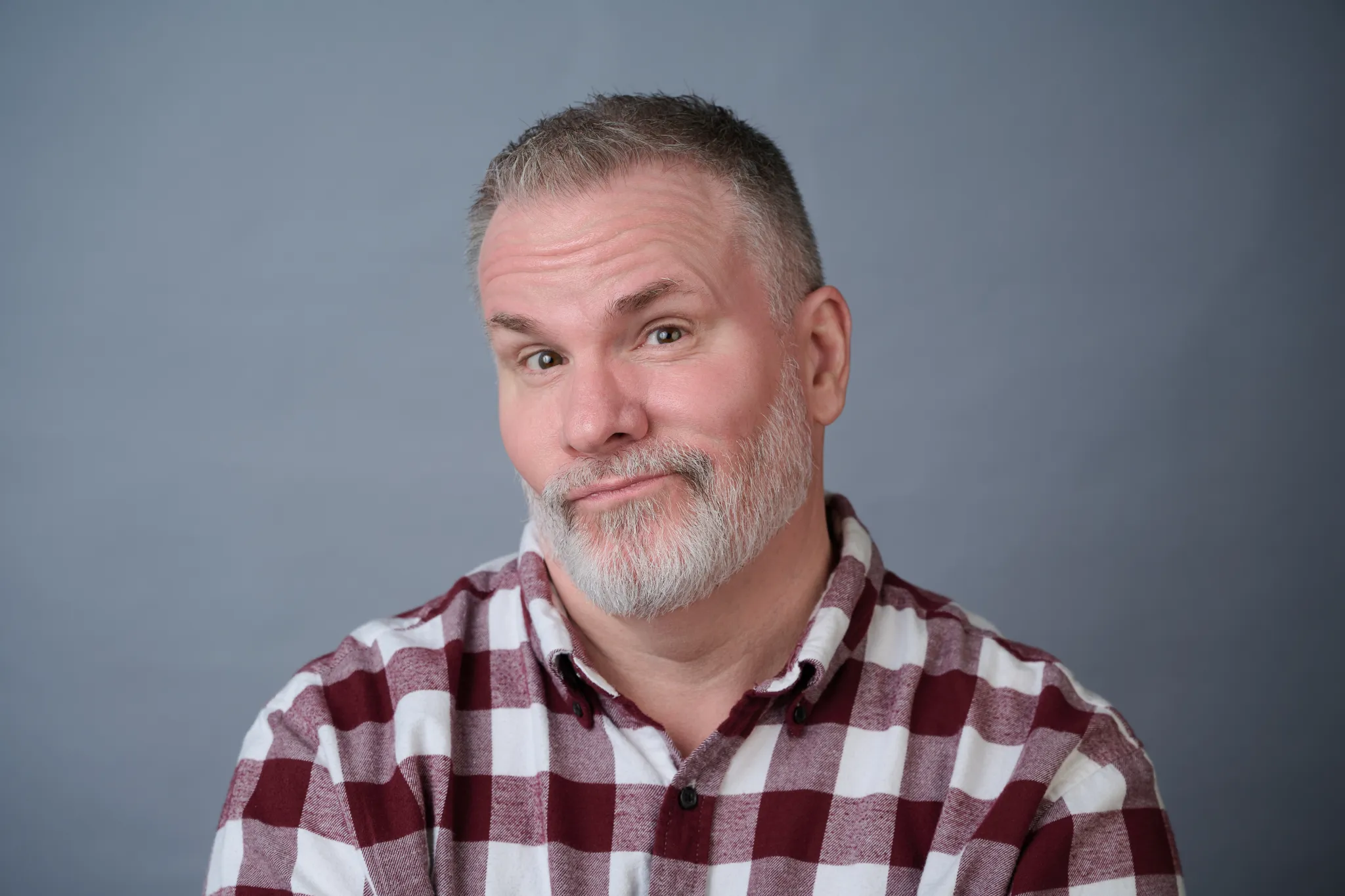
Voice Actor, Podcast Host
I've always acted, though not professionally. I tried to break into Hollywood when I was younger and lived in the LA area, but that idea was over before it really got started. Flash forward 30 years, and this D&D Dungeon Master Who Does All the Voices decided that, as an empty nester, it was time to pursue something creative again. So I jumped into voice acting a couple of years ago. I'm not about to quit my day job, but voice acting has brought me back to the joy of acting.
Now for the personal side of my story. I've always been a twitchy guy, self-concious and embarassed at times about my inability to control them somtimes, but never depressed about it. I just never knew why I had tics until about 15 years ago when I finally figured out, with my doctor's help, that I have Tourette Syndrome. Just knowing what I have have took such a burdon off my shoulders. I don't have corprolalia, so I don't curse uncontrollably, which is the public's general perception of everyone with Tourette's. But it is still difficult at times, and something I wish I didn't have to deal with. I know I, with TS, I'm not destined to be in front of the camera, but it doesn't hinder me from being behind the mic. I'm sometimes hyper aware of my tics while I'm watching myself host my podcast, but Mitch & I are 100 episodes in so I guess it doesn't bother me too much!


