
Kelly Moscinski, Casting Director, CEO, Mom


Have you ever had a dream shatter and you not know what to do next? Our guest this week had that happen from an injury and her solution was to leave her small town and head for Hollywood. Though there were bumps along the way she knew immediately when she stepped into one particular role that she would own the company one day!
Follow Kelly, The Voicecaster, & Blank Pages on Instagram: @kelly.moscinski.vc @thevoicecaster & @blankpagesinitiative
Email Kelly - Kelly@Voicecaster.com
Check out Kelly's Podcast: Creative Imperfections
If you'd like to support this podcast, you can buy me a coffee HERE.
Check out the "Keep the Darkness at Bay" Journal & T's Here
I'd also appreciate it if you left a 5 star rating and review for the podcast on whichever platform you listen on. Thank You!
Special Thanks To:
@jasonthe29th - Logo Design
@jacobjohnsontunes - Theme Music
Pod Decks - Fast 5 Questions
DISCLAIMER: Some of the links here are affiliate links, which means I will make a small commission if you click them and make a qualifying purchase, at no extra cost to you :)
*I hereby solemnly swear to only promote products and services I actually love and use in my podcast and everyday life!
Kelly
Oh yeah, people also need encouragement.
Robb
Welcome to another episode of Chewing the Fat. I am your host, Big Robb. Thank you so much for tuning in, downloading the podcast. I certainly do appreciate it. And to the folks that have bought me a coffee at ChewingTheFatBR.com, thank you for your financial support. It helps us to continue to tell these beautiful, messy human stories. And calling in today from LA, please welcome Kelly Moscinski. Kelly, how are you doing?
Kelly
I'm doing good. How are you? Thank you so much for having me.
Robb
Oh, thank you for agreeing to be here. Uh Kelly is a casting director, business owner, entrepreneur, uh, world traveler uh that that I met in the VO community. Uh and uh she's just got such a great uh attitude and and life about what she does and how and the care she gives to the work she does, but also her family and everything like that. So that's why I wanted to have you on and uh talk to you more about who you are and what you do. So thank you so much for being here.
Kelly
Yeah, I'm excited to be here.
Robb
So LA, is that is that home for you? I mean, I know I know it's home now. Is that uh where you grew up and all like that?
Kelly
I actually grew up in Michigan.
Robb
Okay.
Kelly
So yep, I'm originally from Michigan, Christmas, Michigan, to be exact. Um, I grew up on a in a in a little tiny village on Jingle Bell Lane. Um, a lot of people are like, this can't be real. Like your life is like a Hallmark movie. I'm like, it's it's real. Jingle Bell Lane, Christmas, Michigan. Look it up. That's where I grew up. That's so cool. So yeah. So in in the cold, right on Lake Superior. Um, you know, it's very different than Los Angeles, that's for sure.
Robb
Yeah, I can imagine.
Kelly
But LA is definitely home now.
Robb
Yeah. So what was uh what was uh life like for you growing up in in Christmas, Michigan? Were you always interested in the arts and things like that?
Kelly
Yeah. So I mean, my family, I actually grew up in a very like sports-centric family. Um, you know, my parents were both coaches of various sports. My brother was big into sports. I played sports, but I was always terrible at it. Um, it was not something that I loved. It was not something that I was good at. Um, but it felt like it was something that I that I had to do, you know. And small town, it's like you're kind of limited in what there is. Um, I feel like I kind of found my way into the arts um through dance. I was a ballet dancer for about 14 years. Um, I was on point shoes, you know, ballet was was my thing until I had a couple of injuries in high school that required knee surgery, ankle reconstructive surgery, um, which also then took me out of sports and all of that. And that's when I got into theater. So I didn't actually get into theater until I joined the drama club in high school.
Robb
Oh, wow. Wow.
Kelly
Yeah. So that was kind of the start of it. And then I mean, the rest is history after that. It's like once once that that hits, you know, it it sucks you in. And yeah.
Robb
Yeah. It was so um, and gosh, that's gotta be uh devastating. And I'm sure we can talk about some of that, you know, in the next segment. To have been doing that much dancing and then for have something that takes that that passion away from you uh that way. Uh but uh, you know, it's great that you found another passion. Uh not necessarily to replace it, because I I'm I'm sure it is that passion is still there, but but to be able to do something else that allows you that kind of artistic creative outlet. Um Do you remember what one of your first uh shows or roles were when you made it into the theater side of things?
Kelly
Well the the funny thing is, is I I often worked behind the scenes. I love doing like the sets and doing the painting and you know, all of that kind of stuff. The first time I did any sort of acting was kind of coming off of those surgeries and getting out of sports. And I was like, okay, I just want to be involved somehow. And um what the what the drama club director ended up doing is there were two of us, me and me and one other girl who were just kind of getting started. So we didn't we didn't audition for the show that they were doing, but he was like, I want you guys to be intermission entertainment. So my very first time on stage, I was actually like intermission entertainment. I don't know. We were dressed like hippies, we were just reciting quotes, like Confucius kind of quotes, and like it was the strangest thing, but I was like, oh, this is fun. You know, like I get to do something different. And I'm on a stage again. I'm not dancing, but I'm you know, I'm I'm entertaining, providing that entertainment to people. And that's that's really where I, you know, I feel like it was one of those things where I was like, I didn't necessarily want to be an actor, but I wanted to, I wanted to provide joy to people, you know. It's like I wanted to to put that into people. And in a small town, there's there's very few opportunities for that sort of thing. Um, so yeah, and of course that all snowballed, and I was, you know, basically running the community theater there. I was directing a lot of shows. Um, you know, I was acting in them. I had some lead roles in some, you know, community theater shows and stuff. It just that that wasn't where my passion was. It was the the directing, the, you know, putting everything on.
Robb
Yeah, yeah.
Kelly
Yeah.
Robb
I love that. Um, did that passion did follow you into college? Did you pursue pursue a degree in that or anything like that?
Kelly
Yeah. So I originally went to college for pre-med.
Robb
Oh, wow. Okay.
Kelly
So I wanted to be a psychiatrist. So my focus was in psychology. Fun fact.
Robb
Yeah.
Kelly
Um, and yeah, so I got it, I got into pre-med, and essentially that first year, I was doing a lot of the the, you know, the uh elective classes and things like that that you that you have to take. Um, I was doing psychology classes, I took a theater class, you know, all these, all these different things. And when I sat down to meet with my advisor, he was essentially like, you know, we got to go back, we got to do remedial math, we got to do this. And yeah, I was like, you know what? My heart's just not in that. Maybe I don't want to be a doctor. You know, and I was loving the theater and I was getting very involved in the theater department. I was like, okay, but you can't just go from being a doctor to getting a theater degree. Like, what do I do with that? You know, so I ended up switching my major to education. It's like, I'll be an English teacher, then I can do the drama club, and you know, I can do all this stuff. Basically, got all of my credits. The only thing I didn't do was the student teaching, but I would have had a degree in education. Finally, after year two, I was like, I'm just gonna go, I'm theater major. Like, that's what I need to do. Just gonna be a theater major and see where that goes in my life. Oh, um, so yeah, I ended up getting my bachelor's degree in theater, and then the theater department offered me a full ride to get my master's. Um, so I was I was running the box office. Um, I was uh teaching some classes and doing all of that during my master's degree, which I ended up getting my master's degree actually in writing, creative writing. My thesis was a play that I had written. Um, I was the first student to direct one of the main stage productions for the for the university. Um, so that was pretty cool. I got I got some great opportunities there. Um, but it wasn't until I put aside plan B and just went full in on plan A. This is what I'm gonna do, and we're gonna see see where it takes me in life.
Robb
I love that. I love that. What's what school was it? I assume this wasn't uh Christmas community college or anything.
Kelly
No, no, Northern Michigan University. So still in the upper peninsula of Michigan, about an hour away. It was it was in the same city where I was dancing. So I was I was driving an hour to and from dance classes all those years. Wow. Very dedicated parents, doing homework in the car and you know, all that stuff so that I could dance.
Robb
But that you know, but that helps so much when you do have those passions and you do have people that that are there to to support you and like, yeah, let's let's make this happen. I do think that's really interesting though that you went to for psychology because there's a lot of psychology in what you do now and what you do as a director on stage, how to get a performance from someone uh, you know, other than like just here's a line read, here, say it this way. It's get them to connect with the material to be able to give that performance, give what that vision that you have, and then to encourage them without maybe they actually knowing that that's what you're doing as well, you know? So that's that's really interesting. Um, I mean there's I had there's commonalities between those for definitely.
Kelly
Absolutely. And I had a moment while I was directing the the main stage show at the university. I had a moment where it's like I had a couple of actors come up to me and they were like, I never know what I'm doing right with you directing. So I've I found out and I'm so glad that they were so open with me about this because it like it changed my style for forever, you know. It's like I'm still like the way I direct and the way I coach now is influenced by this moment. But they came to me and they were like, you know, we're just not ever sure if we're doing anything right because all of your notes are things to fix, you know, constructive criticism, but still like it's always things to fix. And I realized, you know, in my head, I was like, no note is a good note.
Robb
Yeah, yeah.
Kelly
So keep what you're doing. If I didn't mention it, fix the things that I'm mentioning. And I realized, and this, I mean, this is this goes back to psychology, you know, it's all it's all part of that. But I was like, oh, oh yeah, people also need encouragement. You know, they do need to know what they're doing right because if somebody is just always telling you what you're doing wrong and how to fix it, that is going to take its toll. And I was seeing it on stage, you know, I was I was seeing these actors just kind of shutting down slowly rehearsal after rehearsal. And it's like, as soon as I started incorporating, like, oh, I loved this moment when you did that, it's like they started, they started to light up again. And that made, that made all the difference. And so that's why, you know, it's like a lot of people are like, you're always so encouraging. And I'm like, yeah, because there's something to be said about that too. I get better performances out of people with some encouragement because then then they can keep that confidence.
Robb
Yeah.
Kelly
You know, then you take that constructive criticism a lot easier if you also know you're doing things right.
Robb
Yeah, yeah. Because there's a part of us, especially as performers, actors, even just humans, that, you know, the more you hear the negative, the more you start to believe it, the more that lizard brain starts to say, nope, this is the reality of it. You always get notes on what you're doing wrong. You never hear anything you're doing right. So when you give somebody the opportunity to hear something they're doing right, you know, call it call it a compliment sandwich or whatever, you know, it's like, oh, I love when you do this. Could you also pronounce this word correctly? And then also this was great. You know, that then allows them to have feel that full range of emotions and and be part of that experience to realize it's not all bad. Yes, there are things that can improve, but it's not all bad. So don't get into that headspace. Yes.
Kelly
Yep, yep, I completely agree. And it's like, you know, some people are like, oh, Kelly, be hard on me, be hard on me. And it's like, I will be hard on you when I need to be and about what I need to be, you know, because I also think that there are directors out there who have the no bullshit attitude, but it's really they're kind of harsh just to be harsh, you know, and it's like, and they don't there there are better ways to go about that. Um, and if that's their style and people, you know, can work well with that, awesome. Then that's then that's your coach. I find that majority of people also need to know what they're doing right along with you know what what could be tweaked.
Robb
Yeah, no, I love that. So, what was the transition then from theater stage at Northern Michigan University to how'd you land in Los Angeles? Is that a lot of steps in between there?
Kelly
No, no, actually. So when I graduated with my bachelor's, I was actually gonna move to New York. You know, New York was the thing. I was like, I'm gonna either direct, stage manage, you know, I'm working in theater in New York. After I had gotten my master's degree, I was like, Los Angeles. Wow. Going to Los Angeles. So graduated in May, moved out to LA in July, started working at a voicecaster in October. And it just, it just kind of happened, you know. So at that time, it you weren't applying for anything online. You didn't have email addresses for everybody. You know, it was one of those things. It's like I looked up casting directors and talent agencies primarily. I sent out over 350 cover letters and resumes before I even left Michigan to everybody in Los Angeles. Cause I was like, I'll be an intern, I'll be an assistant. Like I am willing to work from the ground up, you know. Um, that's one thing I've always I've always had a strong work ethic. Like I will, I'll do whatever I need to do, you know, like put me to work. Um, so it's it was one of those things where I was like, I'm just gonna just kind of do what I need to do. And it's so interesting because it was so hard to just get a normal job. You know, it was like I did some background work. Um, again, acting, not what I wanted to do, but I was like, eh, let's let's see what happens. I'm just gonna, you know, I did the background work so that I could talk to the 80s, so that I could start meeting people in production. Um, so then I got a couple of leads on things like that. I ended up working at a theater company here in Burbank, the Colony Theater, um, which is how I met Catherine, who's our senior casting director at VoiceCaster. Um, so yeah, we I was doing backstage of shows and things like that. Uh, I was like, okay, but I need to pay bills still. So, like, what kind of job can I get? And it's like I was applying at banks and all these things. For me, the biggest thing I had working against me is one, they were like, you're you're overqualified. You have a master's degree. Like, you can't be a bank teller, apparently, if you have a master's degree. So I was like, okay, cool. Um, and then and then there was the fact that I'm not bilingual. Another thing very helpful in Los Angeles. And so it's, you know, all these things kind of working against me. I finally ended up getting a job at Lowe's of all places. So I was like, whatever, like just gonna make some money. I'll do theater in the evening, you know, I'll drop this job when I when I have something else. Um, and it was three days in. And, you know, there were there were comments from the manager, like, oh, I hired you because of your smile, and you know, all this stuff that I was like, okay, this is gross. Like, I feel gross being here. Then the theater wanted me on a show, and I was like, okay, I was like, so I need these days off for this show. And he was like, No, can't do that. And I was like, Okay, then this is my resignation. I I quit um on the spot with no notice because I was like, okay, this is gross. I'm not gonna be in this situation, and I'm gonna pursue theater. And it doesn't pay much. I don't have guaranteed hours after this one show, but we're just gonna go for it. And then I ended up a couple weeks later, I got a call from a talent agency. They wanted to bring me on as a junior agent to start. Um I was like, being an agent doesn't feel like my vibe either, you know, like that. It just felt like meeting with them. I was like, this feels a little too slimy for me. I was like, not all agents are slimy. You know, I I'm good friends with some agents and they're not slimy. But, you know, it was just the it was the whole idea of just negotiations and all these things. And I was like, maybe that's not what I want to do. I was like, I'm gonna see, I'm gonna see what else happens before I have to make a decision. Then voicecaster called. And as soon as I walked in, I was like, I'm gonna own this place someday.
Robb
Wow.
Kelly
So I turned down the agency job. Um, I was still able to do the theater. And three and a half years later, my boss came to me and said, you know, he's retiring, he's moving, his house is in escrow, and he would love for me to take over. He had gotten other offers on the company, but he wanted me to take over, or he was closing the doors in two weeks. And I was like, all right. And he's like, Well, you can you can go home, you can think about it, you know. And I was like, I don't need to think about it. Like from the second I walked in here, I knew I was gonna own this company someday, and this is that moment.
Robb
Oh, that's so cool.
Kelly
Yeah.
Robb
That is so cool. And you know, it's it's those, it's the it's the listening to yourself in your whole story there, listening. It's like, you know, we think of these closed door moments as dang it, that door closed, dang it, that door closed, as a negative thing. But a lot of times those closed doors are positive things. They are either protecting us from something that we just don't need to be in, but we don't realize that because we're we're, you know, we're manic and we're we're stressed out and we're looking at the one problem right in front of us. We're not looking, you know, at the years ahead of us or whatever. We're like, this is the one thing and this is a bad thing, as opposed to thinking as, wow, thank goodness I didn't, you know, thank goodness the guy at Lowe's was creepy because I might have felt good and wanted to stay, and I might have changed my mind. I might have not had these opportunities. I I I love that. And that's that's so encouraging from you to show that you know, following your your dream, but more so following your your gut of what feels right for you is what you know has led you to now now own this company that you knew as soon as you walked in the door that you were gonna you were gonna own the company. And how many years now has that been?
Kelly
Uh since 2013, so 13 years now.
Robb
Wow.
Kelly
Actually, in four days, it'll be exactly 13 years. May 15th.
Robb
Happy 13th year anniversary. Yeah.
Kelly
Thank you.
Robb
And in that time, I'm sure you've learned a ton, you've met a ton of people. How has your process changed from when you were, you know, directing uh on stage and you know high school and then in college, and then now what you're doing to help, you know, direct in uh, you know, commercials and and all the other stuff, all the other work that you do uh for voice actors.
Kelly
Yeah, I have found that my process has it essentially still has the same sort of building block since that that moment that you know I I realized, oh, we need we need both the good and the and the what to fix. Um so it my process has gotten a lot more efficient. You know, that's that's one thing that I hear from a lot of people, whether it's from clients, actors that I'm working with, you know, when I'm directing sessions, auditions, whatever it is, they're always like, you can say so much in just a few words. And part of that really is just it's a matter of, I, you know, I've developed the vocabulary where it's like, I also know that saying one word can completely change somebody's direction in what they're doing. Um, I also know that, you know, as you start to explain these stories, you know, you get some directors who are just so long-winded that it's like, wait, what was the first thing you said? What did you, you know? So it's like I have learned to really be efficient in giving direction. But one of my biggest things is always trusting the actor. I have been in enough sessions, whether it's, you know, just just as a casting director, as the engineer, where I'm sitting back and I'm, you know, just there doing my part, you know, and I'm not directing the session. It's it's one of the clients is directing. And it essentially is them saying, like, I was in one one time where it was two hours of just saying friendlier, friendlier after every single take. And it's like, okay, can we throw out a different word? Can we can we give the actor something else to work with? And sometimes I feel like it's for me, it's like I'm I'm gonna trust that you as the actor are doing the acting part. You know, it's like I I shouldn't have to say, who are you talking to? I shouldn't have to say what is your intention. I do, of course, when I'm coaching and everything, because that is that is such a big part of it and getting that ingrained. Um, but it's you know, it's there's a lot of trust that I think has to be there. And honestly, I feel like if a lot of directors just trusted the actors a little bit more, I think everybody would have a better collaborative process overall.
Robb
Do you think uh some of that though is because you've got you've got the the people who wrote the piece, the people who are backing it with their dollars, and then you've got this unknown of an actor. And so sometimes people have created in their imagination their perfect spot before anyone comes in the in the booth, and they are they are trying to recreate their imagination in a physical realm when that's basically impossible. Because we you know what I mean, and sometimes you struggle against and and are so so stuck on like, oh, it has to be this way, it has to be this way, you know, skies are blue, grass is green, you know, it's like as opposed to opening yourself up to well, maybe skies are teal and grass is aquamarine, you know. Or whatever that the actor brings to it. Um, and then I assume you you work kind of as a bridge to help both parties create that final, you know, beautiful piece.
Kelly
Yep. Yep. And as a casting director, that's a huge part of my job, is like I am that middle person. I am, I'm essentially playing matchmaker. You know, it's like I know the personalities of the clients, I know the personalities of the actors. And that's that's why it's like I'm always saying like relationships in that community, like that's huge. It is rare that I send somebody into a session and I don't know them in some way, having had worked with them, whether it's in in auditions or you know, in uh just community settings or class settings or you know, things like that, because there is that level of I I also have to trust them. I do know that some clients are extra difficult. So I kind of need to make sure that you know the talent can handle that because I've also seen those those situations go downhill pretty quick where it's like the the client might just be very, very direct and not sugarcoat anything. They're not gonna tell you anything that you're doing right. And so there are some actors who will shut down in situations like that. So it's you know, I I know the people, so it's like, but going back to just having everybody has a different vision. That's why when we look at specs and things like that, they're all over the place because there might be six people who are involved in this, you know, say 30-second commercial, and there's six people involved, they all have it in their head a certain way.
Robb
Yeah.
Kelly
So it's like as an actor, you have to be listening to all of these different things, all of these little notes and directions, and they're gonna contradict each other and all of that. And ultimately, it's like you have to trust that what you're bringing to it is what they want. They cast you for a reason, you know, and it's it's usually it's because of the you that you brought to it. And I know just human nature, it's hard to just be confident in ourselves as we are.
Robb
Yeah, yeah, for sure, for sure. So talk me through just a quick like you gotta you get a commercial. What is what does that look like? It lands on your desk, you've gotta figure out who you're who you're gonna send this to because you're a casting director, so you're gonna send it some to some agencies, you may send it to some folks directly or whatever. What's the average group of folks that you're now listening for uh for a piece? Because I know you've you've mentioned before that you've upwards of 3,000. Something, you know, voices.
Kelly
Oh man, it gets crazy sometimes. It depends on the project. If there are projects that we just send out to people directly, obviously we're listening to a lot fewer that way because I'm not gonna send it to 200 people directly. You know, I'm gonna send it to a very specific group of people who I'm like, these are the people who are right for it. And so, you know, it's like on some of those projects, it's like cool, we only have 70 to listen to, or you know, that kind of a thing. Or we might send it to 70 and 50 submit, you know, or whatever. Um, and then there are other projects where it's like, okay, well, we need to cast it a little bit wider. So, you know, I have an A list, B list, and C list of agents that we work with. And so A lists are the ones that, you know, that I that I like working with. And so those are the ones that I will send to first. So if I'm sending to agents, I'm sending to my A list. If I need to cast a little bit wider, I'll send to the B list. If I need to cast basically nationwide, I will send to the C list.
Robb
Yeah.
Kelly
So, and then of course we have worldwide contacts as well for for more specific things. But it kind of depends on on what we're casting and who we're sending it to. Um, but we we will get anywhere, I would say on average, excuse me. On average, we would get anywhere from 400 to like 1400 auditions.
Robb
Wow. That's a that's a lot. That's a lot. And I'm sure your process now, you know, let's see, 13 years of owning the company and being there three, you know, 16 years of being there uh is a lot different than when you first there, and you just know within that first three to five seconds of whatever it is that it's like, okay, that's a doesn't we give that a second listen, or no, that one's gonna go ahead and get, you know, get get ejected. And, you know, we'll it's not that they did anything wrong, it's just it just doesn't feel right. So we're gonna move on and you know, I'll send something to them again at some other point, but it's just not right for this.
Kelly
Um absolutely. And and the process has changed just with the pandemic. Because pre-pandemic, we were bringing everybody in studio. So if you didn't live in LA, you probably weren't even auditioning for VoiceCaster unless we needed to cast a wider net, or we were specifically casting in New York, or you know, things like that, then you probably weren't even auditioning for VoiceCaster. You know, it's like voicecaster has been around 51 years this year. And there are still actors who are like, I've never heard of VoiceCaster. And I'm like, because you're not in LA. You know, it's like it's it's now that you know we're we're six years from when the world shut down. It is one of those things where most voice actors do know us now. But for a while there, it was like from 2020 to like 2024. We had people who were like, Who's voicecaster? What do they do? You know, things like that coming up to us, me and Katherine at you know, Vio Atlanta and places like that. And they're like, So what do you guys do? Like, well, let me explain.
Robb
Right, right.
Kelly
You know, but but how would they know, you know, when it's it's it everything changed in 2020? And so before that, it's if we were sending 20 auditions to the client, we brought in 20 people to audition. Sometimes we'd have 21, 22, just in case somebody completely blew it. But most of the time they didn't, and they were working with us, they were getting our direction, you know. So it's like we were confident with you know, people came in. So it's like we were choosing those people from a couple hundred demos that we listened to. Again, only need to listen to three to five seconds of a demo to know if somebody is in the right zone for it, and then we can listen more if we need to. But then we just trust that, okay, well, they're an actor, we're gonna bring them in, we're gonna work with them. Yeah, you know, there are obviously people who never came back in after that one audition for various reasons. But, you know, we just never, never invited them back for whatever reason. Um, usually not even performance-wise, usually it was, you know, just just attitude or you know, ego gets in the way.
Robb
Didn't fit the vibe.
Kelly
Yep.
Robb
Yeah. So do you think, I mean, do you do you personally as a casting director look at what happened post-shutdown in the industry as a positive or as a negative? Because like I said, you were casting in person up to that point. And I know you guys are now casting, having more folks in and having some workouts in the in the studio and things like that again now. Um, but do you look at that as a positive because now you you do have an easier access to talent across the country uh as opposed to prior to that?
Kelly
Yeah, I absolutely see it as a positive, you know, and and for me, that's kind of just my mindset in general, is like I always I always see the the positive in things, you know. I always see the silver lining. And it was funny because once, you know, we we shut down the office and I told the staff, like, okay, we're gonna be working remote at that time. I mean, you remember, it was like two weeks. If the whole world shuts down for two weeks, we'll be fine. Okay. So, you know, it was one of those things where like, we'll see you back in a couple weeks, and then a couple weeks goes by, and then next thing you know, like we were working, we worked remotely for 14 months. Yeah, however, we were still going in studio. We did all of the protocols to be a you know, uh SAG authorized studio during COVID and all that stuff. And the nice thing about voiceover is you can stay secluded. You know, there's a different entrance to the actor side than there is the director side. So you can come into our studio and never come in contact with a human. So we were still doing a lot of sessions and things like that. And I know a lot of a lot of studios, a lot of casting places, they they shut down completely. You know, we're we're one of the few who still have a studio um and we're expanding. You know, it's like we have five studios right now, we're gonna have a sixth, we're working on renovations, you know. So it's like we're we're expanding while others have, you know, kind of shut down. And I absolutely see it as a positive thing because I have gotten to know so many amazing people, not just talented voice actors, but but good people, you know, that I would not have had that opportunity to get to know had we stayed in our own little LA bubble here. So I'm thankful that that happened. And, you know, another thing was like just workshops and stuff. I had always talked about like, oh, we should do, I should do some workshops online so I can meet other actors in other places. And you know, people are getting home studios and things like that. You know, it's like I need to, I need to expand. And it just never happened. So for me, COVID also pushed me to, well, we're gonna adapt, we're gonna change things. I have no idea what it looks like to run, you know, online classes. Yeah, cool. What's this thing called Zoom? I'm gonna look into that and see, you know. So I I absolutely think it changed everything for the better. And you know, it's like a lot of actors are like, oh, but you get more auditions and it's you know more saturated now and all that. And it's like, yeah, but it has opened up so much, you know, for for me, for my clients, it's like, you know, I I feel like for a long time there, I was pushing agents to like, please send me new people. You know, I feel like we're always bringing in the same people. And now it's like I have I have found so many amazing new talent, and some of them are not even new talent, you know, they've been doing this for 10, 15, 20 years. I just never knew them because they weren't in LA.
Robb
Yeah.
Kelly
So I feel like it has opened up so much, and I love it.
Robb
That's awesome.
Kelly
I'm thankful for it.
Robb
I love that. Um, on the on the actor side of it though, do you think it's because of not being in the in the booth and be able to kind of give a little bit of direction to the audition? And so now everybody is self-taping and sending in that you've had to kind of expand those notes on your audition. It's like, all right, I'm trying to front load everything that I'm thinking here because I can't change your performance because I'm not able to give you live feedback on what's going on and tell you to roll an R or not roll an R or whatever or something silly. Um, has that changed your process?
Kelly
Have you Yeah, it absolutely has. You know, it's like I try not to get long-winded with specs. I try to keep them pretty close to what actors do. I know there are some specs that you'll see that are a full page, and it's like, I feel like that's just confusing. And again, I have found that shorter, more concise information is always better. Um, I do have some clients who are like, I want this for take one, this for take two, this for take three, casting one of those today, actually. And it, you know, it's one of those things where it's like, okay, that's what we're gonna do, but it doesn't give the actor a ton of creative license to to bring themselves to it because it's so specific. But I do, you know, it's it is one of those things where I feel like there have been this is probably the biggest thing that I have noticed is that a lot of times actors don't just they don't just trust and do their thing. They end up doing something like like trying too hard, essentially. It's like it's something that's like outside the box. It could work, but it's one of those things where sometimes I'm just like, oh, this person would have been perfect if they had literally just taught. Like all they needed to do was be themselves. And so I find that a lot of times the actors are just not owning themselves as much because they're self-directing, you know. So it's like they're getting in their heads, they are trying to do a lot more than we need them to do. And I I've had times where it's like I'm listening to something and I'm like, you know, if it's somebody that I know well, it's like I'll I'll text them or I'll email them and be like, hey, if you have a chance in the next half hour to an hour, could you just give me one take where you're just like, just talk, like, don't do anything with it, just say the words, you know. Um, and I've had people book because of that. So it's like, I will give direction when I can. We do have time slots where people can either come into the studio or, you know, book a time with us. Um, we'll do it virtually, Zoom, whatever. Um, so that we can direct some people if people want that direction, you know. So sometimes people will do it if they're like struggling and they're like, oh, I just don't know. I don't know what I'm doing on this one, or you know, I can't figure out a take two or take three. I've got one take and that's it. And you know, so it's like we still, we still want to direct when we can. Um, it's just, yeah, it's not the the the primary thing anymore. And I do feel like that that has affected the actors and the quality of the auditions because it's sometimes I'm like, oh, they're a shoe-in. Like this is perfect. They've just just be themselves and they've got this, and then they don't be themselves.
Robb
Yeah, I feel like you're talking to me, but uh because I because I often will put on the character, get in my head, and try to do something that's like not as natural as it normally is. So I'm not sure. You are not alone. You are not alone. Yeah. Uh huh. I I I love that. I love that, Kelly. I love that just that bit of advice too. So um aside from the work you're doing and and and the the the life that you're living right now, what is bringing you joy?
Kelly
My kids, yeah. I have two little ones, a five-year-old and an eight-year-old. Um, they're yeah, they are just they're so fun. You know, it's like every every age, I'm like, oh, this is a fun age. Also challenging.
Robb
Yeah.
Kelly
But it's fun. You know, it's it's I I just love watching them grow, you know, just letting them be their own little people is is it's it's just magical, you know, and then seeing so much of of myself in them and just it's yeah, which is scary, but also I'm like, my daughter is gonna like own a company someday. She's definitely gonna be a girl boss, but it right now I don't want her to be a girl boss.
Robb
Right, right.
Kelly
She thinks she thinks she runs the house. Um, so yeah, but uh they they absolutely give me joy. My nonprofit, I started a nonprofit last year um called Blank Pages Initiative, and we're finally getting things really moving on that. Um, which, you know, it's basically the idea of it is confidence through the arts. So mental health, finding confidence, finding an outlet to just be yourself, you know, in this world that tries to tell us what we should be. So I we're offering workshops in performance arts, visual arts, music, dance, writing, you know, all the different things and for all ages, kids through adults, um, just to kind of give people that safe space, you know, whether it's people who just can't afford to take a dance class or an art class, you know, um, people who just want to, you know, get into a voiceover booth and get a little bit crazy just to express themselves and have fun, not necessarily for a career, you know, things like that. So just trying to kind of open those doors as more and more art programs are being shut down in schools and things like that, you know, and it's like mental health issues obviously on on the rise, you know. I mean, they have been for years. So yeah, just trying to trying to do a little a little part in helping with that.
Robb
All right, Kelly, this is the second segment of the show. This is where we'll dive a little bit deeper into your mental health journey. Uh, because I believe the more that we talk about this, the more that we kind of take away the power from the negative of the stigma of mental health and and depression and things like that, because we realize we are not alone in it. So for you, how do you keep the darkness at bay?
Kelly
Honestly, it's it's not always easy.
Robb
Yeah.
Kelly
You know, it's it's generally I am a pretty positive person, and that is because I have worked very hard. I have done the inner work, I have figured out, you know, both both what triggers are as well as what glimmers are. You know, it's like I call them glimmers. They're the the opposite of the triggers, right? The things that trigger the the joy, the happiness. And I feel like a big part of of keeping the darkness at bay is being able to take that step back. So I like to think of it as, you know, it's it's when we're in the storm, we can't see anything else. So it's like this cloud is over us, we're in the middle of the tornado, it's chaos, it's dark, it's terrifying, and you feel stuck, you feel trapped. But if you can just step back a little bit and look and see the rest of the sky, then you can see that that storm is only the small part of the sky. There is more sky on that side, there is more sky on the other side, and it's just it's passing through. So I feel like that has always been a big thing for me is just feeling that darkness and not allowing it to suck me in. Or if it does suck me in, then just trying to remember there is so much more. Like I just need to take that step back and know that there is blue sky in the distance, you know, and it's like you just need to try to see that whenever you can. And I'm not saying that that's an easy thing to do. That has taken me many years to to really be able to efficiently do, you know, and actually, actually be able to see that. Um, but I feel like once I've, you know, worked on that and gotten to that point, it it has been life-changing for me.
Robb
Yeah, I love that. So I assume that, you know, that that perspective you have now is a lot different than you know, you had when your your ballet career kind of got halted because of an injury.
Kelly
Yeah.
Robb
Uh I'm I'm sure it was hard to see blue sky during that point.
Kelly
Absolutely. It felt like like the the one thing that I loved, the one passion that I had was was taken from me and and abruptly, you know, it was like one day I'm on point shoes, the next day I can't, you know, and I never could again after that. So yeah, it was it definitely sent me into a sort of spiral. Um, and then of course, I mean, throw, throw being a teenager on top of that, a teenager in a small town, you know, where there's not a whole lot to do. And it's like that, you know, by the time I was, you know, 17, 18, I was, I was ready to get out, you know. I was like, I need to get out of here. Otherwise, I don't know. You know, this is not the life for me. It was, you know, there was definitely depression, there was definitely anxiety, you know, it's like I, and at that time it was like nobody saw a therapist. I could definitely use the therapist at that point, but you know, it's like, and then of course, you know, there there is that that I mean, I'm gonna say Midwest mentality, but it's it's kind of everywhere where there's a stigma to see a therapist. And so it was never, it was never a thing. It was like you just shoved those feelings down and you just went on with your life. Um, so for me, a big part was like, okay, well, when I'm 18, I get out of here. Like I can, I can get out, I can go start my life and don't have to feel stuck. Um, and like I said, I grew up with very supportive parents and you know, I'm very, very lucky in that regard. But it doesn't, it doesn't matter how great that is. It's like things still happen that pull you, that pull you down, and you just have to kind of figure out. And again, it's seeing that light and trying to see that silver lining. And I knew, you know, it's like I I wrote a lot of poetry in high school. And I mean, I have poems that are about suicide and you know, all these things because it just it doesn't feel like there's that out. And, you know, I so for me it was very much like I'm graduating and I'm getting out of here, you know. And it's like, and I did. I mean, I I I barely keep in touch with people that I knew in high school. I still have a couple of friends that will catch up once in a while. You know, it's like I know people who still have like their best friends from high school. For me, it's like I needed to let go of. Of all of that past in order to figure out who I was at that point, you know? And yeah.
Robb
Yeah. It's not a good idea. I think especially being from a small town. I mean, uh I'm I'm I'm in a fairly small town. Uh you kind of get defined by your geography. And in in and when you're in a small town and oh well everybody knows everybody's business and blah, blah, blah. And this no and you you know, you it's the rarity to find people who have expanded beyond those borders of that city or or town or county or whatever it is that have gone off and not come back or gone off and you know made something different uh of of than what they grew up in. I mean, that's a that's that's that's difficult. Even though there were probably hundreds of thousands of people that wanted to. They just didn't feel like they could.
Kelly
Yeah. Yeah. And that that I mean, that's kind of the the thing that breaks my heart is, you know, it's like I did have parents who supported me. I did have parents who were like, go to college wherever you want. You know, I was looking at one pre-med program in Alabama, you know, and they were they were Alabama's so random, but they had a great pro they had a great program for psychiatry, um, at least then. And so yeah, it was just, you know, they were just like, go do whatever you want. When I moved to LA, they were the ones who, you know, my dad's truck loaded up, pulled the U-Haul, and you know, move me out here. So it's always, I've always had that support. And, you know, with without that, I mean, I probably still would have clawed my way out of there, I would like to think. I'm a very determined person. So, but it's also hard and it it breaks my heart that not everybody feels like they can get out.
Robb
Yeah, yeah. Because it there I think there is just some. And you know, that may happen, you know, we say small towns. You could you could be in a small town living in Manhattan. You because of what your scope of influences, your friends, your family, whatever it is, it's like you may just walk the one block back and forth between your, you know, your dad's, you know, corner grocery store and the apartment or whatever it is, and that's now your world, and that's as only as big as it is, even though you're in one of the largest cities in the world.
Kelly
Yeah.
Robb
And it's hard for us to as people to to break free of that stuff. And a lot of it is the b believing in ourselves, you know, because we want to lizard brain everything and it must I must be hearing all the bad things. It's all the bad things, and I'm not worthy, I'm not good enough, you know. Whereas if you just try, you know, give yourself the chance to try as opposed to believing that that negative inner voice.
Kelly
Yeah. Yeah. I call my my negative inner voices my pessimistic co-pilot. Like, I've got my pessimistic co-pilot always right there. But, you know, I try to try to get her to sit in the back seat so I don't have to listen to her as much.
Robb
Yeah. Yeah. And that's important.
Kelly
I'm driving.
Robb
Yeah. I love that. I love that. Because yeah, it's it's we're all gonna have that, no matter how what a positive person we are, and we're all gonna have that at some point. There's always gonna be that frail chink in our armor that we can't, you know, that it's gonna stick its head. It's like, hey, you sure you're good enough for that? It's like, I know that you got that, you got that email without audition, but do you really think you can do that? No, I don't think you can, you know, and so it confronting it and saying, All right, I see you, I hear what you're saying, but I don't need that right now. That's I know you're trying to protect me from something, but I don't need to be protected right now. Go ahead and sit back and watch. You know, and if things go sideways, then maybe we'll talk again. But I gotta at least I gotta at least try first. You know? And I think I think just being and it's easier said than done. Being able to to give yourself the permission to try. You know.
Kelly
Always, always. It's like it and it feels risky and it feels scary, and that's usually how you know you're doing the right thing. If you're terrified to do it, usually that's the right next move.
Robb
All right, Kelly, it is time now for the third segment of the show. It's time now for the Fast Five, the Fast Five. It's time now for the Fast Five. Fast Five. Sorry, I'm still working on a theme song for the show and uh there's still just kind of workshopping that right now, but uh the Fast Five.
Kelly
I think you have a winner.
Robb
Hey, thanks. Fast Five is powered by Pod Dex. It's an app created by my friend Travis Brown. If you go to ChewingTheFat Br.com slash Poddex, uh it'll take you to where you can download the app. It's great for podcasters, but the great icebreakers as well. No wrong answers. Uh just the first thing that comes to the top of your mind. You ready?
Kelly
Yep.
Robb
Here we go. Question number one. When is the last time you cried?
Kelly
Yesterday.
Robb
Okay. Yeah. Are you a freaking caller?
Kelly
Good release of feelings, you know, and I'm not, I'm not ashamed of it. I let my I let my kids see me cry. You know, it's one of those things where I always tell them like it's it's okay. And here's the thing is I I cry about everything. Like I'll cry if I'm sad, I will cry if I'm mad, and I will cry when I'm happy. Like I'm just one of those people. I have shoved it down too much for too long that I'm like, whatever, whatever I feel. If the tears come out, the tears come out.
Robb
Yeah. Yeah. I'm I'm a I'm an easy, easy crier myself. I and I will cry at commercials, which is, you know, I'm sure great for the people that produce the commercials and stuff like that. But like I am a big old softy, so yeah. There's nothing wrong with shedding a tear. Yeah. All right. Question number two. What would constitute a perfect day for you?
Kelly
Oh, getting a good night's sleep doesn't always happen, especially with kids. And then I think just just having the freedom. And I will, I will say that a lot of a lot of my days end up kind of in this zone. I'm very fortunate to have some days like this where it's like I get the slow morning, you know, it's like I can I can write, I can just relax, enjoy my coffee, I can do some work, I love what I do. So it's like even on the weekends, you know, you might find me working because I love what I get to do. Um, spending time with my family, you know, going to the park or going to the beach or things like that. Um, I also love just just relaxing at home, whether it's just sitting outside or watching a movie or, you know, things like that. Anytime I get to just slow down a little bit and not feel like everything is on me and everyone needs me. And, you know, all of that that external pressure, that's that's a good day for me.
Robb
I love that. I love that. Question number three. Is there any local dish or food product from where you grew up that you miss?
Kelly
Yes. So, first of all, Mackinac Island fudge. Um, but specifically, Mackinac Island fudge ice cream is the best, um, as well as as pasties. So a lot of people don't know what pasties are, but pasties are essential essentially it's like a meat pie. Um but yeah, so I I do miss those. And I am I'm a ketchup person, not a gravy person. If you know pasties, you know, you're either team ketchup or team gravy. I'm team ketchup.
Robb
Hmm, interesting. Interesting. My oldest son lives in Cornwall, England, and so they're famous for the Cornish pasties. So he knows how to make those and things like that. I don't know if they put ketchup on it. Probably put HP sauce on it. I don't know if they put ketchup on it, though, but yeah, I'll have to talk to him about that next week.
Kelly
There you go.
Robb
Love that. Question number four. Do you consider yourself superstitious?
Kelly
No, not in a traditional sense. So it's like, I feel like 13 is a lucky number. Um, I I've kind of reversed a lot of superstitions. I'm like, oh, if a black cat crosses my path, I'm like, it's gonna be a good day. You know, I've kind of I don't know why, but yeah, over the years I kind of have reversed things where I'm like, I'm gonna take that as a good sign.
Robb
That's awesome. Yeah, I also think that 13 is a lucky number. So it's always come up somehow that 13 is a lucky number. I love that. I love that. And question number five. What was the first car you ever owned?
Kelly
A Chevy Blazer. Ooh, a 1995 Chevy Blazer. Oh, wow. And I took that thing back roading. I can't tell you how many times I got stuck in mud and all the things. What else is there to do in the middle of nowhere?
Robb
Right, right. Oh, that's awesome. That's awesome. Great memories, I take it. Yeah. That's like you said, you don't have much to do. Let's go off-roading in the blue.
Kelly
Yeah, let's see where we can take this thing. It's got four-wheel drive. Let's see how far we can get.
Robb
See what that means.
Kelly
Only had to call my dad a couple times to bring a winch and get us out of the mud, try to describe what trail we're on. Go past this tree and then turn right. Oh, yeah.
Robb
What color was it? Do you remember what color?
Kelly
Green. It was a dark green.
Robb
Okay, very cool.
Kelly
Yeah, cool.
Robb
Well, that is our fast five, and that's the show, Kelly. Thank you so much for being here.
Kelly
Thank you so much for having me. This was great.
Robb
Yeah, this was awesome. If folks want to keep up with you and what you've got going on uh personally or with voicecaster or blank pages, uh, what's the easiest way they could do that?
Kelly
Yeah, so all three are on Instagram. So uh the voicecaster is just the voicecaster, all lowercase. Uh Kelly.moscinski.vc is me personally, and then blank pages initiative is for blank pages. Um, you can also email me. It's Kelly at voicecaster.com. So feel free to reach out about any of those things.
Robb
Awesome. I'll make sure to put those links in the show note as well. Again, thank you so much for being here. Uh I love what you're doing, uh, uh, and I wish you nothing but success with everything that you've got coming.
Kelly
Thank you. Thank you so much. And thank you for doing this podcast. It's incredible.
Robb
Oh, thank you. I appreciate that. And if you would like to support this podcast, I would appreciate it if you bought me a coffee at chewingthefatbr.com. But until next time, I look forward to the chance we have to sit a spell and chew the fat.
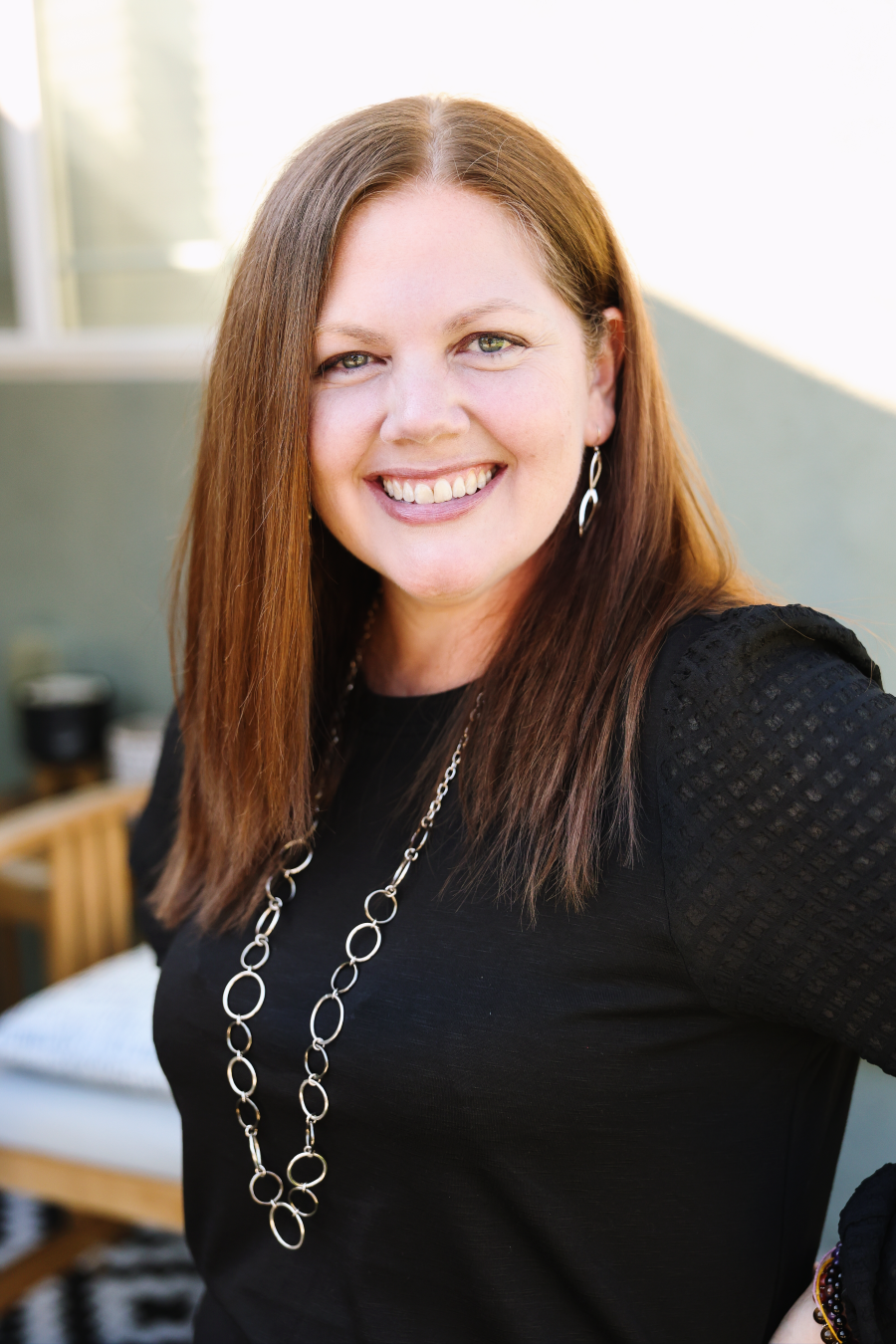
Casting Director / Writer / Career & Life Coach / Non-Profit CEO / Mom
Kelly Moscinski holds a lot of titles. She is the Owner and Head of Casting at The Voicecaster in Los Angeles (the first VO casting house in the US) where she casts, directs, produces, and teaches. Her podcast, Creative Imperfections, as well as her book (to be released in 2027), combines the focus of personal and professional development for creatives. On top of all of that, Kelly started the non-profit Blank Pages Initiative in 2024 with a focus for individuals to find confidence through the arts. Her most important role is being a mom of two.


