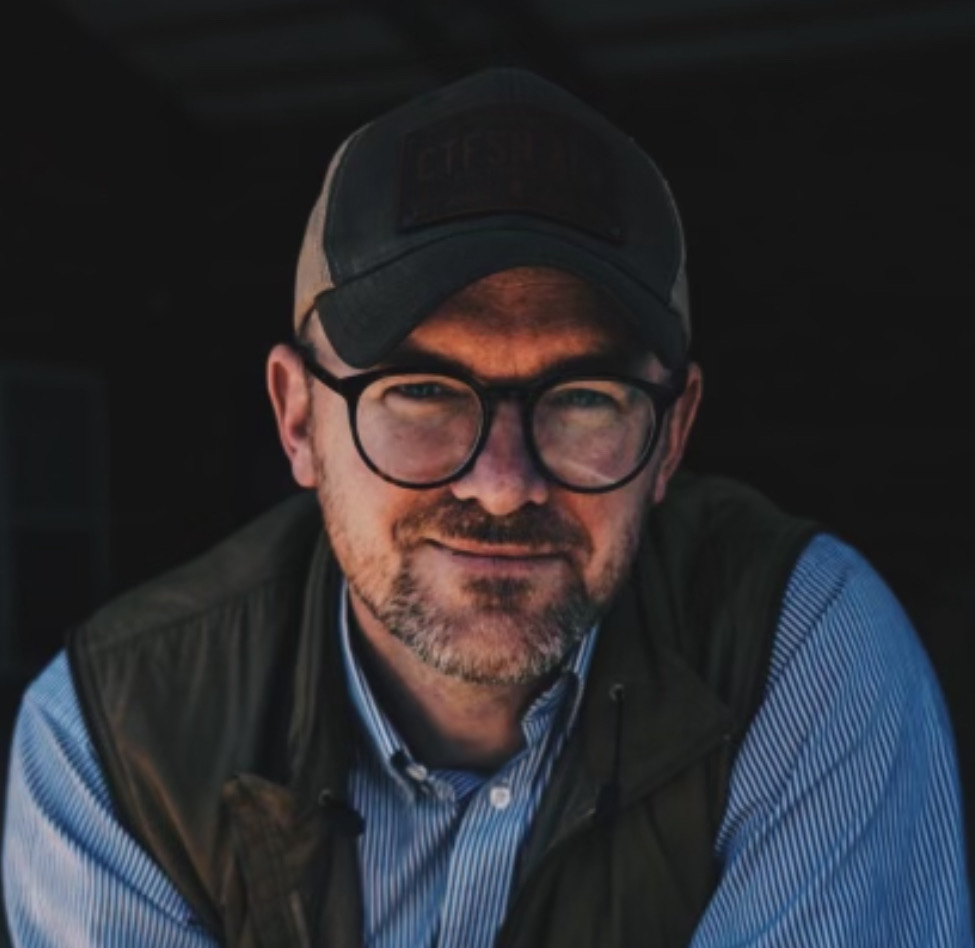
Jake Phillips, Voice Actor, Veteran, Cultured Bumpkin

Have you ever had to change yourself to fit someone else's mold? Our guest this week did and discovered a whole new world of play from the lesson it taught him. Follow Jake on Instagram - @theculturedbumpkin Subscribe to his The Cultured Bumpkin YouTube Channel Find out more about Voice Acting at The Voice Acting Academy Support the show If you'd like to support this podcast, you can buy me a coffee HERE. Check out the "Keep the Darkness at Bay" Journal & T's Here I'd also app...


Have you ever had to change yourself to fit someone else's mold? Our guest this week did and discovered a whole new world of play from the lesson it taught him.
Follow Jake on Instagram - @theculturedbumpkin
Subscribe to his The Cultured Bumpkin YouTube Channel
Find out more about Voice Acting at The Voice Acting Academy
If you'd like to support this podcast, you can buy me a coffee HERE.
Check out the "Keep the Darkness at Bay" Journal & T's Here
I'd also appreciate it if you left a 5 star rating and review for the podcast on whichever platform you listen on. Thank You!
Special Thanks To:
@jasonthe29th - Logo Design
@jacobjohnsontunes - Theme Music
Pod Decks - Fast 5 Questions
DISCLAIMER: Some of the links here are affiliate links, which means I will make a small commission if you click them and make a qualifying purchase, at no extra cost to you :)
*I hereby solemnly swear to only promote products and services I actually love and use in my podcast and everyday life!
Jake
We can't understand you. You've got to learn to speak English.
Robb
Welcome to another episode of Chewing the Fat. I am your host, Big Robb. Thank you so much for tuning in and downloading the podcast. I certainly do appreciate it. Thank you to the folks that have bought me a coffee at ChewingtheFatBR.com. It definitely helps to keep the podcast rolling, to help folks tell their beautiful messy human stories. Coming in now from Starkville, Mississippi, please welcome renowned voice actor Jake Phillips. Jake, thank you so much for being here, buddy.
Jake
Well, thank you for having me, Robb. I don't know about the renowned part, but uh I am a voice actor, so it's good to be here.
Robb
Well, you know, I I consider you renowned uh because when when people cross my path and I just gravitate to them and I absorb their content, you know, that becomes renowned in my universe. And as the cultured, as the cultured bumpkin, you have you've become uh renowned in my universe uh with your content that you that you put out. Um and we'll talk more about that in just a few minutes. But you're uh either in Starkville, Mississippi. Um is that home, like been home, born, raised?
Jake
I was born very close to it. Uh then I went into the military, moved off, and then came back after my um dad passed away some years ago. I moved back just to be near my mom, my younger siblings, that kind of thing. So yeah, I I would say born and raised till adulthood and then returned.
Robb
Yeah, gotcha. Gotcha. That's cool. Um so you are you are a voice actor now. Is that something that you always had a passion for when you were young, uh growing up there in Starkville?
Jake
I think it was I mean, I think everybody likes to imitate voices and you know that kind of thing. But I never really thought of it as a career option. Um when I was in the Army, in fact, got being from Mississippi, I had a very thick southern accent, which now I I turn on and off uh for very you know comedic purposes or depending on who I'm talking to. But um I my platoon sergeant I was a I was a um a uh platoon leader in the army and a cavalry unit, and my platoon sergeant from Montana pulled me aside one day and said, We can't understand you. You've got to learn to speak English. And I said, like, that's the that's the meanest thing anybody's ever said. And uh and it kind of I mean I didn't say that, but it it kind of hurt my feelings. But I started like, okay, well, that that makes sense if if I'm given directives over the the uh push to talk radio and somebody says, what? And then that's why they uh they got hurt or killed. Man, that I couldn't live with myself. Oh wow. So I said, okay, well, yeah, you know, whatever my feelings aside, I'm gonna learn to speak English. And so I was in Kansas at the time, Fort Riley, Kansas, which uh is to me that that's like the epicenter of that area of American English. The further you get from um you know Kansas in any direction, the more of an accent you're gonna hear. But I think that's real close to perfect American English. And even rural people, farmers, you know, um folks you meet in a gas station on a country road speak perfect English out there, at least in my experience. And so that was a good place to learn English. And uh, you know, this was you know, early, I guess mid uh, you know, oh five to oh nine, that in there. And um that was a good time to start learning uh an American accent, I guess. And so without knowing it, that's when I started to become a voice actor without knowing it, just so other people could understand me in stressful situations. Yeah, and then um so yeah, it really never crossed my mind till till much later, in into adulthood. I mean, yeah um before I ever thought about it.
Robb
Yeah, what an important reason to, you know, get rid of an accent or to to work on your neutral American uh accent uh because of you know what you were in the middle of. And and like you said, making sure that the directions you were giving out were easily understood so that they could be executed the way that they need to for safety's reasons, safety reasons. That's amazing. Um well, what were you into, you know, as a child growing up? What I mean, were you a sport? Were you a theater? Were you a you know, I mean, were you in ROTC?
Jake
What yeah, well, as a kid, I was I loved birds and still do. I love nature. I love nature walks. I'm a big, big bird guy. Um, and history. I've always liked history, so I love visiting battlefields uh with my family. Um even and before I was, you know, had a family, I s I enjoyed going to battlefields and uh reading the plaques and learning about people that came before me. So yeah, birds and history was kind of a big two big things that I grew up doing. And I was not a performer. Like that was I'm pretty introverted. I mean, I'm a a functioning introvert, but I'm I tend to be introverted, as as I think a lot of artistic people are. Um and so in my case, uh I had one one role. It was in the church play. I played the the ass that uh Mary rode to Bethlehem upon. And so it was a non-speaking role. And uh so that was literally my only credit before I decided to be a voice actor decades later.
Robb
Right. Wow.
Jake
So yeah, suffice to say theater was not a part of my upbringing. It it all came, you know, into adulthood, which is kind of interesting for me.
Robb
Yeah, no, no, I mean that's great though, when you f you know, when you find those places that you can use your your skills, you know, differently and in different ways than you had you like you said, that you'd grown up or had expected to even to even do. I think that's amazing. Um were you were you from a uh a military family, uh, you know, or that was just something that was uh in your heart to join the military?
Jake
Well, I'm from a um, you might say kind of your stereotypical patriotic family. You know, it's good to you know, do your duty, preserve freedom, whatever.
Robb
Uh yeah, no.
Jake
I the not to get political, I don't always see eye to eye with our uh, you know, we're our our nation building uh more George Washington, stay out of other people's business now. But back in the day, you know, it was like, well, I need to defend my country uh abroad and all that kind of stuff. And so that's what I did. Um but yeah, after 9-11, I was like, man, I I feel like I ought to do my part, you know what I mean? I ought to join up. So so that was that was the day I decided to join, actually. I'd been thinking about it, and that was the day I said, All right, I'm I'm definitely going in, told my dad, he said, All right, let's do it. And um, so my grandpa was military. Uh then my dad was not. He was right on the end of uh Vietnam. And then he since he had a scholarship to college, uh he ended up just going the the uh college football route and uh and um but yeah from a from a patriotic family, and that's that's why I went the army route.
Robb
That's great. That's great. Thank you. Thank you for your service. Uh and I know um you know folks in the military you know hear that a lot, and I don't take it lightly saying that because that's something that you know I personally didn't do. You know what I mean? Um I flat feet and every other reason that I couldn't join even if I wanted to. Um so so thank you for what you did to give us the opportunity to talk right today. You know what I mean?
Jake
Right. And I'm thankful to be in a situation that your the choice is uh the main factor. Like, no, I don't I don't think the military is for me. Some of my brothers, like, I don't think I want to do military. So they didn't. And then others of us said, I want to do military, and we did. And both are cool. It's a free that's what being in a free country means. You don't have to, yeah, you know, uh you're not it's not forced upon you because man, I can't imagine being Vietnam, like being against the war, let's say, don't even want to be here, and then someone, your own government says, Oh no, you're gone. That would be a tough situation to be in. So thankful we don't have that right now, anyway.
Robb
Yeah, absolutely. Absolutely. So back back home, you're out of the military. What are we what are we doing now? I got into before before the uh the voice acting stuff, yeah.
Jake
Right, right. I I got into factory work, um, which is funny because although uh you know a voice booth is a dark, quiet place, uh a factory being indoors all the time with artificial light, your whole shift, that to me that took a toll on me mentally. Like I don't really like that. I would rather at least in my booth I can you know step out and get some fresh air. So, you know, in the uh I was in the factory, and that's when I decided uh one day I heard Tom Selleck narrate North America. The there was a nature show called North America. It was around 2012, 13, somewhere in there. It came out on uh Discovery Channel, I think, and it was just a masterpiece. Great writing, great cinematography, amazing narration, and and it was just all about the wildlife and uh you know cool nature in North America. And um I remember hearing that and thinking that that sounds really cool. I I want to do that. And um so I like I literally started copying him and copying other people, uh reading poetry, reading different things just as practice. And then I didn't really know where I was going with it, but I was like, I I know I need to be practiced and and I'm gonna figure this out. So then I just you know got on YouTube and started learning from various people that um we both probably know, I'm sure. And uh yeah, it kind of went from there. So I guess 2017, I started, I got on ACX for the first time, got uh kind of my first audiobook, and um just a you know royalty share kind of a thing. But that was really cool. It it boosted my morale because somebody wanted me. They wanted my voice. It helped me with uh, you know, editing, mastering, narration, all that kind of stuff, and it got me uh it kind of got me down that road, and then you know, just I kept messing around for a I would say a year and a half or so doing a lot of work in in you know after hours. And then I guess 2018 is when I was able to say, you know what, I think I can't get to where I want to go from here. I can't I can't do it part-time anymore. Yeah. And my wife is is very supportive, um, which is funny we make a good team because she is not artistic. I'm the artist. She's she's real analytical and everything. And she said, Hey, this factory's killing you, man. You gotta get out of there. Let's just we'll we'll tighten our belt, let's leave the leave the factory and you you do this. That's what you need to do. And uh, if I didn't have that kind of support in my life, I would still be in a factory, I'm quite sure. Um, so I'm so thankful for her. She's so her name's Mary Elizabeth, she's just a great, a great woman. I'm very lucky and proud to be married to her. But that was, I mean, she's a big part of sort of giving me permission to say, no, let's let's do this, even if it's tough at first. Yeah, yeah.
Robb
And I mean, uh very similar story with me when I got I didn't choose to leave where I was working for almost 10 years. I got let go, and the decision was like, well, what am I doing? What am I gonna do now? You know, and my wife was like, Yeah, do what you love. You need to do what you love. We'll we'll make it we'll make it work. And it is so important when you have those type of things. And you're saying have she's very analytical. That's great because you just became a business owner, too. So you know, you know what I mean? And it it this is so much more of a business than anything that most folks have ever done, as far as like, because you're you're clocking in and someone's can't handling all the back end stuff, and you just get a check and put it in the bank. You know, that's you know what I mean. Whereas this is you're it, you're the talent, you're the editor, you're the you're the lead magnet, you're you're you're you know, you're doing the contracts, you're doing taxes, you're doing all of the stuff. So so uh it it takes a lot to to run this business when you've not done something like this before. The fun part, the talking is a tenth of what of what the job is, you know. Exactly. Um so having that exactly having that support uh is is so important to this. Yeah. So from from that point, you're like, all right, let's make a go of it. How did the cultured bumpkin come about then?
Jake
Well, I think um my way of looking at it was, you know, okay, I should be practicing every day, and I still I maintain this. Um I should be practicing every day at my craft of voice acting. I don't want to only be recording when I'm being paid to do it, because those sometimes are few and far between. It might be a couple days, a couple weeks, whatever. So I thought, well, if I have a podcast, I can be always, I'll always have something to work on. And and I think long form narration is one of the best ways of developing your your voice acting. It's kind of like I used to be in in track. Running a lot of miles is just gonna make you a better runner. If you're a sprinter, to some extent, being able to run two miles, let's say, is uh that's a good thing for a sprinter. Because if a hundred meters is as far as you ever run, you're gonna be limited somewhat on how fast you're gonna cover that hundred. Whereas when the distance, that's not the hard part, it's just the speed. If you can run a mile or two mile, no problem. 100 meters is no problem. Now it's just how fast are we gonna do it. And I think with voice acting, it's that way. I I think that's a great training regimen to be on, is being able to tell a story. That's the most ancient art form is sitting around a campfire telling the stories about the day yesterday, last year. Uh, that's a very ancient art. It connects us in a lot of ways to the past uh in being able to do that. And so um I thought, well, uh, it'll be constant practice. And then, two, I really like classic literature. So that makes it easy in that, okay, this well-written story by Mark Twain, let's say, he's gonna set me up for success because the writing is amazing. And then it's public domain, so I don't have to spend time tracking down people for permission. Yeah. And so uh, and then it's educational. Um when my dad passed away, we were, my wife and I were about to have our first child, and there there was really um, I sort of contemplated my own mortality, and I thought, you know what, I would love for my daughter to have a library of dad reading to her. Because my dad used to read to us live, you know, at night all the time. I thought, what if, you know, what if I am am recording these and she can listen to them and then pass them on to her kids because it's on YouTube or whatever. So that was kind of the the thinking behind that. A love of literature and then sort of, you know, creating a um uh an audio library for the next generation was my motivating factors. And then it helps me be able to connect with really cool people. I've had um, you know, professors and actors, voice actors, I've had authors, I had Sitting Bull's great-grandson, uh a Lakota uh gentleman from South Dakota, um, you know, and I talked to him about the Battle of Little Bighorn and then the book he wrote. And uh so I get to meet a lot of cool people because of it. So yeah, that's that's kind of how it started as a podcast, then I named my YouTube that, and then my TikTok and Instagram, you know, I've kind of kept that going.
Robb
Yeah, it's a great name, too. I mean, the cultured bumpkin. And you and that's what you do with a lot of this stuff is you will do your, I'm assuming, native Mississippian accent on some of these things. I mean, you your your um your pride and prejudice, if it happened in the South, is amazing. Thank you. You know, and the and of course, and the the fun videos that you make along with that uh are just hilarious. Um but yeah, it's all it's it's it's it's a great way to have that legacy kind of left behind of stuff that you did. You know, I I lost my mom last summer, and I luckily, you know, from working in radio, she co-hosted with me one Thanksgiving on my radio show. Um, she was on this podcast. Uh so I have that episode that I can go back, you know, and and hear her and uh and have that. And that's something that a lot of people don't have, you know, and I recommend it to anybody if you have, I mean, pretty much everybody's got a cell phone, and pretty much all of them have a voice recorder on there. Hit record and go sit with your parents and just talk to them, tell them, get them to tell you about their childhood, get them to sing you their favorite, you know, lullaby song or what it's that type of stuff that you don't know at the moment is gonna mean so much later. So I think that's I think that's great that your your intention of like, yeah, this is this is a workout for me, this is practice for me for what I want to do, but it was beyond that to leave something for your for your kids too, to have you whenever that they might need you. Right. You know, because they could go off to college and not literally want to talk to you because they're young adults. And having two grown children myself, sometimes they just don't want to talk to you. You know, but maybe they want to hear your voice. Right. And so now they can covertly still have an attachment to you and be connected to you without actually having to get your opinion on anything. Exactly. You know. Oh, I love that. I love that. So what is on that um VO bucket list for you? Uh I'm gonna make an assumption and then you tell me how far off I'm because of how the the thing that spurned you on that documentary, that nature, I'm assuming something like that, a little, a little Nat Geo Discovery documentary, net nature uh narration might be on that bucket list for you.
Jake
That would be pretty cool. I um I've gotten to do a couple, nothing big yet, but I've gotten to do a couple um nature documentaries, and those probably are my favorite just because I grew up um doing that. So yeah, I would I would say um um yeah. Uh in as I think of it, my bucket list is continue to provide for my family in a creative way. That's my bucket list, whatever that looks like. But that um something that like a nature documentary that that was on Discovery or something, yeah, that would be pretty sweet.
Robb
Um is uh audiobooks, is that kind of your is that your bread and butter? Do you do commercial? Do you do promo, video games, uh animation, that type of stuff as well? Kind of because I know like when you get into this, you kind of have to have at least at least a pinky near all of these things. If it's not in the middle of your hand, you kind of at least have to be available in case somebody says, Hey, by the way, here's this.
Jake
But uh Right. Um I would say I'm usually always working on an audiobook. I'm usually always getting commercials, and then I I I am in a lot of audio dramas and video games and stuff too. So I do lots of character work. I really enjoy everything. You know, a a bad day in the booth is better than a good day in the factory, is what I always say. So if I can be paid to get in here and sort of perform something or record something, that's a good day. Yeah. Uh whatever that is. Um but yeah, I I think I've done just I would say most genres for sure. Um But I I would say I would call myself a commercial actor. That's where I've gotten the most work, probably.
Robb
Okay.
Jake
If you just if you added up dollar amounts, it would be I would be a commercial voice actor. Aaron Powell Gotcha.
Robb
Gotcha. And part of your journey and what you're learning and what you have learned and uh you're you're now sharing with others that are that are new to the to the field that are wanting to figure out what is voice acting. Can I do that? Can I you know what I mean? So so you're coaching now too, is that right?
Jake
That's right. Yeah, so I really enjoy instructing. I always have in the Army. I was I really enjoyed instructing, even if it was like not my title, but I might see, you know, a soldier sort of struggling to shoot accurately. And instead of yelling at him, I'll come up and hey, you you need to relax. Your butt so high in the air, you just need to, you need to just take a couple deep breaths. And there's a proverb from the Bible that says, the sweetness of the lips increaseth learning. And I think when you talk to someone like you care about them, they're gonna soak up what you have a lot better than if you yell at them or if you um, you know, are condescending or whatever, all things they do in the military. And it it has its place. Like it's a it's a system of of you know reducing down and stuff. Some people need that more than others. But um I I like teaching. And so um I think it's really cool to help people um sort of see their own talent and indulge it. Like, no, no, no, it's I know you're 28 years old or whatever, but this is not childish to think you could make a living at that. Like I had to get over that sort of mental block of, you know, I think when I started I was 34, maybe 35. And and like, okay, this you're too old to be thinking about making funny voices as a living. That's ridiculous. You get in that factory and you provide for your family. That was what the little oh yeah, the little shoulder devil kept telling me. And when I think, when I finally said, you know what, I'm gonna do what I want to do. I'm gonna just what if I want to make funny voices for a living? And when I sort of told that to be quiet and said, no, I give myself permission to be a a silly goose if I want to be. Yeah. Uh if that's what will pay the bills, then it was like, no, this is fun. I don't really care what other people think of me if the client says, hey, we liked it, and here's a check.
Robb
Yeah.
Jake
Then um, yeah, that's that's that's the the uh the only goal that I have really at that point.
Robb
Yeah.
Jake
No, I uh I I really like I like teaching other people.
Robb
Yeah, I love that. And you know, that's that's part of doing this. Like I went full time, you know, air quotes, full time into voice acting at 51. You know. How about that? And so that's that's the thing, is like it's like I gotta, I gotta, you know, I was given, I was given permission by my wife to make this work because she believes in me. So why would I not believe in me too? And it's a lot of that mind stuff that you have to get over. And so and it happens sometimes, it's day by day. You, you know, like you say, you have that dry spell. You start seeing bills that need to be paid or things like that, and you're like, oh, I'm just I don't know how am I gonna invent this much money to pay this bill by doing silly voices, you know, in this booth. Um, but you you have to quell that, you have to keep going. I think that's that's the thing with this industry is you just have to, you gotta keep going. Because as soon as you stop, that's it. It's stopped. As soon as you tell yourself you can't, you can't. You know, you you tell those things to yourself and you and you believe it, and then you go back to the factory and then you you know wither away for the rest of your years, you know. Um so it's just uh so it's great that you're giving others permission to play, you know. Um aside from the work you're doing with coaching and uh your your personal work, what's bringing you joy?
Jake
Well, I'm a family man. I'm very blessed. Um, you know, I have a wonderful wife who I've mentioned. We have four kids, and that is um, you know, and and I'm a Christian, so I take joy from the Lord and uh the the word of God, the Bible. And um for me, you know, living out here in the country, you know, I've got it made.
Robb
Yeah.
Jake
Like I I've achieved my bucket list in that way. Uh and if the Lord took it all from me in a moment, I would say I had a good life. I had a real good time. You know, um, so I'm, you know, I I don't I would say just the existence, just being able to have the health and strength to open my eyes and draw breath and get out of bed under my own power. That's so much to be thankful for. You know, I I can remember one time in Iraq, um, I was I was in this building um in a headquarters type building, and they had brought in some wounded warriors. They had this wonderful program where you could um some people that were hurt really bad could come back, they would send out a patrol to the spot that they were injured, and they could get out and sort of make peace with that. Like return them to the spot and get closure. That's wonderful. Anyway, so while I was there, this group of these wounded warriors came in, and in various states of uh, you know, some you could tell immediately what was wrong. He doesn't have an arm, you know, he's he's on crutches, no leg.
Robb
Yeah.
Jake
There was one guy, he was uh he was wearing a uniform, but there was no no place on his head or hands that was not a skin graph. Wow. And even all 10 digits came to a point, like the first knuckle had been burnt off down to the second knuckle. So he had these short, pointy fingers, all 10 of them. And he had the biggest smile on his face. And when he left, he said, Hey, thank y'all for showing us hospitality. I just I just really appreciate it. I just want you all to know, no matter what you're going through, like you're gonna get to the other side, man. You can do it. You know, um, you know, I had I've had a tough time, but here I am. Look at me. I'm I'm doing fine. And I I think of him a lot. Like, no matter what I'm going through, I haven't been on fire. Like at one point, he was his entire body was on fire.
Robb
Yeah.
Jake
There is not an inch of that man that didn't get turned black uh from fire.
Robb
Yeah.
Jake
And yet he keeps an exuberant spirit and he's positive and like, my gosh, I've got a lot to be thankful for. Yeah. And um, so yeah, just the fact that I can get up and be healthy and do a job that I really enjoy. I can uh when I need a break, I step out and uh we homeschool our kids. So I'll, hey boys, get out here, let's play catch the baseball for a few. All right, all right, go do some math. I gotta do some more work. And then you know, that that's I love that. I I feel like I'm I'm I'm le I'm living a dream life, and that that brings me joy.
Robb
All right, Jake, this is the second segment of the show. This is uh where we dive a little bit more deeply into your mental health journey. I believe the the more we could talk about this, the easier it is for us all to realize that we're not alone. So for you, how do you keep the darkness at bay?
Jake
For me personally, I um I love poetry. I like to read poetry. I feel like it's um people that have been through the same thing that I have have said it in a way much more eloquently than I could, sometimes hundreds of years ago. And to read their poetry, it makes you feel uh like you're not alone. Someone else has been through the same thing, that kind of thing. So I really like poetry, and I I actually have a podcast where it's a sleep podcast, and all I do is read classic poetry to like ambiance. And a lot of, you know, people say, Oh, well, I like it because it's relaxing and all. For me, that is therapeutic, just making it.
Robb
Yeah.
Jake
Just get getting to read it aloud and sort of slow enough to think about what's being said. And uh so yeah, I would say, you know, poetry to include things like psalms. I love the psalms from the Bible. Some of the times, some of the words in there are like, man, this guy was he's downright suicidal. And yet there's a um, you know, there's a hope to it at at the end and stuff like that. So just yeah, reading reading classic poetry is that's that's a way, uh probably my biggest way, I would say, of of uh keeping the keeping the darkness at bay.
Robb
Do you have a um Do you have a go-to that like is that you've memorized, that's in your head, that you go to all the time, or a favorite um of yours?
Jake
I tend to remember snatches of them. Because I have I'm surrounded by poetry books. So usually I'll say, I need to read I need I need to read John Clare, so I'll go get a John Clare book. But there's one line I'll share of of a guy from in the 1840s who was in a mental institution. He was struggling with mental health, and he there's this wonderful poem he wrote called I Am. And it starts, the for opening line is, I am, but what I am, none cares or knows. And that's the part of sometimes we we get in our own head and we think nobody understands me, and that kind of thing. And that that sometimes is the case in John Clare's case. That's what he that's how he felt. But by reading poetry like that, it makes you feel like, oh, that's not a weird feeling that I'm going crazy. This is this is just a human experience. Other people have felt this way too. And you can really get uh comfort, support from people that have come before you that have dealt with the same things. Yeah. So yeah, so I keep books around me. I don't, I wouldn't say I have a lot memorized, but I have verses memorized of a lot of different stuff.
Robb
Yeah, yeah. Yeah, no, I I love that. And it's you know, that's one of those things too, is to to surround yourself with those things that do bring that that light back to you. Like you said, whether it be books of poetry or um if you have a circle of friends, or if you, you know, play ball, or you or you, you know, do art or Lego or whatever it is that you know allows you to get out of your head so much and to and to realize again that there's there's other stuff going on. There's other people that have gone through the same type of stuff and that you're not you're not alone in thinking these thoughts. Um I think that's one of the one of the best things you can do is to again have those type of things so that you can when you feel it coming on alleviate that in in some way. Um exactly. Is there um is there in that realm of of poetry, um is there a I know I asked you if you have like a favorite poem, or is there is there an author that if someone is struggling and maybe, you know, I don't want to say that it that it simplifies the process, but you don't want to go into some you know ancient text that's hard to understand, or sh you know, Shakespeare wrote beautiful words, but sometimes it's it's a little hard to it's a little difficult to decipher. Is there a gateway poet that you would recommend uh for folks?
Jake
Yeah, I think um John Clare would be one of them, or at least I would say some of these people have poems like that. Not all of their work is gonna be like this. But the but there is a couple real pieces, uh masterpieces. One of them is John Clare, I am. And I feel like it was it was it's you know nearly 200 years old, but it's also very straightforward. It's not very far from how we talk today. It's really it's not poetic. It's it's very very sincere from the heart. Um that's a really good one. There's one called Ode to a Nightingale by John Keats, he was a romantic English poet. That's that one's gonna have some stuff in it that if you're not a a poetry reader, it might be like, I don't know what he's saying there in that line, but there's so much in it that it it's like, oh, I I know how that feels. Yeah. Like in the setting being, he's laying under a tree, looks up at a nightingale in the up up in the branches above him, and he's sort of pondering, man, it must be nice to be fly away like a bird from my problems. And there's no resolution to it, like other than just uh allowing you to sit with your own emotions, but he just sits there and thinks through these things. And the author was dying of tuberculosis when he wrote it. Which is that makes it there's that lends a heaviness to it as well. Um but I I think um somebody like Mary Oliver, she passed away in 2017. She has a lot of nature poetry. And uh I I I love hers for um it's very straightforward, very modern as far as this the language of it. It's not hard to understand. Um and yet she touches on a lot of feelings and the human experience. And she's uh she was a a walker, a nature, a bird watcher, you know, um, that kind of thing. And then I would say maybe Robert Frost. That's another really good one.
Robb
Um I think that most folks folks, you know, probably heard the you know uh the path less, you know, taken, you know, that type of stuff. Yeah. Which, you know, there's a lot of it's a lot of symbolival symbolism and life lessons in that poem. You know. Right. Um Yeah, no, I I love that. I love that.
Jake
And and the more you can start to I was gonna say that that is one in the I mean that he was a prolific. Um I'm holding up a book that's pretty thick. Yeah. Um that is uh a Robert Frost poetry book. And there's so much, The Road Not Taken's one beautiful, very popular one, but he wrote so many short, sweet, just make you think. Yeah. He's a great one.
Robb
Yeah, yeah, for sure. And I think um, you know, if that's something that if you're folks that that are readers and like, oh, I read books, I read books, I read books, it's like, okay, great. If you if you read a book of poetry, you're not you're reading, you know, a hundred books at that point because they're not, it's not one singular singular, you know, storyline or anything like that. It's like these are these are thoughts encapsulated, you know, each one maybe about a different thing or a different time or a different part of the day that the person was in when they were writing this stuff. Um, I'm a big fan of poetry myself, and I've often, you know, read poems on you know my YouTube channel and things like that, things that affect me. And um just because it's it is, it's I I think it's one of those things that we can do, especially as a voice actor, to do service to the words. To do serv but but more so than the words to the heart behind the words.
Jake
Yeah, it's like you're being a faithful messenger of what the author was trying to say. Yeah. And you're using your vocal inflections to do it. And I think, you know, for a voice actor, even without the the mental aspect, it's one of the greatest things a voice actor can do as a practice tool is read poetry, be able to portray intense emotion in a nuanced way, is that'll make you a lot of money. But the um the uh but also I would say writing your own. And it doesn't have to be, it doesn't have to rhyme, it doesn't have to have a certain uh couplet, you know, it doesn't have to have a certain pattern. Just putting your thoughts uh and I and I would take it a step further and say with a pen and physical paper, not with your thumbs on a screen, like sit down under a tree and write what what are you thinking, what are you going through right now? That is that's therapy. And uh and uh just commit it to paper, you can burn it afterwards. Like nobody has to see it. It's not like somebody's gonna see it and make fun of you. You don't have to share it unless you want to. But that is very powerful. Uh there's an interesting mind writing hand connection, and I don't know what it is, but there's uh there's there's that's some real power in working through things when you are forced to say, okay, I've just have this general bad feeling. Okay, why is that? What is it? And then now you're putting words to the feelings, and then you're you're putting those words in in a ordered way to present a bigger thought, and it helps you work through stuff.
Robb
All right, Jake, it's time now for the third segment of the show. It's time now for the Fast Five. The Fast Five. It's time now for the Fast Five. Fast Five. Sorry, I was still working on that theme song for that. I'll eventually get to putting some music down or something like that. Uh the Fast Five is powered by Pod Decks. It's an app created by my friend Travis Brown. If you go to chew and the fatbr.com slash poddex, you can uh download uh the app from your favorite app store. It's made for podcasters, but they're great, just icebreaker questions as well. But there's no wrong answers. It's uh just the first thing that comes to the top of your mind. You ready? Ready. All right, here we go. Question number one. When is the last time you cried?
Jake
This morning. I think uh I was with my mom and we were talking about my dad, who has been gone for twelve years. And I think anytime you cry, it means you love something real intensely. It might be yourself, it might be somebody else. But there's some intense love involved when there's tears. And yeah, this morning.
Robb
Yeah. Yeah. I love that. I love that. Question number two. If you were a captain of a ship, what would you call it? Oh, that's good.
Jake
Um The Mary Rose.
Robb
The Mary Rose. What's the significance of that?
Jake
My wife's name's Mary. First dog I ever had was Rose. Uh there are uh two things that I love and uh and I I'm actually a sailor, by the way. I'm American Sailing Association certified but I'm a landlocked land lover as well, so I love sailing. I love this question. Yeah.
Robb
Wow.
Jake
Yeah. Yeah, the Mary Rose. It's also a famous ship from English history, but whatever.
Robb
No, but I love that. That's great. That's great. Question number three. What famous celebrity chef would you want to cater your dinner party?
Jake
Uh I I think uh Gordon Ramsey. He's just a straight shooter.
Robb
Yeah.
Jake
I don't have to like what he says, but I know I like what he eats.
Robb
Yeah.
Jake
I know I'll like eating what he prepares.
Robb
Oh, yeah, for sure. For sure. I mean, and as long as I think it's as long as it's not like other chefs in the kitchen that he doesn't know. Like he hires the top of the top. So I don't think he's gonna be doing the hell's kitchen act preparing this meal. He's gonna be amazing. Yeah, yeah, it's it's gonna be amazing. Um, I love that. I love that. Question number four. Where's one place you hope to visit before you die? Scotland. Like to go to Scotland. Yeah.
Jake
Any particular reason or just uh it's on the list? Yeah, it's it's on the list. It's beautiful. I do have friends there, but I've never visited. And I do have uh, you know, far enough back up the family tree, we're from Scotland. So yeah, it would be cool. Yeah.
Robb
I love that. I love that. All right. Any question number five? If you could go back in time and give your younger self one piece of advice, what would it be?
Jake
Like I had a good dad, I had good advice, and I'm thankful. I don't have any big regrets. Just like you d you just do the right thing. And don't worry about it. Make sure you're in the right and then go ahead. Yeah, I wouldn't I wouldn't steer myself from where I've become, I guess.
Robb
Yeah. Sometimes I remember being you know, feeling alone, feeling, you know, depressed, things like that, younger. But to go back and see my younger self and be like, it's it's gonna be okay. It's gonna be more amazing than you think. Yeah. You know? Right, right, exactly. You know, keep keep doing what you're doing. You know what I mean? But yeah, that's how exactly how I feel. Yeah. But yeah, no, I I love that. I love that. That's awesome. That's our Fast Five, and that is the show. Jake, thank you so much for being here, buddy. I really do appreciate it.
Jake
Man, yeah, thank you for the invite. I've had a wonderful time.
Robb
Uh, if folks want to keep up with you uh on socials or anything like that, what's the easiest way they can do that?
Jake
The uh this the cultured bumpkin on uh YouTube, Instagram, and um uh TikTok. That's probably the best way to do it.
Robb
Okay. And if somebody wants to um maybe look into doing voice acting, get some coaching from you, is there a different way they might be able to find you through that?
Jake
Well, I have a school group that I teach voice acting in. So it's uh kind of a group session and um we have a lot of fun. The the link for that is gonna be in any uh video I post or it's in the you know the the the bio of my social media. So yeah.
Robb
I'll make sure that we put the links to all of that in the show notes for the for the podcast as well, so folks can find you. Buddy, I really do appreciate you being here. Uh I love you and I love everything that you're doing. I love your heart. And uh just just just keep doing it, man. Just just keep doing it.
Jake
I appreciate that. Right back at you, brother.
Robb
And if you would like to support this podcast, I'd appreciate if you bought me a coffee at chewing the fatbr.com. But until next time, look forward to the chance we have to sit a spell and chew the fat.